Overcoming the Puer Aeternus Syndrome
Introduction to Puer Aeternus
The Eternal Boy
In Latin, puer aeternus means “eternal boy.” In psychology, it describes an adult, usually a man, who remains emotionally stuck in adolescence. He struggles with the responsibilities of adulthood, often drifting through life without committing to a career, a relationship, or a stable sense of self. The idea isn't new; it's rooted in ancient myths about gods and heroes who never truly grow up.
Puer Aeternus
noun
An archetype referring to an adult who remains psychologically adolescent, characterized by a reluctance to face adult responsibilities and commitments.
Forever Young in Myth
Mythology is filled with figures of eternal youth. Think of gods like Eros (Cupid), forever a playful, winged boy, or Dionysus, the god of wine and revelry, who embodies spontaneity and freedom from convention. A more modern example is Peter Pan, the boy who wouldn't grow up.
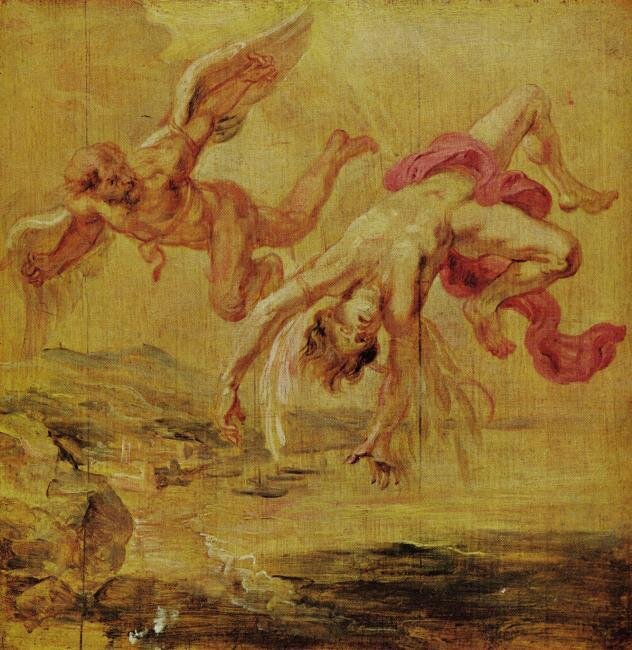
These stories capture the allure of endless possibility. But they also hint at a darker side. The myth of Icarus, who flies too close to the sun on wax wings, serves as a powerful metaphor. His youthful ambition and refusal to heed his father's warnings lead to his downfall. He has the freedom of the sky but lacks the wisdom to navigate it safely.
Jung and the Puer Archetype
Psychiatrist Carl Jung brought the puer aeternus into the world of psychology. He identified it as an archetype, a universal pattern or theme that exists in the collective unconscious of all people. For Jung, archetypes are like blueprints for our experiences and behaviors.
According to Swiss psychologist Carl Jung, archetypes are innate universal psychic dispositions that form the substrate from which the basic themes of human life emerge.
The Puer archetype represents the part of the psyche that is connected to youth, potential, and the spiritual. It's the voice that says, "I could do anything!" However, when an individual over-identifies with this archetype, they may fail to ground their potential in the real world.
A Double-Edged Sword
Like all archetypes, the Puer has both a light and a dark side. It's not inherently good or bad, but its influence can manifest in positive or negative ways.
The positive Puer is the source of creativity, spontaneity, and a sense of wonder. This is the part of us that dreams big, explores new ideas, and maintains a connection to what feels joyful and authentic. It provides the spark for art, innovation, and adventure. Without it, life would be rigid and dull.
The shadow side, however, can be destructive. The negative Puer fears being tied down. He avoids commitments because they represent an end to infinite possibility. Any choice feels like a trap. This leads to a life lived provisionally, always waiting for something better to come along.
The man dominated by the Puer archetype lives a 'provisional life.' He believes his real life hasn't started yet and is perpetually waiting for the perfect moment, the perfect job, or the perfect partner.
This can manifest as job-hopping, a string of short-term relationships, and a general refusal to take on the mundane but necessary tasks of adult life. The eternal boy might be charming and full of potential, but he struggles to turn that potential into anything lasting.
Now, let's test your understanding of this complex archetype.
What does the Latin phrase puer aeternus literally mean?
According to the provided text, which mythological figure serves as a cautionary tale about the dangers of the puer aeternus archetype?
Understanding the puer aeternus is about recognizing the tension between limitless potential and the concrete reality of life. It’s a dynamic present in everyone, a call to balance the dreamer with the doer.