Our Solar System Adventure
Introduction to the Solar System
Our Cosmic Neighborhood
Our solar system is a vast collection of celestial bodies held together by the gravity of a central star, the Sun. It's a bustling place, filled with planets, moons, asteroids, and comets, all circling the Sun in constant motion.
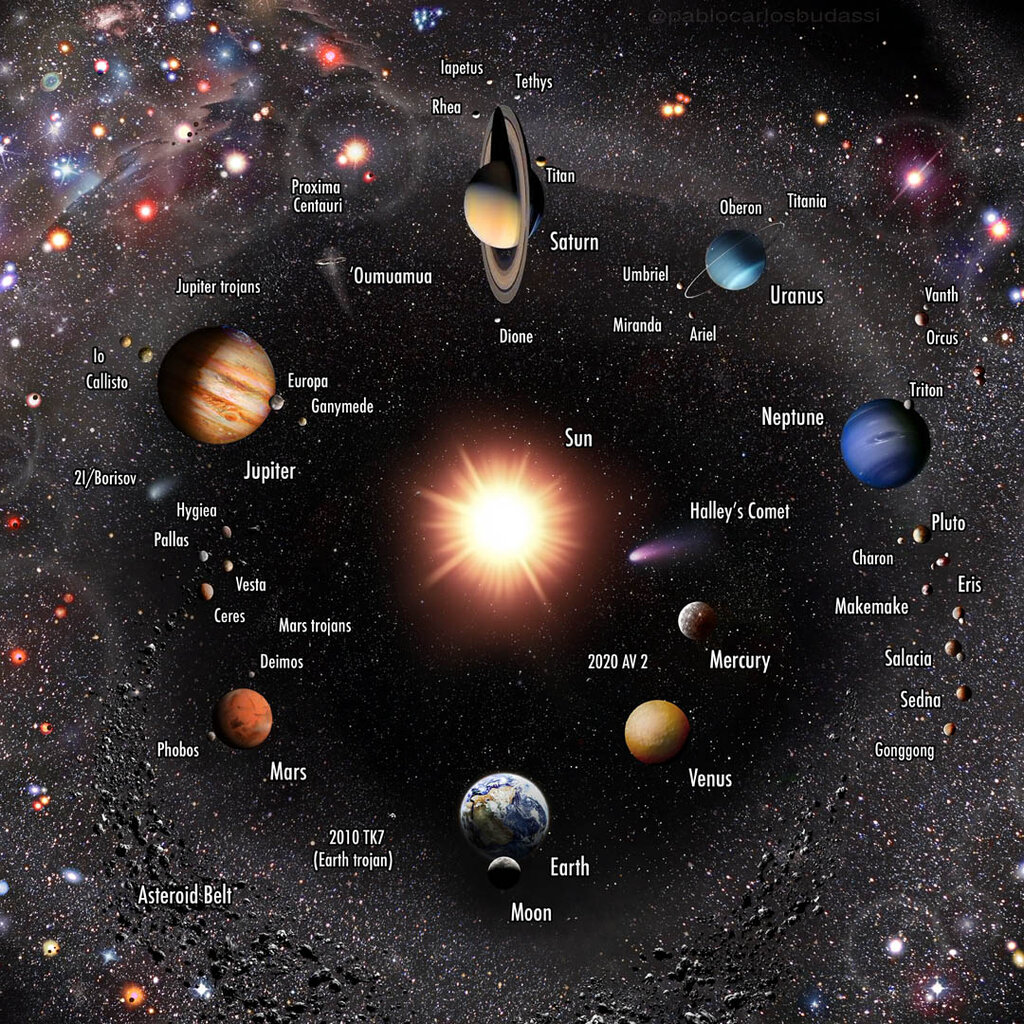
At the heart of it all is the Sun. It's not a planet, but a star—a gigantic, glowing ball of hot gas. The Sun contains more than 99% of the solar system's total mass. This immense gravity is what keeps everything from the largest planet to the smallest piece of rock locked in orbit around it. The light and heat it generates make life on Earth possible.
The Planets
Our solar system has eight planets. They travel around the Sun in elliptical paths called orbits. We can group them into two main categories based on what they're made of.
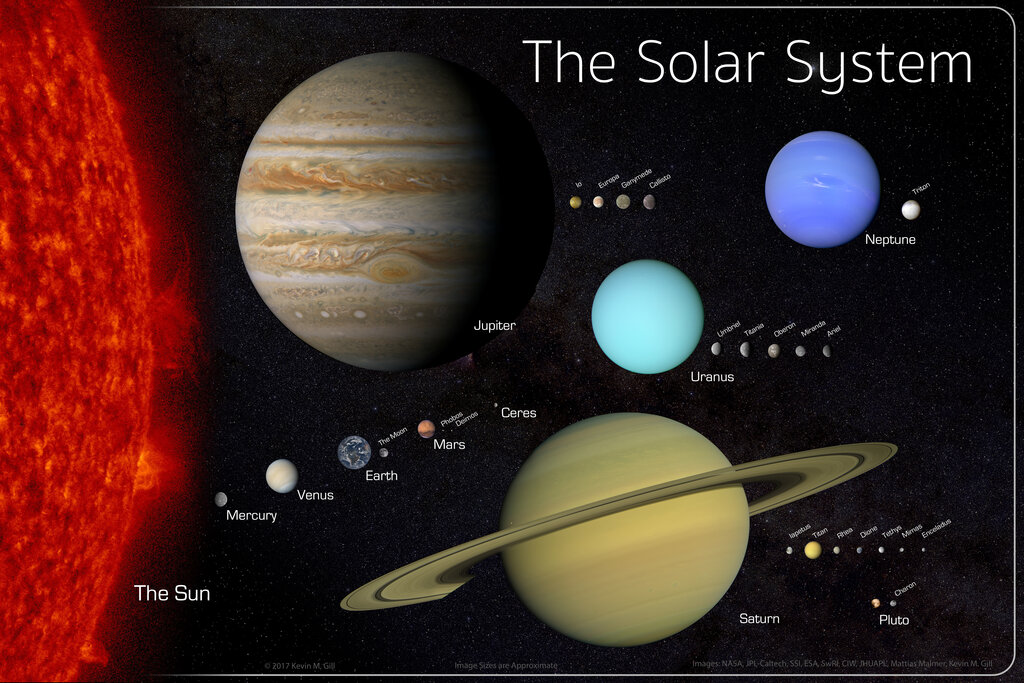
The first four planets are the inner, rocky worlds, also called terrestrial planets. They are relatively small and dense.
- Mercury is the closest to the Sun and the smallest of the eight planets.
- Venus is the hottest planet, with a thick, toxic atmosphere.
- Earth is our home, the only place we know of that harbors life.
- Mars, the “Red Planet,” is a cold, desert-like world.
Beyond Mars lies the asteroid belt, a ring of millions of rocky objects. These are leftovers from the formation of the solar system. After the asteroid belt, we find the giant outer planets.
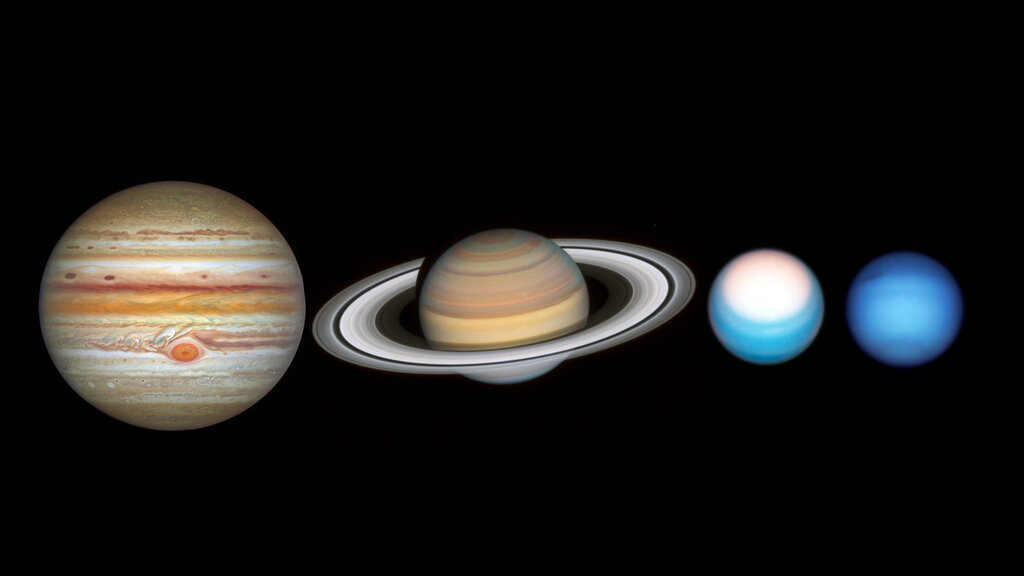
These four planets are much larger than the inner planets and are composed mostly of gas and ice.
- Jupiter is the largest planet in the solar system, a gas giant with a famous Great Red Spot, which is a massive storm.
- Saturn, another gas giant, is known for its spectacular system of rings made of ice and rock.
- Uranus is an ice giant that rotates on its side.
- Neptune, the farthest planet from the Sun, is a cold, windy ice giant.
Smaller Worlds and Icy Wanderers
The solar system is home to more than just the Sun and planets. Many other objects fill the space between and beyond the planets.
Moons are natural satellites that orbit planets. While Earth has only one, some planets like Jupiter and Saturn have dozens. They come in all shapes and sizes, from small, potato-shaped rocks to worlds larger than Mercury.
Dwarf planets are celestial bodies that orbit the Sun and are nearly round, but haven't cleared their orbital path of other debris. The most famous is Pluto, which was considered the ninth planet until 2006. Others include Ceres, located in the asteroid belt, and Eris, which is even farther out than Pluto.
Asteroids are rocky, airless remnants left over from the early formation of our solar system. Most are found in the asteroid belt, but they can be found throughout the solar system.
Comets are often called “dirty snowballs.” They are mixtures of ice, rock, and dust. When a comet's orbit brings it close to the Sun, the ice vaporizes, creating a glowing head and a long tail that can stretch for millions of miles.