Our Solar System
Sun and Gravity
Meeting Our Solar System's Star
Imagine a brilliant, glowing engine that keeps our entire world warm and bright—that is our Sun. In this chapter, we will uncover how this colossal ball of gas acts as the heart of our solar system and discover the invisible, gravity-powered tether that keeps the planets dancing safely in their orbits instead of drifting into the cold void. By the end, you will understand exactly why we stay so perfectly close to our golden star.
Inside the Sun's Roaring Engine
The Sun is often described as a big ball of fire, but it is actually much more intense. It is a massive nuclear reactor made mostly of hydrogen and helium. Inside its core, the conditions are so extreme that it functions like a cosmic pressure cooker. Imagine a where everyone is packed so tightly that they cannot help but bump into one another with incredible force.
In the Sun's heart, atoms are crushed together with such ferocity that they fuse, releasing the immense heat and light that travels across space to reach us. This process, known as , is the source of all the Sun's power. Without this constant explosion of energy, our solar system would be a dark, frozen wasteland.
The Invisible Cosmic Tether
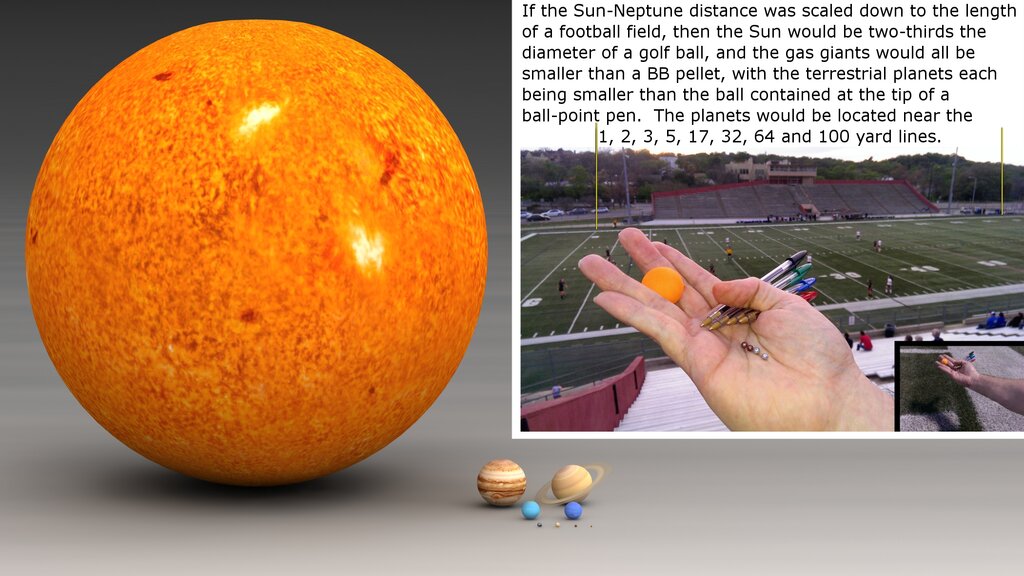
If the Sun is the engine, gravity is the steering wheel. We can think of the relationship between the Sun and the planets as a cosmic dance. But why do the planets stay in a neat circle instead of flying away? The answer lies in the Sun's enormous mass. In space, the more stuff an object has, the stronger its gravitational pull. Because the Sun contains 99.8% of all the matter in our solar system, it acts like a giant magnet for everything else.
To understand this, picture a ball tied to a string. If you spin the ball around your head, the string keeps it from flying away. That string is like gravity. It is an invisible tether that constantly pulls the planet back toward the centre. If that string were to suddenly snap, the planet would not keep curving; it would fly off in a perfectly straight line, like a ball released from a swing at the highest point of its arc.
This balance between the planet's desire to move forward and the Sun's pull is what creates a stable orbit. It is a precise equilibrium. If the Sun's gravity were any weaker, we would drift off into interstellar space. If it were any stronger, we would be pulled into the Sun's fiery depths.
This relationship is defined by the law of universal gravitation, which shows that the force is determined by the mass of the objects and the distance between them.
The Sun's incredible mass and the resulting gravitational pull create the perfect conditions for the stable, predictable orbits we see today. It is this delicate balance—this grand cosmic dance—that allows life to thrive on Earth, kept at just the right distance from our star's powerful engine.