Ottoman Hegemony Regions Explored
Ottoman Administrative Structures
The Sultan's Reach
The Ottoman Empire's success wasn't just due to its military might; its sophisticated administrative system was key to controlling vast territories for centuries. At the heart of this system was a paradox: a highly centralized government that also allowed for significant local autonomy. This balance allowed the empire to manage a diverse population spread across three continents.
At the absolute pinnacle of power was the Sultan, who held both political and religious authority. But no ruler can govern alone. The day-to-day administration was handled by the Imperial Council, known as the Divan-ı Hümayun. This was the Sultan's cabinet, where the most important decisions of the state were made.
Presiding over the Divan was the Grand Vizier, the Sultan's chief minister and most trusted advisor. He wielded immense power, often acting as the commander-in-chief of the army and the head of the entire bureaucracy. Other key members of the Divan included other viziers who advised on state matters, the Kadıaskers (chief military judges), the Defterdars (chief treasurers), and the Nişancı, who was responsible for the imperial seal.
Governing the Provinces
With the central government setting the direction, the empire needed a way to implement its policies across its vast lands. This was achieved through a structured provincial system. The empire was divided into large administrative units, initially called eyalets and later reorganized into vilayets.
Each province was governed by a Pasha or a Beylerbeyi, who acted as the Sultan's representative. These governors were responsible for maintaining order, administering justice, and, crucially, collecting taxes. The provinces were further subdivided into districts called sanjaks, each managed by a sanjak-bey. This nested structure created a clear chain of command, flowing from the district level all the way up to the Imperial Council in Constantinople.
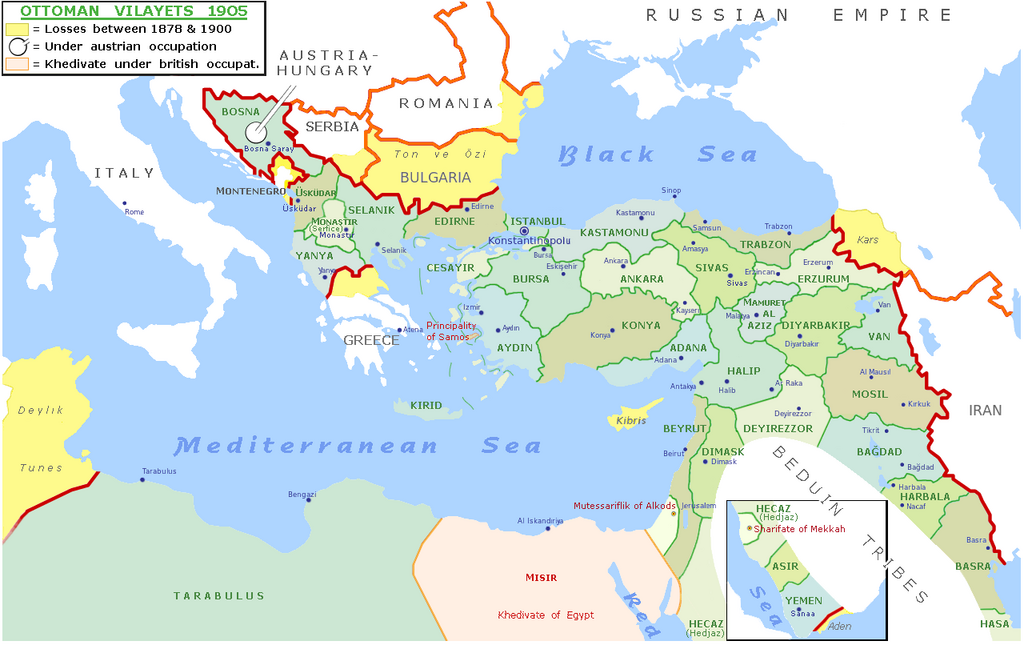
This system allowed the central government to maintain control while delegating local administration to officials on the ground. It was a flexible framework that could be adapted to the specific needs of different regions, from the Balkans to Arabia.
A System for Diversity
One of the biggest challenges for the Ottomans was governing a population with diverse religions and ethnicities. Their solution was a unique administrative innovation known as the millet system.
Millet
noun
A semi-autonomous, self-governing religious community within the Ottoman Empire. Each millet was organized around a specific faith, such as Greek Orthodox Christianity, Armenian Christianity, or Judaism.
Under this system, non-Muslim communities were granted a significant degree of autonomy. Each millet was led by its own religious leader, such as a patriarch for the Orthodox Christians or a chief rabbi for the Jewish community. This leader was not only a spiritual guide but also the community's secular head, responsible for collecting taxes and ensuring loyalty to the Sultan.
The millets were allowed to use their own religious laws to handle internal matters like marriage, divorce, and inheritance. They could also establish their own schools, hospitals, and courts. This arrangement allowed different religious groups to preserve their cultural and religious identities within the larger Ottoman framework.
The millet system was a pragmatic way to manage a multi-religious empire. By granting autonomy over personal and community affairs, the Ottomans reduced potential conflicts and integrated diverse populations into their state.
Let's check your understanding of these administrative structures.
Who was the chief minister and head of the Ottoman bureaucracy, presiding over the Imperial Council (Divan)?
The Ottoman millet system's primary function was to force the conversion of non-Muslim communities to Islam.
Before you go, review these key terms.
The Ottoman administrative system, with its blend of central authority and local autonomy through provincial divisions and the millet system, was a key factor in the empire's longevity and its ability to govern a vast and diverse population.