OT Organizational Design for a SiC Greenfield Plant
Operational Technology Fundamentals
What Is Operational Technology?
Operational Technology, or OT, is the world of computing that interacts directly with the physical world. It’s the hardware and software used to monitor and control industrial equipment and processes. Think of the systems that manage robotic arms on an assembly line, open and close valves in a chemical plant, or regulate the temperature in a massive furnace. That’s OT.
Unlike the Information Technology (IT) that runs office applications and business systems, OT is all about making physical things happen. Its primary job is to keep industrial operations running safely, reliably, and efficiently.
Operational Technology (OT)
noun
Hardware and software that detects or causes a change through the direct monitoring and/or control of physical devices, processes, and events in the enterprise.
OT vs. IT
While OT and IT both involve computers and data, they operate in different worlds with different priorities. IT is focused on information: confidentiality, integrity, and availability. It manages data for business operations, like emails, financial records, and customer databases.
OT, on the other hand, is focused on physical processes. Its top priorities are safety and availability. An OT system failure could lead to production halting, equipment damage, or even physical harm to workers. This fundamental difference in purpose shapes everything from system design to security protocols.
| Feature | Information Technology (IT) | Operational Technology (OT) |
|---|---|---|
| Primary Goal | Protect and manage data | Control and monitor physical processes |
| Top Priority | Confidentiality & Data Integrity | Safety & System Availability |
| System Uptime | Measured in minutes/hours | Measured in seconds/milliseconds |
| Environment | Office / Data Center | Factory floor, plant, field |
| Lifecycle | 3-5 years | 15-20+ years |
| Data Type | Transactional (e.g., sales data) | Real-time sensor & control data |
The Building Blocks of OT
OT systems are built from specialized components designed to withstand harsh industrial environments and operate with extreme reliability. Three key components form the core of most industrial control systems.
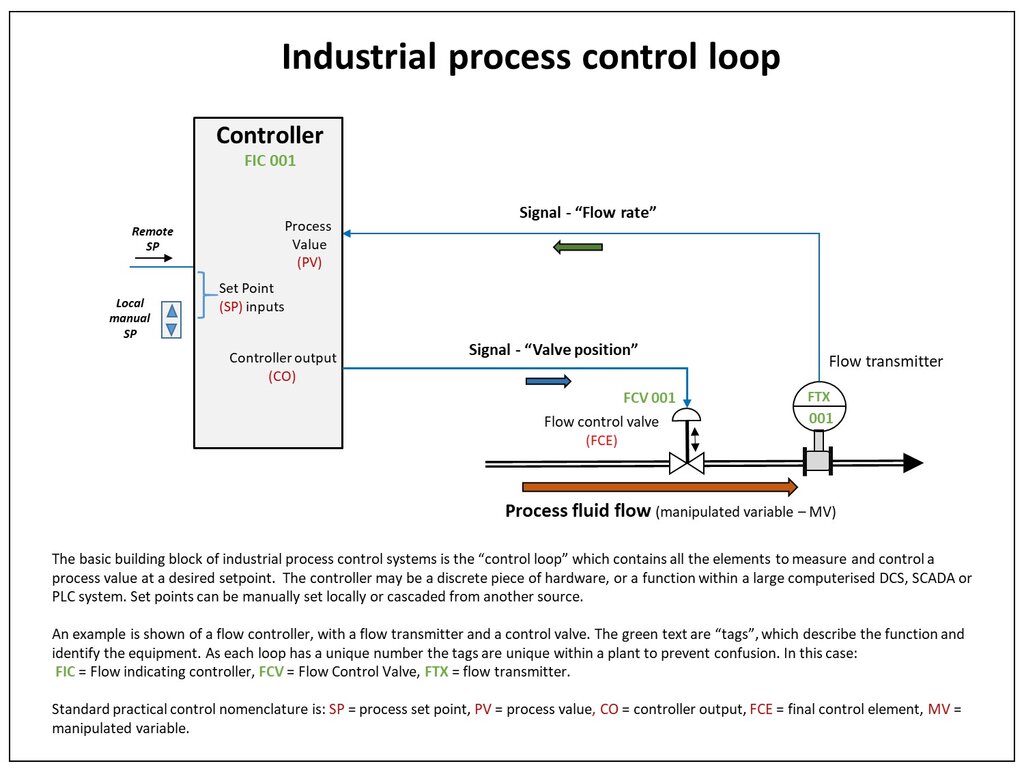
Programmable Logic Controllers (PLCs) are ruggedized computers that act as the brains of a specific machine or process. They take inputs from sensors (like temperature or pressure readings) and execute a program to control outputs (like starting a motor or opening a valve). Think of a PLC as the dedicated computer running a single, critical task, like managing a conveyor belt or a bottling machine.
PLCs are the workhorses of industrial automation, executing simple, repetitive tasks with high speed and reliability.
Supervisory Control and Data Acquisition (SCADA) systems provide a high-level view and control over a larger area, like an entire factory floor or a pipeline network. A SCADA system gathers data from multiple PLCs and other devices, presenting it to human operators through a graphical interface. It allows an operator in a central control room to monitor the entire operation and issue commands, such as shutting down a system in an emergency.
Distributed Control Systems (DCS) are used for controlling large, continuous manufacturing processes, like those in a refinery or power plant. A DCS is a single, integrated system that distributes controllers throughout the facility. This allows for complex, process-wide control strategies and high reliability, as the failure of one controller doesn't necessarily shut down the entire plant.
Why OT Is Crucial for Chipmaking
Nowhere is the role of OT more critical than in semiconductor manufacturing. A modern silicon carbide (SiC) plant, or "fab," is one of the most complex and sensitive manufacturing environments on Earth. The process of creating computer chips involves hundreds of precise steps, many taking place in ultra-clean rooms where even a single speck of dust can ruin a batch of wafers worth millions of dollars.
In this environment, OT systems are responsible for:
- Extreme Precision: Controlling robotic arms that handle delicate silicon wafers, regulating the flow of specialized gases down to the milliliter, and maintaining temperatures with pinpoint accuracy.
- Unwavering Uptime: A fab runs 24/7/365. Any unscheduled downtime in a critical tool can disrupt the entire production flow, leading to massive financial losses. OT systems are designed for maximum availability.
- Data Integrity: Every step of the manufacturing process generates vast amounts of data. OT systems ensure this data is captured accurately and in real-time to monitor quality, track wafers, and optimize the production process.
In a semiconductor fab, OT isn't just a support function; it is the central nervous system that enables the entire manufacturing process.
For a new plant, establishing a solid OT foundation is essential. It ensures that from the moment the factory goes online, its physical processes are managed with the precision, safety, and reliability required to produce cutting-edge technology.
Ready to check your understanding?
What is the primary focus of Operational Technology (OT)?
Which of the following best describes the key priorities of OT compared to IT?
Understanding these OT fundamentals provides the necessary context for designing the systems and teams that will run a modern industrial facility.