Orwellian Echoes in Modern America
Digital Surveillance Ecosystems
Beyond the Telescreen
George Orwell's Telescreen was a single, menacing eye of the state. Today's surveillance is a far more complex ecosystem. It's not one entity watching, but a vast, interconnected network of corporate and government interests. This modern framework operates on a new economic logic: surveillance capitalism a term coined by scholar Shoshana Zuboff. The core idea is that our personal experiences are now the raw material for a new kind of market.
Surveillance Capitalism
noun
An economic system centered around the commodification of personal data with the core purpose of predicting and modifying human behaviour. Tech companies provide 'free' services in exchange for the right to monitor user behaviour, process that data, and sell the resulting predictions to advertisers and other third parties.

Every search, click, and location check generates behavioural data. Companies like Google and Meta analyze these digital footprints to create detailed profiles, which are then used to sell highly targeted advertising. It's a transaction where convenience is exchanged for privacy. This massive privatization of surveillance creates an environment Orwell never envisioned, where the watchers are not just government agents, but the architects of our digital lives.
We are the sources of surveillance capitalism’s crucial surplus.
The Legal Keys to the Kingdom
This corporate data collection doesn't exist in a vacuum. Governments have found ways to tap into this immense reservoir of information, often using legal frameworks created in the name of national security. A key piece of this puzzle is of the Foreign Intelligence Surveillance Act (FISA). Enacted in 2008, it authorizes the government to collect the communications of non-Americans located outside the United States without a warrant.
The scope of this collection became public knowledge through the 2013 disclosures by Edward Snowden. He revealed the existence of the program, a top-secret initiative that allowed the National Security Agency (NSA) direct access to the servers of major U.S. tech companies. This wasn't about targeting specific individuals with a warrant; it was about bulk data collection on a global scale.
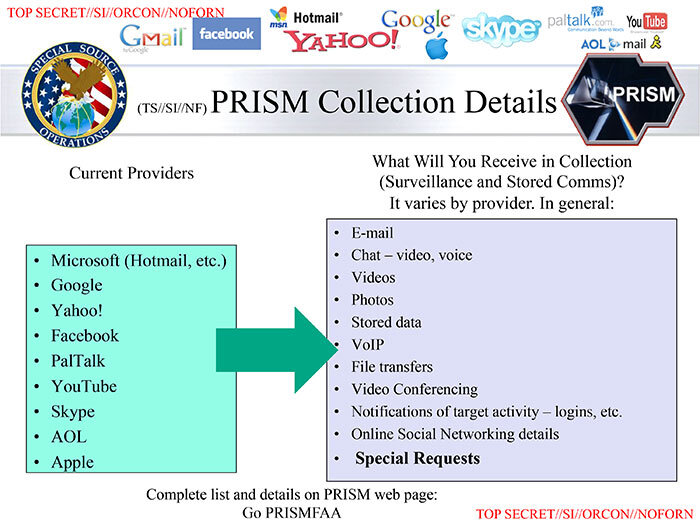
Unlike the Party's direct control over the Telescreen, this system relies on a partnership. Corporations gather the data for profit, and the state gains access for intelligence, creating a decentralized but incredibly powerful surveillance apparatus.
The Marketplace of You
Beyond government programs, a sprawling, lesser-known industry thrives on buying and selling personal information: the data brokerage industry. These companies are the middlemen of the surveillance economy. They aggregate information from thousands of sources, including public records, social media, and tracking data embedded in mobile apps. They then package this data into detailed consumer profiles.
Your location history, purchase records, and online browsing habits are bundled and sold to the highest bidder. This creates a shadow profile of you that is used to make decisions about the ads you see, the loans you're offered, and even the news you read. It's a commercialized form of social sorting, driven by algorithms and profit motives.
The result is a system where our data is collected for one purpose (e.g., using a navigation app) and repurposed for countless others without our meaningful consent.
The City That Sees
The digital surveillance ecosystem is moving from our screens into our physical world. Cities across the United States are increasingly deploying biometric monitoring technologies. Facial recognition cameras on street corners, license plate readers on police cars, and audio sensors that detect gunshots are becoming common fixtures in urban landscapes.
These systems promise increased safety and efficiency. They can help locate missing persons, identify suspects, and manage traffic flow. However, they also create a permanent record of public life, tracking the movements and associations of ordinary citizens. The integration of this data with information from our digital lives creates a surveillance capability that is persistent, pervasive, and predictive.
This modern ecosystem of surveillance—a fusion of corporate data collection, permissive legal frameworks, a thriving data market, and physical monitoring—is far more subtle and sprawling than a simple Telescreen. It watches not through a single, obvious device, but through the countless digital and physical systems we interact with every day.
Now, let's test your understanding of these interconnected systems.
What is the core concept of "surveillance capitalism" as coined by Shoshana Zuboff?
What did Edward Snowden's 2013 disclosures reveal about the PRISM program?
Understanding this network of state and corporate actors is the first step in navigating the complex realities of privacy and power in the digital age.