Orthopedics Explained
Musculoskeletal System
The Body's Framework
Your body is a marvel of engineering, and the musculoskeletal system is its foundational framework. This intricate network of bones, muscles, and connective tissues gives you shape, allows you to move, and protects your vital organs. It's the reason you can stand up, walk, run, and even just sit in a chair. Let's break down its core components to understand how they all work together.
The Living Scaffolding
Bones are far more than the dry, static skeletons you see in a classroom. They are dynamic, living organs that are constantly breaking down and rebuilding themselves in a process called remodeling. This allows them to adapt to stress and repair injuries.
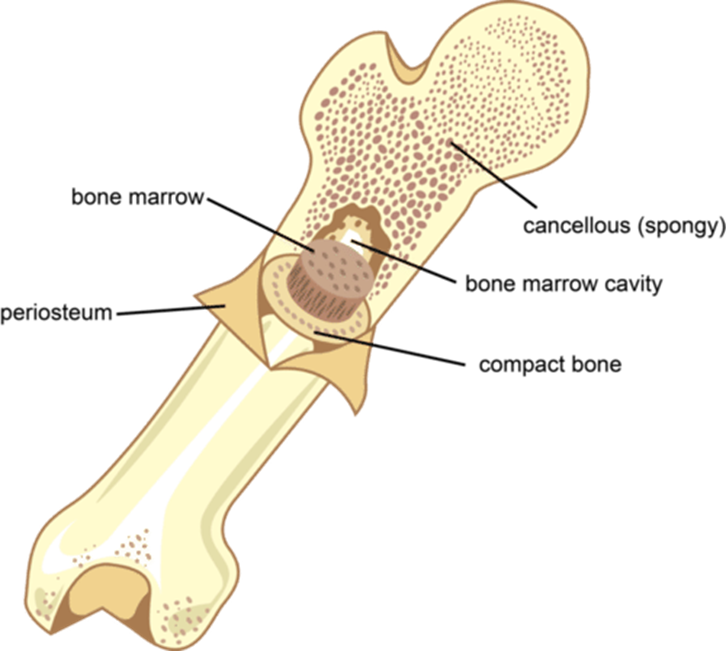
The hard outer layer of a bone is called compact bone. It's dense and strong, providing support and protection. Inside, you'll find spongy bone, which has a honeycomb-like structure. This design makes bones surprisingly lightweight without sacrificing strength. The spaces within spongy bone are often filled with bone marrow, a critical tissue that produces your body's blood cells.
Beyond just providing a frame, bones serve several crucial functions. They act as levers that muscles pull on to create movement, they shield delicate organs like the brain and heart, and they serve as a storage bank for essential minerals like calcium.
Engines of Motion
Muscles are the engines that power your body's movement. While there are three types of muscle tissue (skeletal, smooth, and cardiac), it's the skeletal muscles that are the stars of the musculoskeletal system. These are the muscles you consciously control to perform actions like lifting a box or kicking a ball.
Skeletal muscles are highly organized structures. Each muscle is made up of bundles of muscle fibers, which are in turn composed of even smaller units that contract and relax.
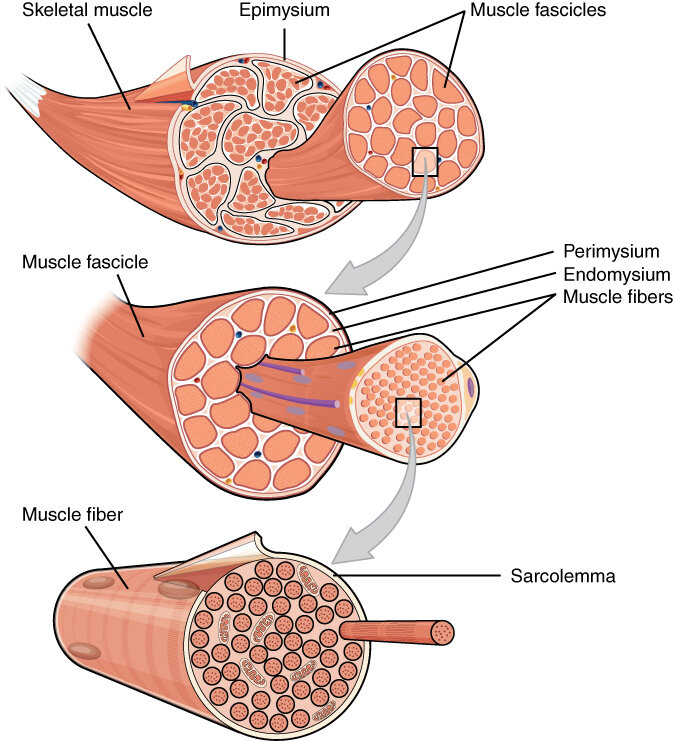
Muscles can only pull; they can't push. To create coordinated movement, they work in opposing pairs. For example, to bend your elbow, your biceps muscle contracts (pulls), while your triceps muscle on the other side relaxes. To straighten your arm, the roles reverse: the triceps contracts, and the biceps relaxes. This elegant push-and-pull system allows for a wide range of precise movements.
The Connectors
The system wouldn't work without the specialized tissues that connect everything together. These are the joints, ligaments, and tendons.
Joint
noun
The location where two or more bones make contact. Joints allow for movement and provide mechanical support.
Joints come in various forms, each designed for a specific type of motion. Ball-and-socket joints, like in your shoulder and hip, allow for a wide range of rotation. Hinge joints, like your elbow and knee, primarily permit movement in one direction, like opening and closing a door.
To hold these joints together, your body uses ligaments.
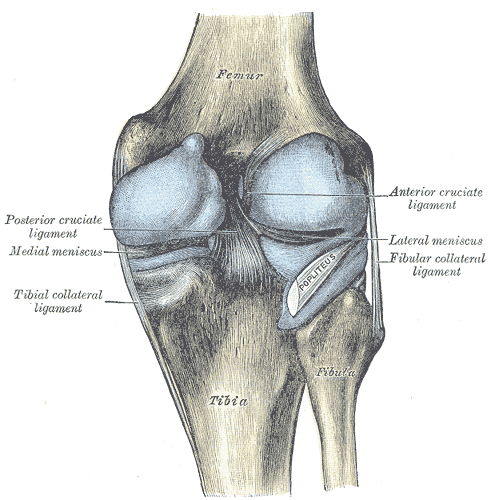
Ligaments are tough, fibrous bands that connect bone to bone, providing stability and preventing excessive or abnormal joint movement.
While ligaments connect bones, tendons have a different job. Tendons are strong, flexible cords that attach muscle to bone. When a muscle contracts, it's the tendon that pulls on the bone, causing the joint to move. You can easily feel some of your tendons, like the large Achilles tendon at the back of your heel that connects your calf muscle to your heel bone.
Biomechanics in Action
Biomechanics is the study of how mechanical principles apply to living organisms. In the musculoskeletal system, this means understanding how forces generated by muscles move the bony levers of our skeleton.
Every movement you make, from the simple act of standing up to a complex athletic feat, is a demonstration of biomechanics. Your bones act as rigid levers, and your joints serve as the pivots, or fulcrums. Muscles provide the force to move the levers.
The efficiency of this system depends on factors like muscle strength, bone length, and the angle at which the muscle pulls. This interplay of forces and structures is what allows us to perform an incredible variety of tasks with both power and precision. Understanding these fundamental principles is the first step toward appreciating the complexity and elegance of human movement.
Let's review the key components we've covered.
Now, test your knowledge of how this system works.
What is the primary function of the bone marrow found within spongy bone?
To straighten your arm at the elbow, your triceps muscle _______ and your biceps muscle _______.
By understanding these individual parts and how they connect, we can see how the musculoskeletal system functions as a cohesive, dynamic unit to support and move the body.