Origins of the Orthodox Presbyterian Church
Presbyterianism Origins
The Reformation's New Order
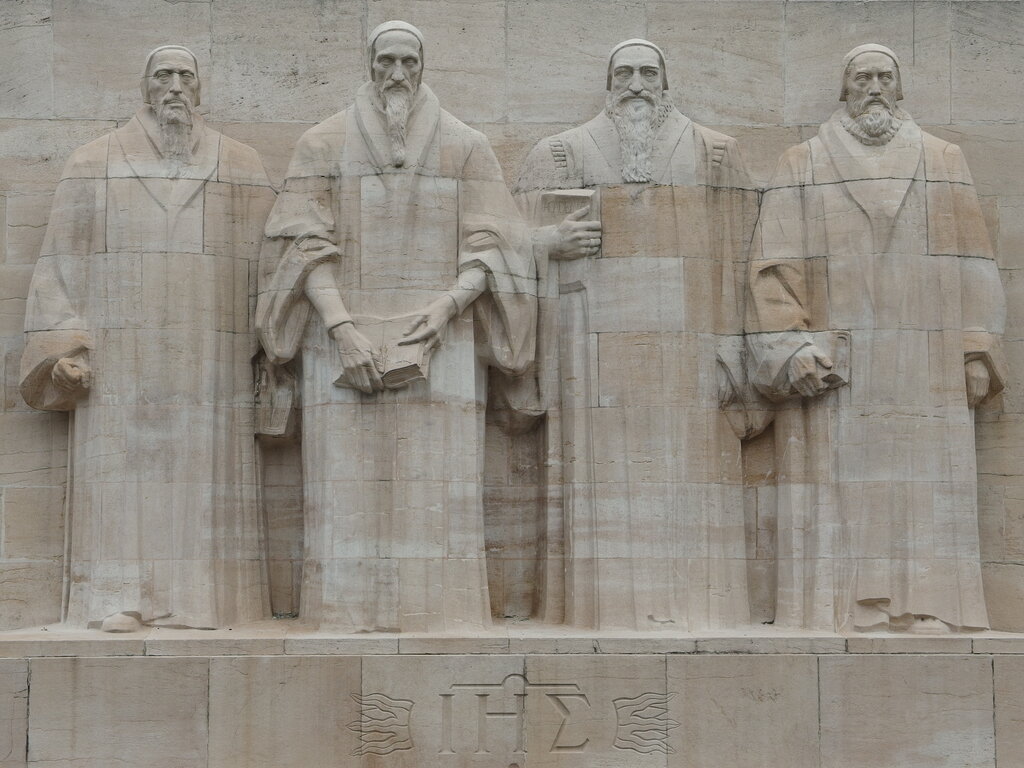
To understand Presbyterianism, we have to go back to the 16th-century Protestant Reformation. While Martin Luther is famous for sparking the movement in Germany, another key figure emerged in Geneva, Switzerland: John Calvin. A French theologian and pastor, Calvin sought to reform not just the church's beliefs but also its structure and daily life.
Calvin's ideas profoundly shaped a branch of Protestantism known as the Reformed tradition. His most influential work, the Institutes of the Christian Religion, provided a systematic theology for the new movement. It emphasized God's sovereignty, the authority of Scripture, and a view of salvation that centered on grace. Calvin's Geneva became a model for a community where civil and religious life were closely intertwined, guided by his theological principles.
A Church Governed by Elders
One of Calvin's most lasting contributions was his vision for church governance, or polity. He looked to the New Testament and proposed a system that broke from the hierarchical structure of the Roman Catholic Church, which was led by bishops and popes. Instead, Calvin advocated for a representative form of government.
This system became known as Presbyterianism, named after the Greek word for elder, presbuteros (πρεσβύτερος). In this model, the church is governed by elders elected by the congregation. There are two types of elders: teaching elders (pastors), who are responsible for preaching and administering sacraments, and ruling elders, who are non-clergy members that help oversee the spiritual life of the church.
Unlike congregational systems where the entire congregation makes decisions, or episcopal systems where bishops hold authority, Presbyterianism relies on a series of representative courts.
These courts form a connected structure. The local church is governed by a body of elders called the Session. Multiple churches in a region are overseen by the Presbytery. Presbyteries are grouped into a larger regional body, the Synod, and at the top is the General Assembly, which addresses matters concerning the entire denomination.
From Scotland to the New World
While Calvin's ideas took root in Switzerland, France, and the Netherlands, they found their most fertile ground in Scotland. A fiery preacher named John Knox, who had studied with Calvin in Geneva, returned to his native Scotland in 1559. He became the driving force behind the Scottish Reformation.
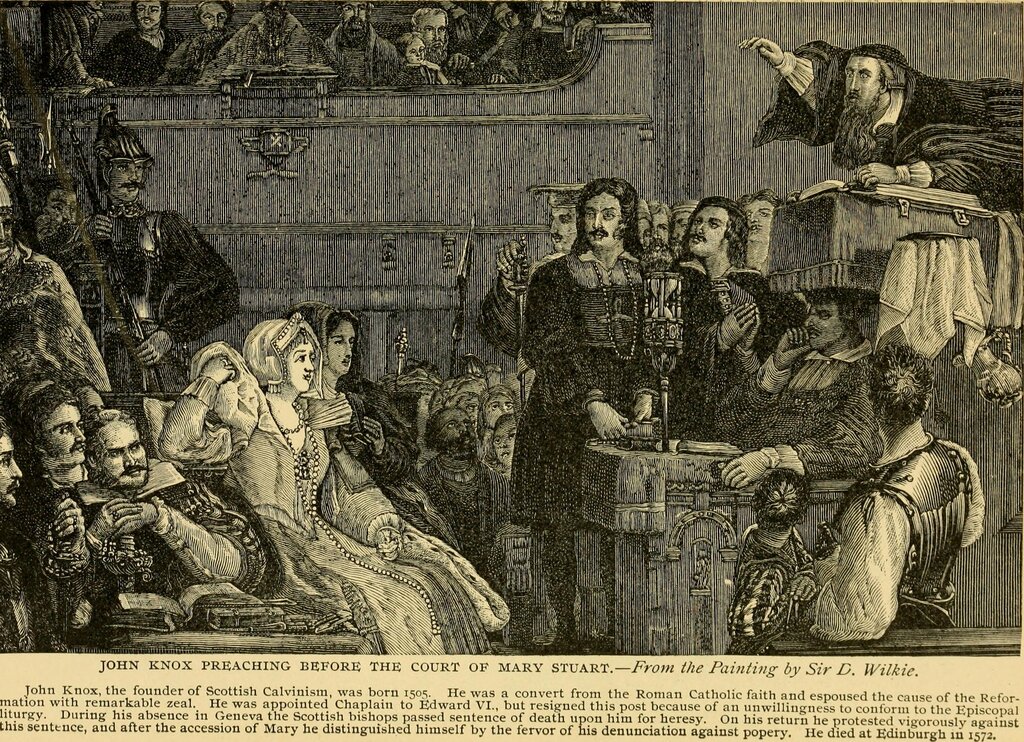
Knox's leadership led to the establishment of the Church of Scotland, also known as the Kirk, which adopted a Presbyterian polity and a Reformed confession of faith. This made Scotland the first nation to officially embrace Presbyterianism. The new church structure replaced the old system of bishops with a network of presbyteries.
Over the next centuries, Presbyterianism spread beyond Scotland, often through migration. In the 17th and 18th centuries, large numbers of Scots-Irish (Scottish Protestants who had settled in northern Ireland) immigrated to the American colonies. They brought their faith and form of church government with them, establishing the first presbytery in America in 1706. This laid the foundation for the growth of Presbyterianism in the United States, making it one of the most influential denominations in early American history.
Let's review the key ideas from this section.
Which theologian is most closely associated with developing the core principles of the Reformed tradition that led to Presbyterianism?
The name 'Presbyterian' is derived from the Greek word presbuteros, which means...
This foundation in Reformed theology and elder-led governance is the bedrock upon which all Presbyterian denominations, including later ones like the Orthodox Presbyterian Church, were built.