Origins of the Lunar New Year and the Zodiac
Nian and Festival Origins
The Beast and the Beginning
Long ago, a fearsome beast called the Nian terrorized ancient China. It had the body of a bull and the head of a lion, and it lived deep in the sea. Once a year, on the darkest night, it would crawl ashore to hunt people and livestock.
Villagers lived in fear. Every year, before the Nian arrived, they would flee to the mountains to hide. One year, an old man with white hair came to a village. He refused to hide, and instead, he prepared a defense. When the Nian appeared, the old man, dressed in red robes, set off bamboo firecrackers. The loud cracks and bright flashes sent the monster shrieking back to the sea.
The villagers returned and were amazed to find their homes safe. They learned the beast’s three weaknesses: it was terrified of the color red, loud noises, and bright lights. These discoveries became the foundation for Lunar New Year traditions.
According to Chinese legend, firecrackers (along with the color red and fire) were first used to help protect people from the attack of the monster Nian, who was believed to destroy houses and villages.
From Fear to Celebration
The annual defense against the Nian evolved into a joyous celebration. What was once a night of terror became a time for family, feasting, and community.

The color red, which scared the beast, is now seen everywhere. People wear red clothes and decorate their homes with red paper. They hang — poetic verses expressing hopes for good fortune—on their doors. The loud noises that drove the Nian away are recreated with firecrackers and drums. And the bright lights are represented by lanterns, which illuminate the streets and guide good spirits home.
This whole tradition is captured in a single phrase: (过年). This is the most common way to say "celebrate the New Year" in Chinese. But it has a deeper, more literal meaning.
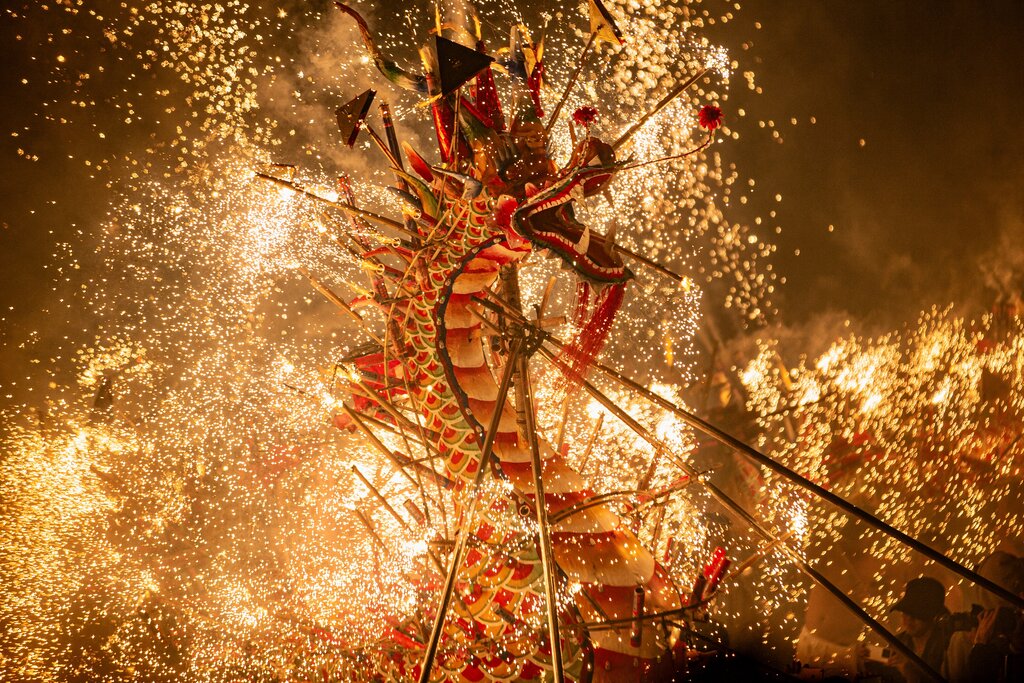
The story of Nian explains why the Lunar New Year is more than just a date on the calendar. It's a celebration of community, resilience, and the triumph of light over darkness. The traditions are not just for decoration; they are rituals born from a story of survival, transforming a time of fear into the year's biggest celebration.
According to the legend, what is the Nian?
Which of the following is NOT a weakness of the Nian beast?