Orienteering Navigation Skills
Introduction to Orienteering
What is Orienteering?
Orienteering is an adventure sport that combines running with navigation. The challenge is to navigate between a series of points on a map, choosing your own route to find them all. It's a race against the clock, but the fastest runner doesn't always win. The best navigator often does.
Think of it as a treasure hunt in the woods. You get a specially prepared, detailed map showing a course with marked control points. Your job is to visit them in order and get to the finish line in the shortest possible time. The sport got its start in Scandinavia in the late 19th century as a military training exercise.
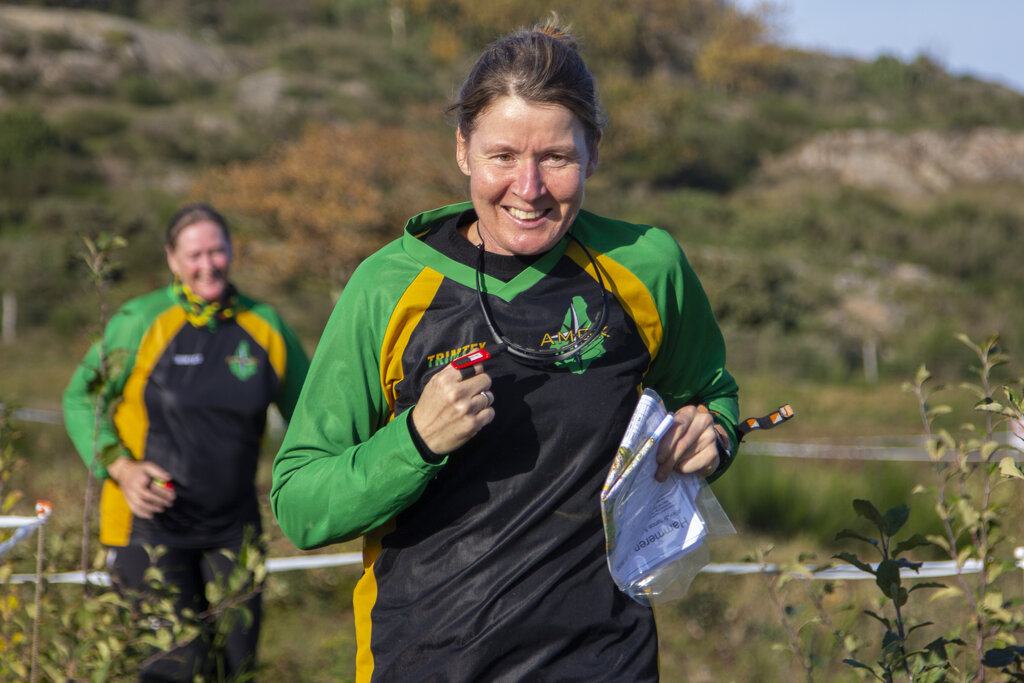
It has since grown into a competitive sport for all ages and fitness levels, with events held everywhere from city parks to remote wilderness areas.
The Course and the Goal
An orienteering course is marked on the map as a series of circles connected by lines. The start is a triangle, control points are circles, and the finish is a double circle. In the most common type of event, called a line course, you must visit the controls in a specific numerical order.
At each control point location on the ground, you'll find a bright orange and white flag and a punching device. You use this to prove you were there, either by stamping a physical card or by using an electronic timing chip. The choice of route between controls is entirely up to you. This is where the real skill lies, in picking the fastest and safest path based on the terrain shown on the map.
Control Point
noun
A marked point on an orienteering course that a participant must visit. It is represented by a circle on the map and a physical flag and punch at the location.
Gearing Up
You don't need much to get started in orienteering. The two most essential items are provided by the event organizers: the map and a compass. You will, however, need to bring a few things yourself.
Sturdy footwear, like trail running shoes, is important for handling varied terrain. Comfortable clothing that you can move in and that protects you from branches or scratches is also a good idea. Many orienteers wear full-leg covering for protection, even in warm weather.
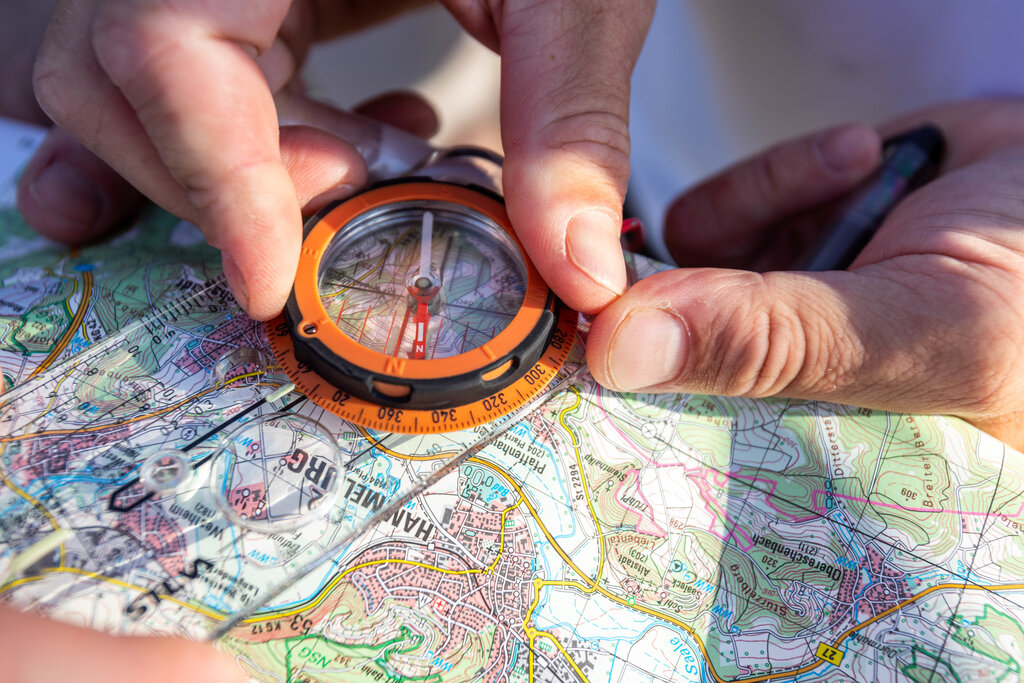
Beyond that, you might want a whistle for safety and a watch to keep track of your time. As you advance, you might invest in specialized gear, but for beginners, the focus is on learning the skills, not on having fancy equipment.
The core of orienteering isn't about what you carry, but about how you think. It's you, a map, a compass, and the landscape.
Ready to review what you've learned?
Now, let's see how well you've grasped these initial concepts.
What is the key skill that most often determines the winner in an orienteering race?
What symbol is used to mark the finish line on an orienteering map?
This foundation sets the stage for everything that follows. The next step is learning how to read the map itself, which is your most important tool for navigating the course.