Organizational Climate vs Culture
Introduction to Organizational Behavior
What Is Organizational Behavior?
Organizational Behavior, often shortened to OB, is the study of how people act within an organization. Think of it like a sports team. A team might have superstar players, but if they don't work well together, they probably won't win the championship. OB looks at the playbook for people at work, examining individuals, groups, and the overall organizational structure to understand what makes a workplace tick.
Why does this matter? Because understanding why people do what they do is the first step to building a better, more effective workplace. It helps managers lead more effectively, teams collaborate more smoothly, and companies achieve their goals. It's not just about managing people, but about creating an environment where they can do their best work.
OB is the field of study that investigates the impact that individuals, groups, and structure have on behavior within organizations, for the purpose of applying such knowledge toward improving an organization's effectiveness.
Why People Do What They Do
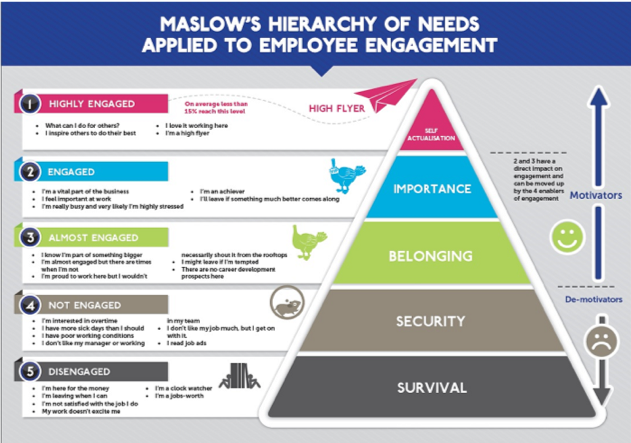
At the heart of OB is a simple question: what motivates people? Understanding motivation is key to understanding performance. Over the years, researchers have developed several theories to explain this. One of the most famous is Maslow's Hierarchy of Needs.
Maslow suggested that human needs are arranged like a pyramid. We must satisfy the needs at the bottom before we can focus on the ones at the top. In a work context, this means an employee first needs a salary to cover basic survival. Then they need job security. After that comes a sense of belonging with their team, followed by the need for respect and recognition. At the very top is self-actualization, or the drive to become the best one can be.
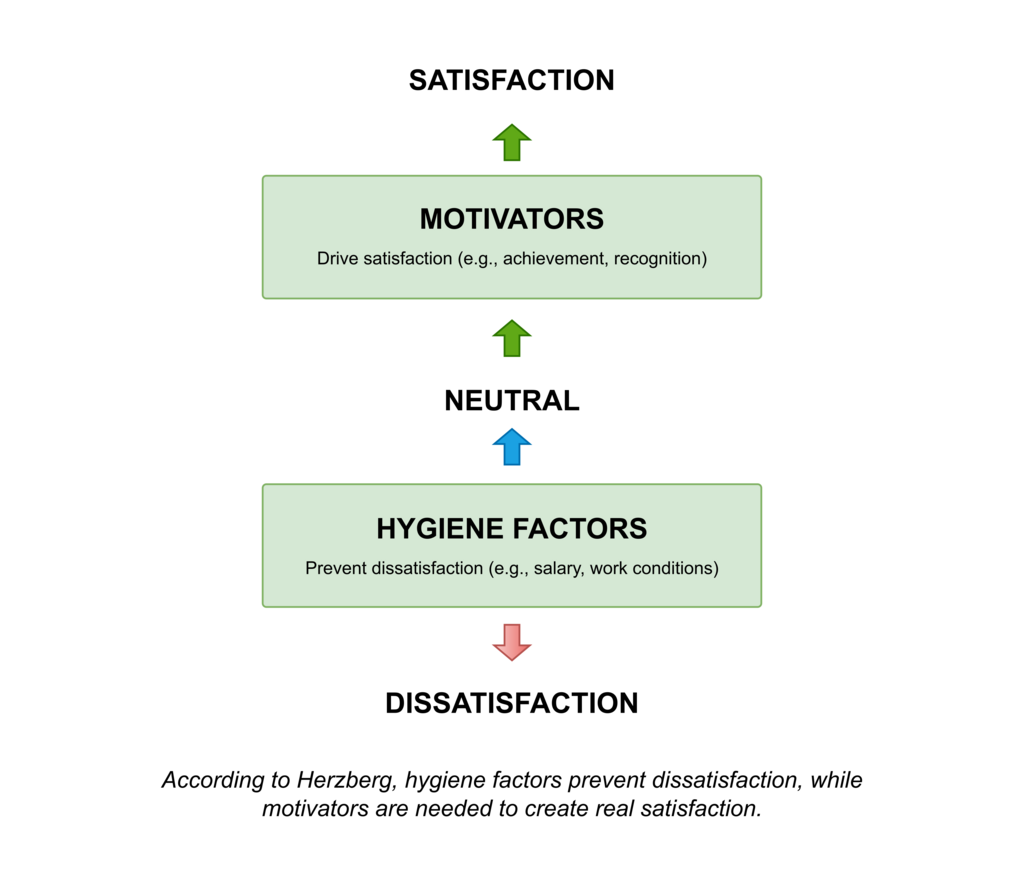
Another influential idea is Frederick Herzberg's Two-Factor Theory. Herzberg argued that job satisfaction and dissatisfaction are not opposites. Instead, they are driven by different factors.
- Hygiene Factors: These are things that, if absent, cause dissatisfaction. They include salary, working conditions, and company policies. Getting these right doesn't make employees satisfied; it just prevents them from being dissatisfied. Think of it like plumbing in a house. You don't feel happy every day that the toilets work, but you'd be very unhappy if they didn't.
- Motivators: These are the factors that actually create satisfaction and drive people to perform better. They include things like challenging work, recognition, responsibility, and opportunities for growth.
Groups and Teams
Few people work in total isolation. How we behave in groups is another core part of OB. Group dynamics explore how teams form, communicate, and collaborate. When you put a group of individuals together, they develop norms, which are unwritten rules about how to behave. They also take on different roles, like the leader, the creative thinker, or the detail-oriented planner.
A team's effectiveness depends on things like its size, the clarity of its goals, and the level of trust among its members. A small, focused team with a clear mission and high trust will almost always outperform a large, disjointed group with vague goals.
Group dynamics theories serve as foundational frameworks for understanding how individuals interact within groups, influencing behaviors, decision-making processes, and overall group cohesion.
The Role of Leadership
Finally, leadership ties everything together. A leader's style has a profound impact on employee motivation and group dynamics. There are many different styles of leadership, and the most effective one often depends on the situation.
| Leadership Style | Description | Best For... |
|---|---|---|
| Authoritative | Tells employees what to do and how to do it. | Crisis situations that require quick decisions. |
| Democratic | Involves employees in decision-making. | Fostering creativity and getting buy-in from the team. |
| Laissez-Faire | Gives employees a lot of freedom. | Highly skilled, motivated teams that don't need supervision. |
| Transformational | Inspires and motivates employees to innovate and create change. | Driving growth and transforming a business. |
The best leaders are often flexible, adapting their style to the needs of their team and the organization. They understand the principles of motivation, foster healthy group dynamics, and ultimately guide the organization toward its goals.