Orchestra Seating Explained
Instrument Families
The Four Families
A symphony orchestra is like a big, extended family. It brings together dozens of musicians and their instruments, all working together to create a unified sound. To keep things organized, instruments are grouped into four main families based on how they produce sound: strings, woodwinds, brass, and percussion.
Strings
The string family is the largest group in the orchestra. These instruments create sound when their strings vibrate. A musician can make this happen by drawing a bow across the strings or by plucking them with a finger, a technique called pizzicato. The pitch of the note is changed by pressing a finger down on a string, which shortens its vibrating length.
Because there are so many of them, the strings form the foundation of the orchestral sound. They often play the main melody, provide harmonies, and create lush, sweeping textures.
The main members of the string family, from highest pitch to lowest, are:
- Violin: The smallest and highest-pitched member. Usually split into two sections, first and second violins, they often carry the melody.
- Viola: Slightly larger than the violin with a warmer, deeper tone. It often plays inner harmonies.
- Cello: Much larger than the viola. The musician plays it while seated. It has a rich, sonorous tone and can play both melodies and bass lines.
- Double Bass: The largest member of the string family. It plays the lowest notes, providing the harmonic foundation for the orchestra.
Woodwinds
Woodwind instruments produce sound when a player blows air through them. Some, like the flute, create sound by blowing air across an edge, much like blowing over the top of a bottle. Others use a thin piece of cane called a reed, which vibrates when air passes over it. Clarinets use a single reed, while oboes and bassoons use two reeds pressed together (a double reed).
Musicians change the pitch by pressing keys that open and close holes along the instrument's body. Woodwinds provide a wide range of tonal colors to the orchestra, from the bright, clear sound of the flute to the reedy, melancholic tone of the oboe. They often play solos or double the melodies played by the strings.
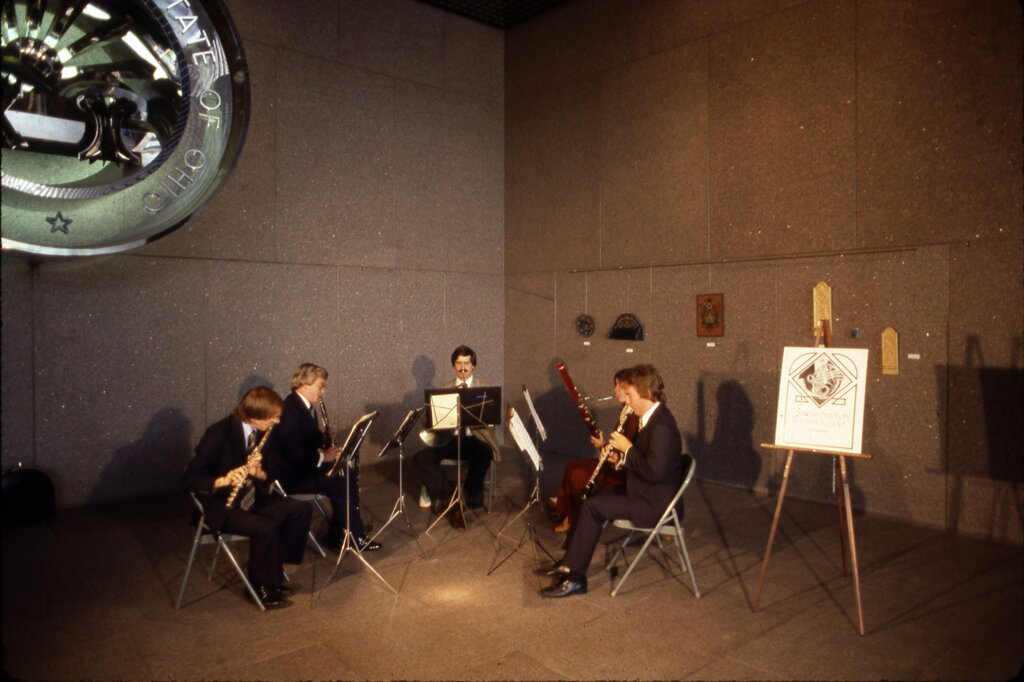
The oboe is famous for a special job. Before a concert, the principal oboist plays a single note, an "A," to which all the other instruments in the orchestra tune.
Brass
The brass family produces sound in a unique way: the player buzzes their lips into a cup-shaped mouthpiece. This vibration is then amplified as it travels through the instrument's long, coiled metal tubing, emerging from a flared end called the bell.
To change pitches, players adjust the tension of their lips and press valves (or move a slide, in the case of the trombone) to change the length of the tubing. Brass instruments are known for their powerful, majestic sound and are often used for fanfares and heroic musical statements.
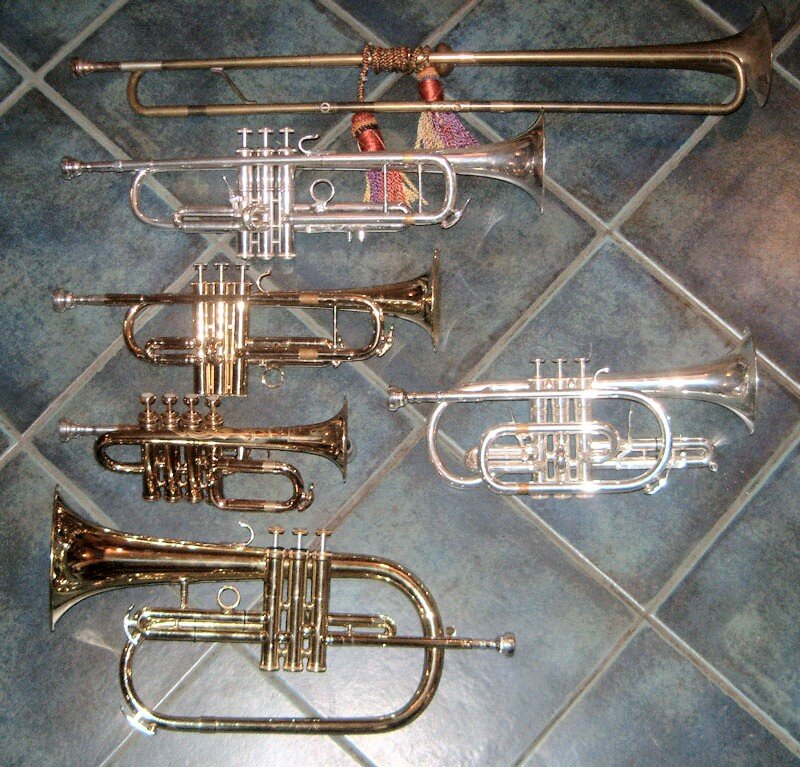
The core of the brass section includes:
- Trumpet: The highest-pitched brass instrument, known for its bright, piercing sound.
- French Horn: Known for its mellow, noble tone, it has a very wide range and can blend well with both woodwinds and other brass.
- Trombone: Unique for its slide, which allows the player to change pitch smoothly. It has a rich, powerful tone.
- Tuba: The largest and lowest-pitched brass instrument, providing the bass foundation for the section.
Percussion
The percussion family includes any instrument that makes a sound when it is hit, shaken, or scraped. It's the most diverse family, featuring a huge variety of instruments.
Percussion instruments fall into two main categories: pitched and unpitched. Pitched percussion, like the timpani, xylophone, and piano, can play specific notes and melodies. Unpitched percussion, such as the snare drum, bass drum, and cymbals, produce sounds with no definite pitch. The percussion section is the rhythmic backbone of the orchestra, adding energy, drama, and color to the music.
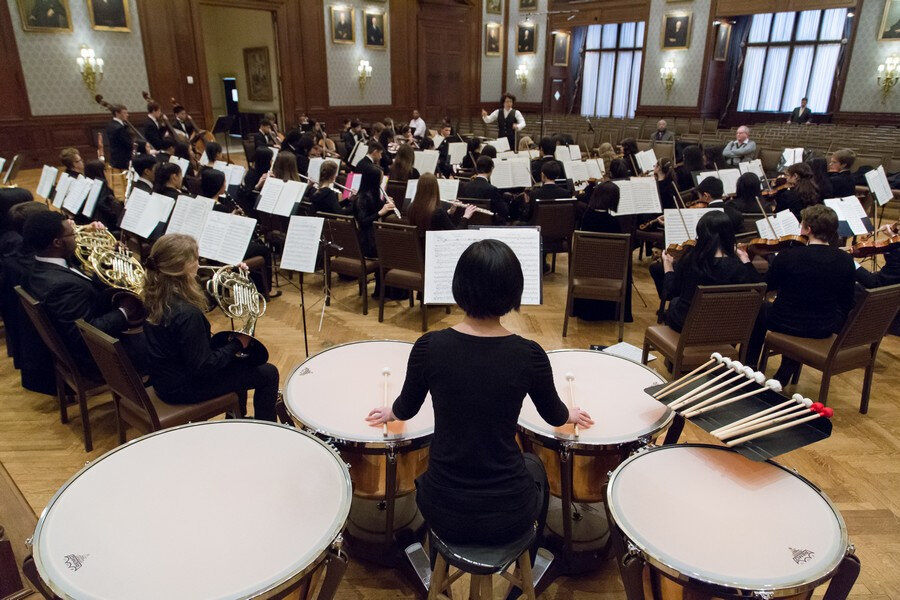
Each family brings its unique voice and character, but it’s how they work together that creates the rich, complex sound of a symphony orchestra.