Oracle NetSuite Fundamentals
Introduction to ERP Systems
What Is an ERP System?
Think of a large business. It has a sales team closing deals, an accounting department managing finances, a warehouse tracking inventory, and a human resources team handling payroll. Traditionally, each department might use its own software. The sales team uses a CRM, accounting uses its own ledger software, and the warehouse has a separate inventory system.
The problem? These systems don't talk to each other. Information gets trapped in silos. When the CEO wants a complete picture of the company's health, someone has to manually pull reports from each system and stitch them together. It's slow, inefficient, and prone to errors.
Enter Enterprise Resource Planning, or ERP. An ERP system acts like a central nervous system for a business. It integrates all these separate functions into a single, unified platform that runs on a shared database.
Enterprise Resource Planning (ERP) systems have become the backbone of modern municipal operations, integrating finance, human resources, procurement, and other critical functions into a unified platform.
This means that when a salesperson makes a sale, the information automatically flows to the finance department to create an invoice and to the warehouse to update inventory levels. Everyone is working with the same real-time information, creating what's known as a "single source of truth."
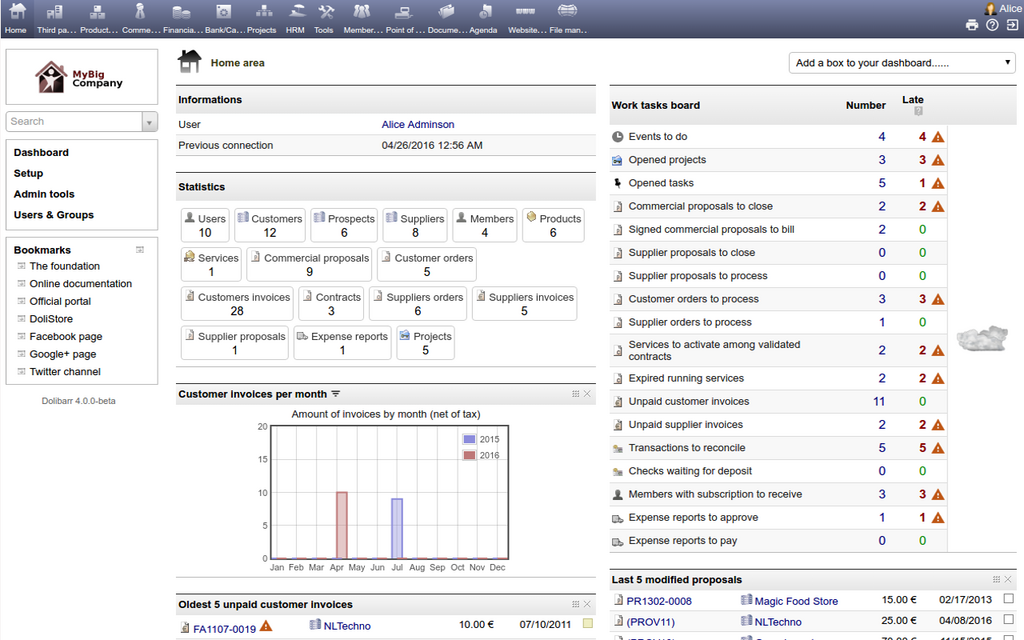
The Core Components
ERP systems are modular, meaning businesses can choose the components they need. While the specific modules can vary, most comprehensive ERPs include a few core areas.
- Finance and Accounting: This is often considered the heart of an ERP system. It manages the general ledger, accounts payable and receivable, budgeting, and financial reporting. It tracks every dollar coming in and going out.
- Human Resources (HR): This module, sometimes called Human Capital Management (HCM), handles everything related to employees. This includes payroll, benefits administration, recruiting, onboarding, and time tracking.
- Supply Chain Management (SCM): For companies that make or sell physical products, this module is crucial. It manages purchasing, inventory management, warehousing, and logistics, tracking a product from raw material to final delivery.
- Customer Relationship Management (CRM): The CRM module helps manage interactions with current and potential customers. It tracks sales leads, manages marketing campaigns, and handles customer service inquiries.
Why Bother With an ERP?
Implementing an ERP is a major undertaking, but the benefits can be transformative. When all of a company's data lives in one place, amazing things start to happen.
The biggest benefit is having a single source of truth. With everyone from sales to finance looking at the same data, there's less confusion, fewer mistakes, and better collaboration across departments.
Efficiency gets a huge boost. Many routine tasks, like generating invoices or creating financial reports, can be automated. This frees up employees to focus on more strategic work instead of tedious data entry.
Decision-making also improves dramatically. Leaders can access real-time dashboards and reports that give them a holistic view of the business. They can spot trends, identify problems, and make informed decisions faster. Finally, ERP systems are built to scale. As a company grows, adds new products, or expands into new markets, the ERP can grow with it.
The Implementation Hurdle
Despite their benefits, ERP projects are notoriously challenging. They are not simple, off-the-shelf software installs. They require careful planning, significant investment, and company-wide commitment.
One of the biggest challenges is cost. The software licenses, implementation consulting fees, and employee training can add up to a substantial investment.
There's also the complexity. An ERP implementation can take months or even years. It involves re-engineering business processes, migrating data from old systems, and customizing the software to fit the company's unique needs. This process can be disruptive to day-to-day operations.

Perhaps the most difficult part is change management. An ERP changes how people do their jobs. Employees who are used to their old spreadsheets and processes can be resistant to learning a new, complex system. Without strong leadership and proper training, user adoption can be low, undermining the entire project.
What is the primary problem that Enterprise Resource Planning (ERP) systems are designed to solve for a business?
The concept of having one unified, real-time set of data that everyone in an organization relies on is known as a...
Successfully implementing an ERP system requires a clear strategy and a deep understanding of its purpose. It integrates disparate business functions into a cohesive whole, providing clarity and efficiency when managed well.