Oracle Exadata X10 Deep Dive
Introduction to Exadata X10M
The All-in-One Database Machine
Imagine building a high-performance race car. You could buy an engine from one company, a chassis from another, and tires from a third. With enough expertise, you might assemble a fast car. But what if the engine maker built the entire vehicle? Every component would be perfectly tuned to work together, delivering maximum performance right out of the gate.
This is the idea behind Oracle Exadata X10M. It's not just a server; it’s an engineered system. This means Oracle designed the hardware (servers, storage, networking) and the software (Oracle Database) to function as a single, optimized unit. It's a pre-built, pre-tuned platform specifically created to run databases at peak efficiency.
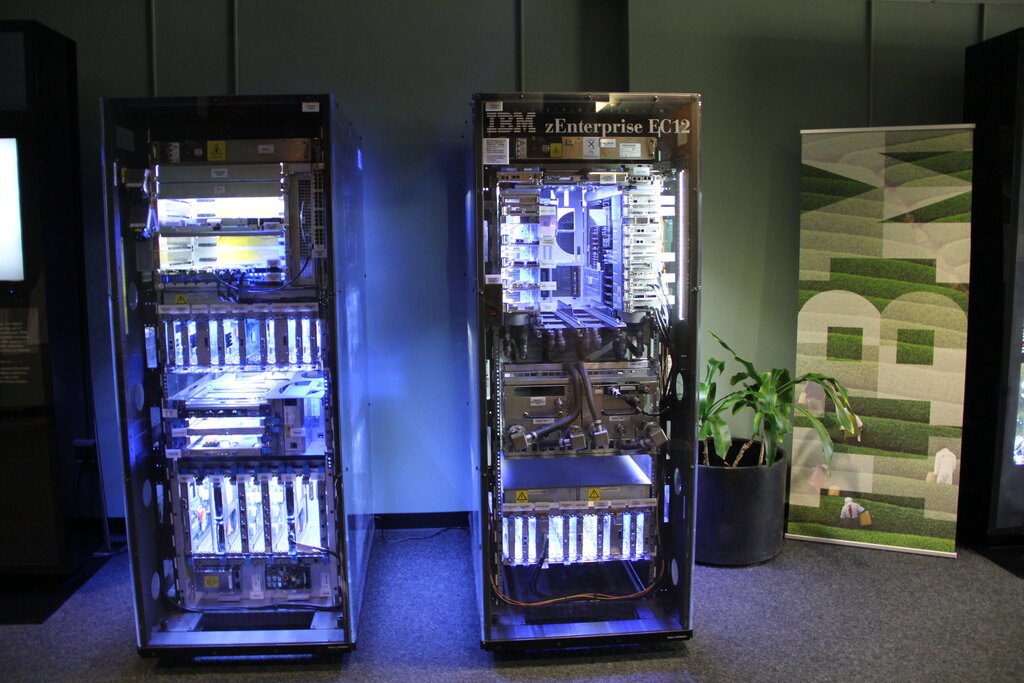
By integrating hardware and software, Exadata eliminates the complex guesswork of building, configuring, and tuning a database environment from scratch. It's designed to handle the most demanding database workloads, from online transaction processing (OLTP) to large-scale data warehousing.
Key Features of the X10M
The Exadata X10M introduces several advancements that boost its performance and efficiency. One of the core principles is moving computation closer to the data. Instead of pulling massive amounts of data from storage to the database server for processing, Exadata pushes parts of the computation down to the storage servers themselves. This concept is often called "smart storage."
By processing data where it lives, Exadata significantly reduces the amount of data that needs to travel over the network. This cuts down on traffic, frees up the database server's CPU, and speeds up queries.
Another key feature is the use of high-bandwidth, low-latency networking. Exadata systems use a specialized internal network fabric that allows the database servers and storage servers to communicate incredibly quickly. This high-speed connection is crucial for ensuring that data can move between components without creating bottlenecks.
The X10M also leverages the latest processor technology, providing more CPU cores to handle more concurrent database operations. More cores mean more power for running complex queries, managing transactions, and supporting a larger number of users simultaneously. It’s the engine that drives the entire system's performance.
Optimizing Database Performance
So, how does all this technology come together to optimize a database? The primary role of Exadata X10M is to make databases run faster, more reliably, and more efficiently. It tackles performance challenges in several ways.
| Optimization Area | How Exadata X10M Helps |
|---|---|
| Query Speed | Smart storage filters data at the source, sending only relevant information to the database server. |
| Scalability | Its architecture allows organizations to easily scale up by adding more components to handle growing data and user loads. |
| High Availability | The system is built with redundancy at every level, meaning there is no single point of failure. This ensures the database stays online. |
| Simplified Management | As an integrated system, it simplifies tasks like patching, backups, and monitoring, reducing the administrative burden. |
By addressing these core areas, Exadata X10M provides a robust platform for mission-critical applications. It allows organizations to consolidate multiple databases onto a single system, simplifying their IT infrastructure while improving overall performance and reliability.
Ready to check your understanding? This quiz covers the main ideas we've discussed about the Exadata X10M system.
What does it mean that Oracle Exadata X10M is an "engineered system"?
The "smart storage" concept in Exadata improves efficiency by moving computation closer to the data.
Exadata X10M represents a tightly integrated approach to database management, where hardware and software are engineered together for optimal results.