Optimal Router Height for Reyee RG-R6260(H)
Wi-Fi Signal Basics
How Wi-Fi Travels
At its core, Wi-Fi is simply a way of sending information over radio waves. Think of your router as a tiny radio station, broadcasting data in all directions. Your phone, laptop, or smart TV acts as a receiver, tuning into that specific frequency to get the information it needs.
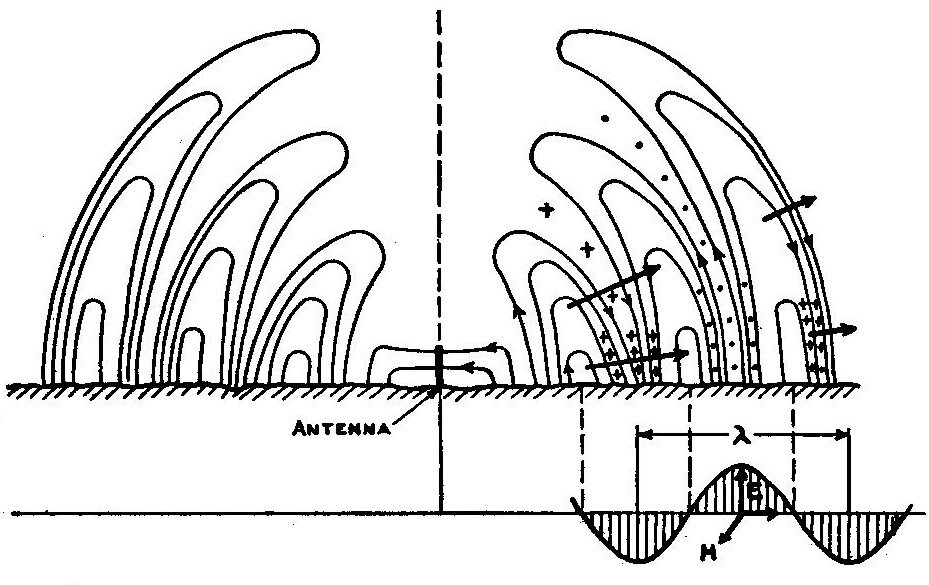
These waves radiate outwards from the router's antenna. If you could see them, they'd look like an expanding sphere of energy. This three-dimensional broadcast is why a single router can cover an entire room, or even a small house.
What Weakens a Signal
A Wi-Fi signal doesn't travel forever. Just like the light from a bulb gets dimmer the farther you move away, a Wi-Fi signal loses strength over distance. The more space the signal has to cover, the weaker it becomes at any single point.
Other radio signals can also cause problems. Your microwave, cordless phone, and even your neighbor's Wi-Fi network are all broadcasting on similar frequencies. When these signals cross, they can interfere with each other, much like it's hard to hear a friend talking in a loud, crowded room. This is known as interference.
Wi-Fi signals travels much more easily through free space than walls, so the ideal router position has line-of-sight to where you’ll be using it.
The biggest challenge for Wi-Fi, however, is physical stuff. The radio waves have to pass through walls, floors, furniture, and even people to reach your device. Each object they encounter can absorb or reflect some of the signal's energy, weakening it along the way.
Navigating Obstacles
Not all materials affect Wi-Fi signals equally. Some are more difficult for the waves to penetrate than others. Dense materials are the worst offenders. Concrete, brick, and metal are particularly good at blocking Wi-Fi.
| Material | Signal Impact |
|---|---|
| Wood, Drywall, Glass | Low |
| Water (Aquariums, Pipes) | Medium |
| Brick, Plaster | Medium-High |
| Concrete, Metal | High |
This is why your connection might be great in the living room but drop dramatically in the basement, which is surrounded by a concrete foundation. Even a metal filing cabinet or a refrigerator can create a "shadow" where the Wi-Fi signal is significantly weaker.
Thinking about the path your Wi-Fi signal takes is key. Every wall it crosses is another hurdle that weakens its strength.
Understanding these basic principles—that Wi-Fi is a radio wave that weakens with distance and is blocked by physical objects—is the first step to ensuring a strong, reliable connection throughout your space.