Optical Circuit Switching Explained
Introduction to Optical Communications
Sending Data with Light
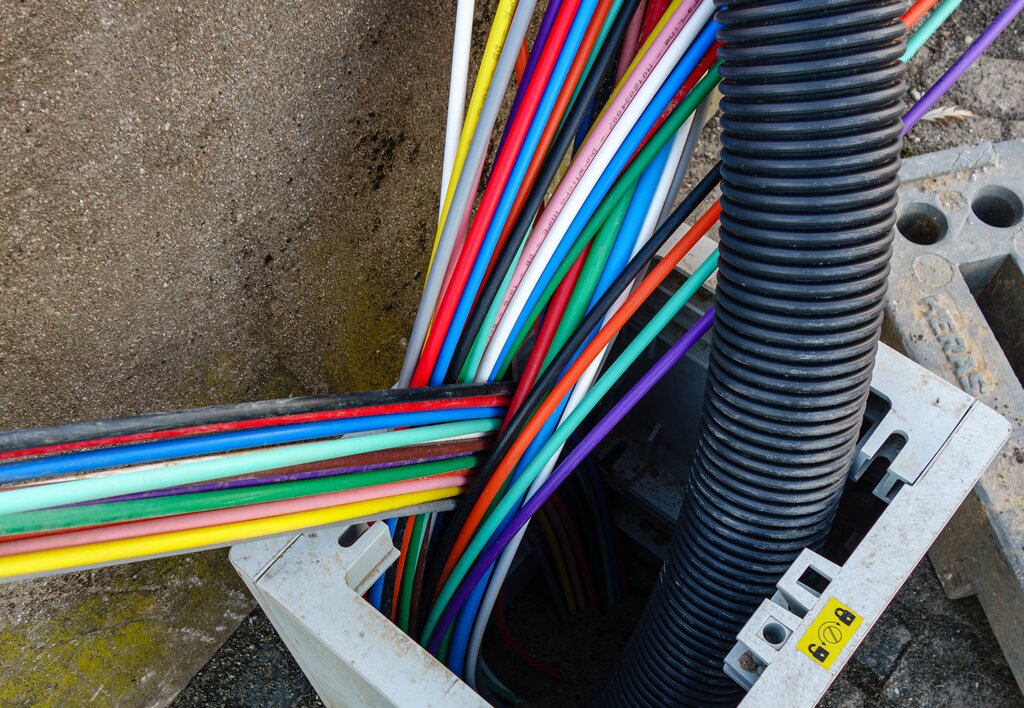
At its heart, optical communication is a simple idea: sending information using pulses of light. Instead of pushing electrons through a copper wire, we flash light down an incredibly thin strand of pure glass called an optical fiber. This is the technology that powers the modern internet, connecting continents and delivering data to our homes at incredible speeds.
Think of it like Morse code, but instead of audible beeps, it uses flashes of light. A flash can represent a '1' and no flash can represent a '0'. By flashing this light billions of times per second, we can encode and transmit vast amounts of digital information, from emails and websites to streaming video and phone calls.
How Light Stays in the Fiber
How do you keep light trapped inside a long, flexible glass thread? The secret is a phenomenon called total internal reflection. It's the same principle that makes diamonds sparkle or allows you to see a reflection of the sky on the surface of a pond.
An optical fiber isn't just a single strand of glass. It has two main parts: an inner core and an outer layer called the cladding. The cladding is made of a different type of glass with a lower refractive index, which is just a measure of how much it slows down light. When light traveling through the core hits the boundary with the cladding at a shallow angle, it doesn't leak out. Instead, it reflects perfectly back into the core, as if bouncing off a mirror.
This process repeats over and over, allowing the light pulse to zigzag its way down miles of fiber with very little loss of signal. This efficient guiding of light is what makes long-distance optical communication possible.
The System's Building Blocks
A basic optical communication system has three main parts working in concert.
- Transmitter: This is the starting point. The transmitter takes an electrical data signal and converts it into a light signal. It's essentially a tiny, high-speed light switch, often a laser or a light-emitting diode (LED).
- Optical Fiber: This is the highway for the light. As we've seen, this ultra-pure glass cable guides the light pulses from the transmitter toward their destination.
- Receiver: At the other end of the fiber, the receiver catches the light pulses. It uses a component called a photodetector to convert the light signal back into an electrical signal, which a computer or other device can then understand.
Together, these components form a complete circuit for sending information over light waves.
More Data, Same Fiber
Fiber optic cables have an enormous capacity for data, known as bandwidth. But how do we take full advantage of it? One of the most important techniques is Wavelength-Division Multiplexing (WDM).
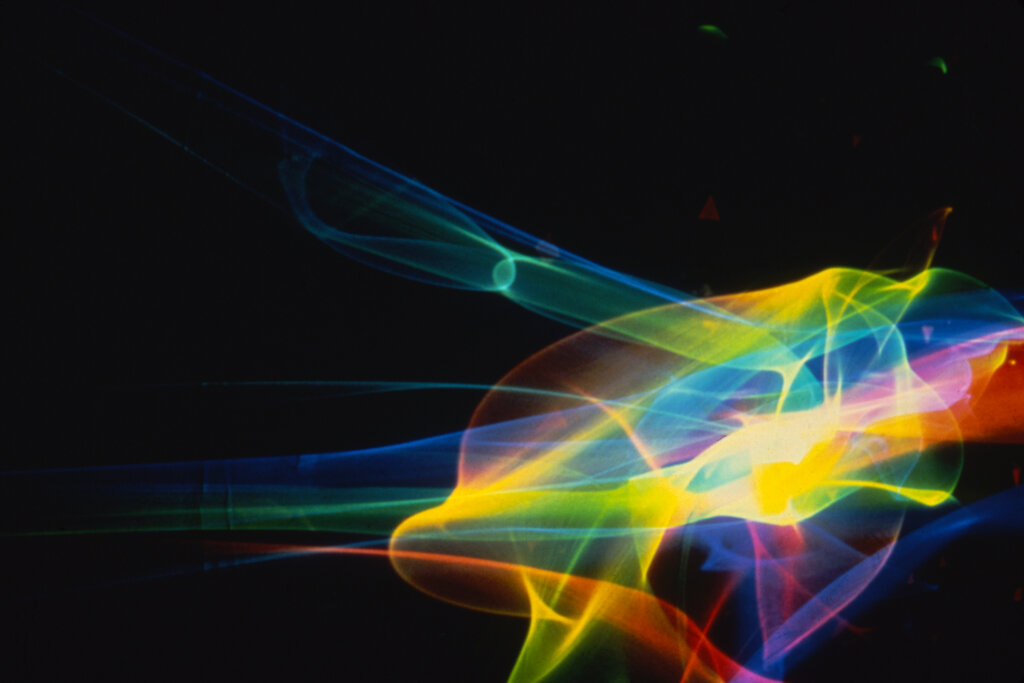
Light comes in different colors, or more precisely, different wavelengths. WDM works by sending multiple data streams through the same optical fiber simultaneously, with each stream using a slightly different wavelength of light. It's like having several different radio stations broadcasting at the same time without interfering with each other, but for light.
A special device called a multiplexer combines these different light signals at the transmitting end. At the receiving end, a demultiplexer separates them back out, so each data stream reaches its correct destination. By using WDM, we can multiply the data-carrying capacity of a single fiber many times over, making our communication networks vastly more efficient.
| Method | Description | Analogy |
|---|---|---|
| Single Channel | One stream of data is sent using one wavelength of light. | A single car driving down a one-lane road. |
| WDM | Multiple data streams are sent at once, each on a different wavelength. | Many cars driving in separate, parallel lanes on a multi-lane highway. |
This ability to pack more and more channels onto a single fiber is a key reason why optical communication has become the foundation of our global information infrastructure.
What is the fundamental principle that allows light to travel long distances within an optical fiber with minimal loss?
For an optical fiber to guide light effectively, the inner core must have a _______ refractive index than the outer cladding.
These core concepts set the stage for how data is moved around the world. Next, we'll look at how networks use this technology to route traffic.