Operations Management Essentials
Introduction to Operations Management
What is Operations Management?
At its heart, operations management is the art and science of getting things done. It’s about taking various inputs, like raw materials, labor, and technology, and transforming them into outputs, which are the goods or services a customer buys.
Think of a local bakery. The inputs are flour, sugar, eggs, the bakers' time and skill, and the ovens. The transformation process is the mixing, kneading, and baking. The output? A warm, delicious loaf of bread. Operations management is the work of designing and running this entire process smoothly and efficiently, day in and day out.
The goal is to create value. The finished bread is worth more to a customer than the raw ingredients, and that added value is what allows the business to thrive.
The Engine of the Business
Operations isn't just one department among many; it's the core engine of a business. While marketing figures out what customers want and finance provides the budget, operations is responsible for actually creating the product or delivering the service.
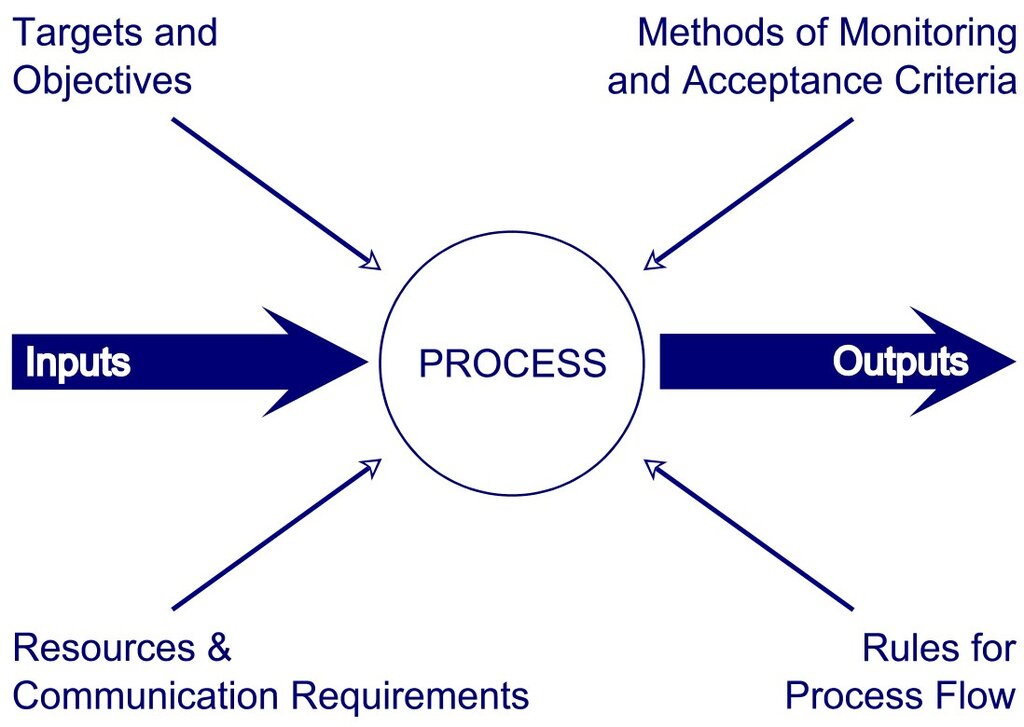
This function must work closely with all other parts of the organization. Marketing might promise next-day delivery, but it’s up to operations to make that happen. Finance might set a cost target for a product, and operations must design a process to meet that target without sacrificing quality. When these departments are aligned, the business runs like a well-oiled machine. When they're not, you get delays, high costs, and unhappy customers.
Goods vs. Services
Operations managers work with two main types of outputs: goods and services. While both aim to satisfy a customer's need, they have fundamental differences that affect how they are produced and delivered.
| Characteristic | Goods | Services |
|---|---|---|
| Tangibility | Physical, can be touched | Intangible, an experience |
| Customer Interaction | Usually low | Often high and direct |
| Inventory | Can be stored for later | Cannot be stored; produced and consumed simultaneously |
| Uniformity | Highly standardized | Varies with each delivery |
A car is a good. It's a physical object built in a factory, and every Honda Civic of a certain model is nearly identical. It can be stored on a dealer's lot until someone buys it.
A haircut is a service. It's an intangible experience. The customer is right there while the service is performed, and no two haircuts are exactly alike, even from the same stylist. You can't put a haircut in a warehouse for later.
Strategy and Design
Effective operations don't just happen by accident. They are the result of a deliberate strategy that supports the company's overall goals. If a business wants to be known as the lowest-cost provider, its operations must be relentlessly focused on efficiency. If it wants to be known for premium quality, its processes must prioritize craftsmanship and control over speed.
Develop strategies to enhance and streamline critical operations.
This strategic alignment is where two key concepts come into play: process design and capacity planning.
-
Process Design is the act of figuring out how to make the product or deliver the service. It involves deciding on the technology to use, the steps to follow, and the roles people will play. Is it an assembly line where each person does one small task, or a workshop where a skilled artisan handles the whole project?
-
Capacity Planning is about determining how much you can produce. It's about ensuring you have enough equipment, staff, and space to meet customer demand without having too much wasteful excess. A restaurant that's always half-empty has a capacity problem, and so does one that has a two-hour wait every night.
What is the primary role of operations management in a business?
A key difference between goods and services is that services are intangible and cannot be stored in inventory for later use.
By mastering these fundamentals, businesses can build a strong operational foundation, allowing them to deliver value to customers consistently and effectively.