Operational Management Avery Dennison Bangladesh
Introduction to Operations Management
What Is Operations Management?
Operations management (OM) is the engine room of any organization. It’s the business function responsible for managing the process of creating goods and services. Think about your favorite coffee shop. Operations management is everything that happens to turn raw coffee beans and milk into the latte you enjoy. It involves planning, organizing, and overseeing all the activities that make this transformation happen efficiently and effectively.
This isn't just about manufacturing physical products on an assembly line. The same principles apply to service-based businesses. For a hospital, operations management ensures that patients receive timely care, that operating rooms are scheduled efficiently, and that medical supplies are always in stock. For a software company, it’s about managing the development, testing, and deployment of code. At its core, OM is about how work gets done.
Establishing clear processes and procedures is the foundation of effective operations management.
Core Principles
Two fundamental principles guide the field of operations management: process analysis and capacity planning. Mastering them is key to running a smooth operation.
Process Analysis
noun
The systematic review of the steps within a process to understand how it works and identify opportunities for improvement. It involves mapping out inputs, transformations, and outputs.
Process analysis means breaking down a task into its individual steps to see how it works from start to finish. By mapping out a process, you can spot bottlenecks, eliminate wasteful steps, and make the entire flow more efficient. It helps answer questions like: Where are we spending the most time? What resources are needed at each stage? Where do errors happen most often?
Next is capacity planning. This is all about balancing supply with demand. It involves determining the production capacity an organization needs to meet its changing demands for its products or services.
Capacity planning asks a simple question: Do we have the resources (people, equipment, facilities) to deliver what our customers want, when they want it?
Imagine our coffee shop again. Capacity planning would involve deciding how many baristas to schedule during the morning rush, how many espresso machines are needed to avoid long waits, and how many seats are required for customers. Too little capacity, and you lose customers. Too much capacity, and you waste money on idle resources.
Connecting Operations to Strategy
Effective operations management isn’t just about being efficient for efficiency’s sake. It's a critical tool for achieving a company's strategic goals. The overall business strategy dictates how the operations should function. A company that competes on price will design its operations very differently from a company that competes on quality or customization.
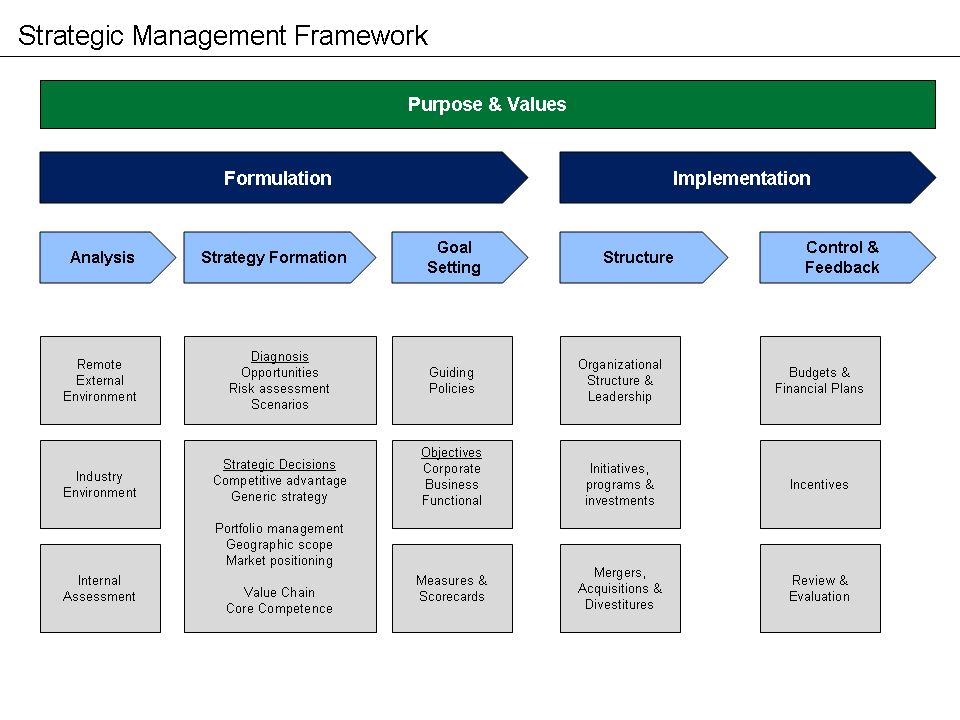
For example, a low-cost airline's strategy is to offer the cheapest flights possible. Its operations support this by using one type of aircraft to simplify maintenance, offering no-frills service to keep labor costs down, and ensuring quick turnarounds at the gate to maximize flight time. In contrast, a luxury hotel's strategy is to offer a premium experience. Its operations are designed to provide personalized service, high-end amenities, and immaculate facilities, even though these things increase costs.
| Strategic Goal | Operational Focus |
|---|---|
| Cost Leadership (e.g., Budget Airline) | Standardization, waste reduction, high volume |
| Differentiation (e.g., Luxury Hotel) | Quality, customization, customer service |
By aligning operational decisions with the broader business strategy, a company can build a sustainable competitive advantage. The way it manages its processes and capacity becomes a powerful tool for delivering on its promises to customers.
Let's review these core concepts.
Now, check your understanding of these foundational ideas.
What is the primary function of operations management?
Operations management principles are only applicable to businesses that manufacture physical products.
Understanding these fundamentals is the first step toward seeing how well-run operations create value and drive business success.