Operating System Types Explained
Introduction to Operating Systems
The Computer's Conductor
A computer without an operating system is just a collection of silent, uncoordinated parts. It’s like an orchestra with no conductor. The hardware—the processor, memory, and storage—are talented musicians, but they don't know what to play or when. The operating system (OS) steps onto the podium, raises its baton, and brings order to the chaos. It’s the master program that manages all the hardware and software, making the computer a useful tool instead of an expensive paperweight.
An operating system is a program that controls the execution of application programs and acts as an interface between the user of a computer and the computer hardware.
At its core, the OS has two main jobs. First, it manages the computer's resources. Think of the Central Processing Unit (CPU) as the computer's brain, the memory (RAM) as its short-term workspace, and the hard drive as its long-term file cabinet. The OS decides which application gets to use the CPU, how much memory each program needs, and where to store files. Second, it provides a stable and consistent way for applications to deal with the hardware. Instead of every app developer needing to know the exact technical details of every graphics card or printer, they just talk to the OS, which handles the specifics. This abstraction makes developing software much, much easier.
Inside the OS
An operating system isn't a single, monolithic thing. It’s made of several key components working together. The most critical part is the kernel.
kernel
noun
The core component of an operating system that manages the system's resources and the communication between hardware and software.
The kernel is the heart of the OS. It has complete control over everything in the system. It handles the CPU's schedule, manages memory, and facilitates interactions with hardware devices like your keyboard and mouse. It’s the bridge connecting the applications you use to the physical hardware that runs them.
Then you have the user interface (UI). This is the part of the OS you actually interact with. It can be a Graphical User Interface (GUI), with windows, icons, and pointers, like in Windows or macOS. Or it could be a Command-Line Interface (CLI), where you type commands into a terminal, which is common on servers and for developers. The UI's job is to translate your actions—a mouse click, a typed command—into instructions the kernel can understand.
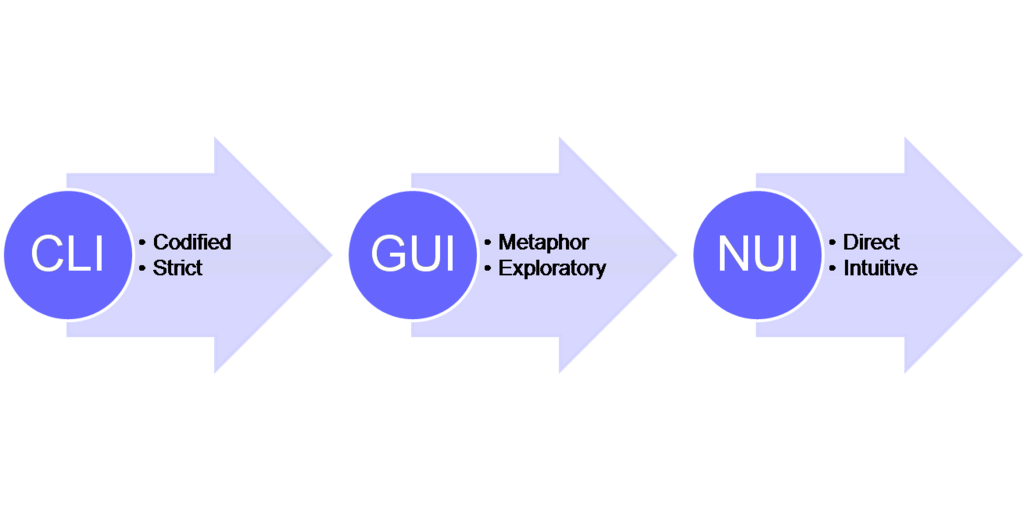
Finally, there are system utilities. These are the small programs that handle essential housekeeping tasks. Think of tools for formatting a disk, managing files (like File Explorer or Finder), or checking your network connection. While not part of the kernel, they are crucial for managing and configuring the system.
The Resource Manager
Imagine you’re listening to music, browsing the web, and downloading a file all at once. How does your computer handle this without grinding to a halt? The answer is resource management, a key function of the OS.
The operating system is often called the "resource manager" because it's responsible for allocating CPU time, memory, storage, and I/O devices among all the competing programs.
The OS manages the CPU through a process called scheduling. Even with a single CPU core, an OS can create the illusion of running multiple programs simultaneously. It does this by rapidly switching the CPU's attention between different tasks, giving each one a tiny slice of time. This happens so fast—thousands of times per second—that it feels like everything is running at once.
Memory management is another critical task. When you open an application, the OS finds a free chunk of RAM and allocates it to that program. It ensures that the program stays within its assigned memory space and doesn't interfere with other running applications. When you close the program, the OS reclaims that memory so it can be used for something else.
It also handles all input and output (I/O) devices. When a program needs to read a file from the hard drive, print a document, or receive data from the network, it doesn't talk to the hardware directly. It makes a request to the OS, which then manages the communication through specialized software called device drivers.
Now, let's test your understanding of these core ideas.
What is the primary role of an operating system, using the orchestra analogy provided in the text?
Which component of the operating system is responsible for translating a user's mouse click or typed command into instructions the system can understand?
Understanding the operating system is the first step to understanding how computers truly work. It's the invisible force that turns a complex machine into a powerful and usable tool.