Operating System Fundamentals
Introduction to Operating Systems
The Computer's Conductor
An operating system, or OS, is the main software that manages all the hardware and software on a computer. Think of it as the conductor of an orchestra. The hardware components—like the processor, memory, and storage—are the musicians. The software applications you use are the pieces of music. The OS doesn't play an instrument itself, but it directs all the musicians, telling them when to play, how loudly, and how to stay in sync to create a beautiful performance.
Without an operating system, a computer is just a collection of electronic parts. The OS brings them to life and makes them useful.
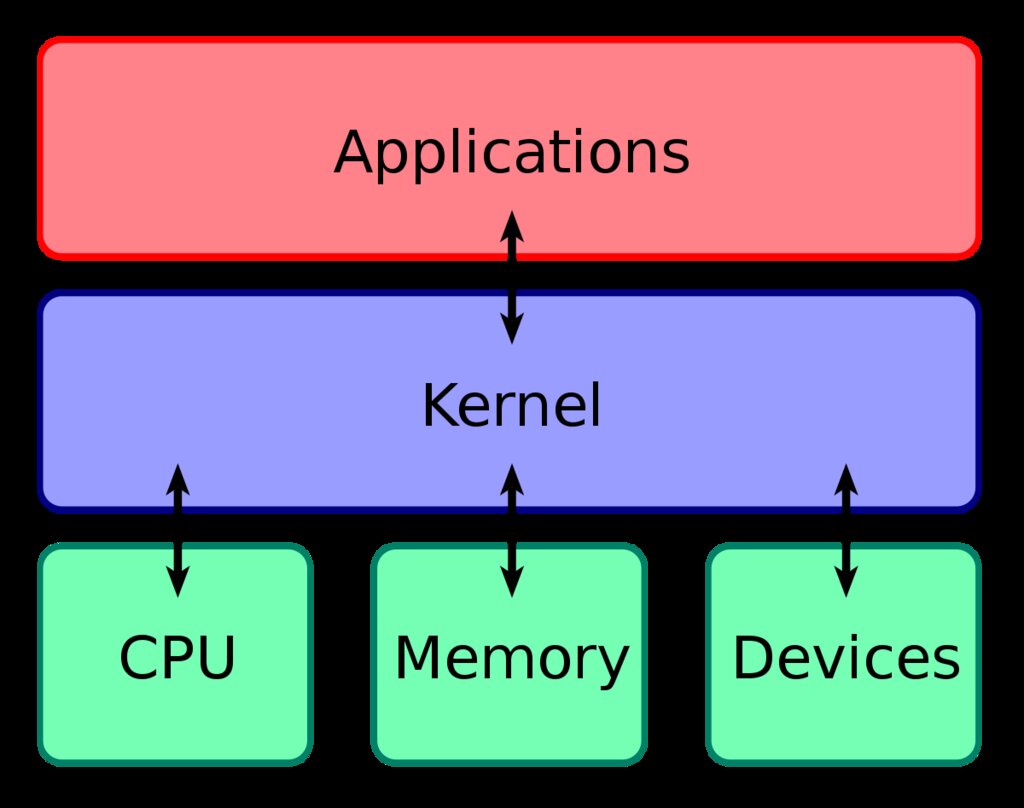
At the very heart of the operating system is the kernel. It's the first program loaded when the computer starts up, and it has complete control over everything in the system. The kernel handles the most essential, low-level tasks, acting as the primary go-between for the hardware and the software. Everything else in the OS is built around it to provide services to you and your applications.
Key Jobs of the OS
The operating system has several critical responsibilities. We can group them into two main areas: managing the computer's resources and providing a consistent way for applications to function.
Let's look at what these jobs entail.
Process Management: A "process" is any program that is currently running. If you have a web browser, a word processor, and a music app open, you have at least three processes running. The OS is responsible for starting, stopping, and managing all these processes. It decides which process gets to use the CPU at any given moment, ensuring that all programs get a fair share of processing time and the system remains responsive.
Memory Management: Every running process needs a place in the computer's memory (RAM) to store its instructions and data. The OS is like a meticulous librarian for memory. It keeps track of which parts of memory are currently being used and by which process. When a process needs memory, the OS allocates it. When the process closes, the OS frees up that memory so it can be used by something else. This prevents processes from interfering with each other's data.
I/O System Management: Your computer has many input/output (I/O) devices, like keyboards, mice, monitors, printers, and network cards. The OS manages communication between your software and these devices. It uses special software called device drivers to translate generic commands from an application (like "print this document") into specific instructions that the hardware can understand. This means an application developer doesn't need to know the specific details of every printer model out there; they just need to talk to the OS.
File Systems: The OS organizes data on storage devices like hard drives and SSDs into a structure you can easily navigate—a file system. It handles creating, deleting, and finding files and folders. Without a file system, a storage drive would just be a massive, jumbled collection of data with no way to find anything specific.
User Interfaces: Finally, the OS provides a way for you to interact with your computer. This could be a Graphical User Interface (GUI) with windows, icons, and menus, like in Windows or macOS. It could also be a Command-Line Interface (CLI), where you type commands into a terminal, which is common on servers and for developers using systems like Linux.
Putting It All Together
Every action you take on your computer involves the operating system. When you click an icon to open an application, the user interface tells the OS to start a new process. The OS finds the program on the hard drive using the file system, allocates memory for it, and tells the CPU to start executing its instructions.
As you type, the OS manages the I/O from your keyboard. When you save a file, the OS takes the data from memory and writes it to your storage drive. All these complex interactions happen seamlessly in the background, managed entirely by the OS.
The operating system is often called the "resource manager" of a computer system because it is responsible for allocating and managing hardware resources such as the CPU, memory, storage, and input/output (I/O) devices.
This role as a resource manager and a stable platform is what makes operating systems so fundamental. They provide the foundation upon which all other software is built, allowing developers to create powerful applications without worrying about the messy details of managing hardware.
What is the primary role of an operating system?
The _______ is the core component of the operating system that has complete control over everything in the system.
By handling these core functions, the OS creates an environment where you can work, play, and create, turning a complex machine into a usable and powerful tool.