Operating System Fundamentals
Introduction to Operating Systems
What Is an Operating System?
Think of an operating system (OS) as the general manager of a busy hotel. The manager doesn't cook the food or clean the rooms, but they make sure the chefs have ingredients, the cleaning staff has supplies, and the guests get the rooms they booked. Without the manager, the whole operation would be chaos.
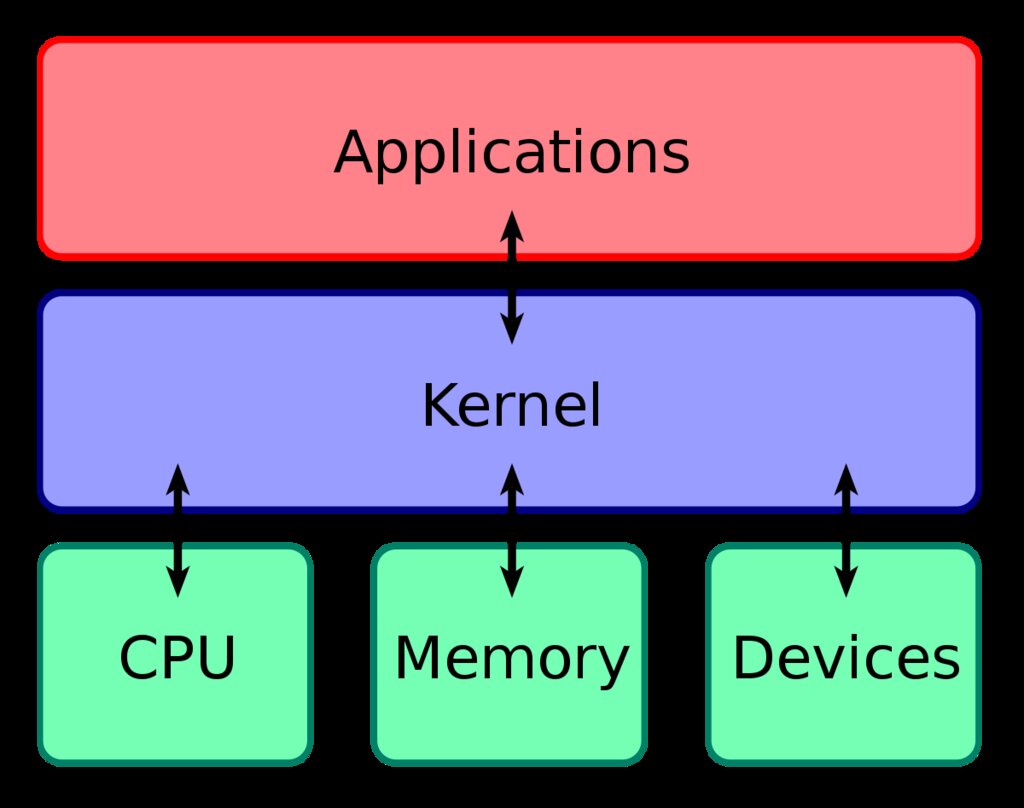
An operating system does the same for your computer. It's the core software that manages all the hardware and software resources. It's the intermediary between you and the physical machine, translating your clicks and commands into actions the computer can understand.
An Operating System (OS) is a system software that manages computer hardware, software resources, and provides common services for computer programs.
When you start an application like a web browser or a music player, you're not telling the CPU directly what to do. You're making a request to the operating system, which then allocates the necessary resources like memory and processing time to run that program. This layer of management makes computers powerful and easy to use. Without an OS, you'd need to manually instruct the hardware for every single task, a complex process reserved for the earliest days of computing.
The Five Core Jobs
An operating system is a master multitasker, constantly juggling several critical responsibilities to ensure everything runs smoothly. These can be broken down into five main functions.
1. Process Management A program on your hard drive is just a file of instructions. When you run it, it becomes a process—an active program that needs computer resources. Most of the time, you have many processes running at once: a web browser, a word processor, and dozens of background tasks. The OS is the traffic cop that directs all these processes, deciding which one gets to use the CPU at any given moment. This is called scheduling, and it's what allows your computer to multitask effectively without freezing.
2. Memory Management Every process needs a workspace in the computer's Random Access Memory (RAM). The OS is like a meticulous librarian for this memory. It finds and allocates a section of RAM for each new process. It also ensures that one process can't access or interfere with the memory space of another, which would cause crashes and errors. When you close a program, the OS frees up that memory so it can be used by something else.
3. Device Management Your computer connects to many devices: a keyboard, a mouse, a monitor, a printer, a Wi-Fi card, and more. The OS manages the communication between your software and these hardware devices. It uses special programs called drivers to translate the general commands from your applications into specific instructions that each device can understand. This way, your word processor doesn't need to know how to speak to every model of printer in the world; it just speaks to the OS, which handles the translation.
4. File System Management All of your data—documents, photos, applications, and the OS itself—is stored in files. The operating system is responsible for organizing these files so they can be stored and retrieved efficiently. It creates a structure, typically a hierarchy of directories (folders) and files, and keeps track of where everything is located on the hard drive or solid-state drive. When you save a file, the OS finds empty space on the disk and writes the data. When you open a file, the OS finds the data and loads it into memory.
5. Security Management Security is a fundamental role of the OS. It controls who can access the computer and what they're allowed to do. This includes requiring a username and password to log in, and managing permissions for files and applications. The OS creates a barrier between different users and between different programs, preventing unauthorized access to data and protecting the system from malicious software.
Types of Operating Systems
Not all operating systems are designed for the same purpose. Over the years, different types have been developed to meet specific needs.
Batch Systems: These were among the earliest types of OS. Users would submit jobs—typically on punch cards—in a batch. The computer would then execute the jobs one after another without any user interaction. They were efficient for repetitive tasks but offered no interactivity.
Time-Sharing Systems: This was a major evolution, allowing multiple users to interact with a single computer simultaneously. The OS rapidly switches the CPU between different user's tasks, giving each a small slice of time. Each user feels like they have the whole computer to themselves. Modern desktop operating systems like Windows, macOS, and Linux are all time-sharing systems.
Distributed Systems: These manage a group of independent computers and make them appear to be a single computer. When you use a search engine or a cloud storage service, you're interacting with a distributed system. The OS coordinates tasks across multiple machines, providing more power and reliability than a single computer could.
Real-Time Systems: In some applications, timing is everything. A real-time operating system (RTOS) is designed to process data as it comes in, without any buffer delays. They are used in systems where a failure to respond instantly could be catastrophic, such as in airline traffic control systems, medical imaging equipment, and car engines.
Every time you use a computer, a smartphone, or even a smart appliance, you are interacting with an operating system. It's the silent, essential software that makes modern technology possible.