Operating System Evaluation
Operating System Fundamentals
The Computer's Manager
Think of an operating system (OS) as the general manager of a busy hotel. The hotel has resources like rooms (memory), staff (processing power), and services (applications). Guests (users) come and go, making requests. The manager's job is to coordinate everything, ensuring each guest gets what they need without chaos breaking out. The OS does the same for a computer.
An operating system is the essential software that manages all the hardware and software on a computer. It acts as the bridge between you and the computer's physical components, translating your clicks and keystrokes into actions the hardware can understand.
Without an OS, your computer would be a useless box of electronics. You wouldn't be able to run programs, save files, or even see anything on the screen. It provides the fundamental platform on which all other software is built.
The Core Components
Operating systems aren't single, monolithic things. They're made of several key parts working together. The three most important are the kernel, the shell, and the file system.
Kernel
noun
The central component of an operating system that manages the operations of the computer and its hardware. It is the core that provides all the essential services for the system.
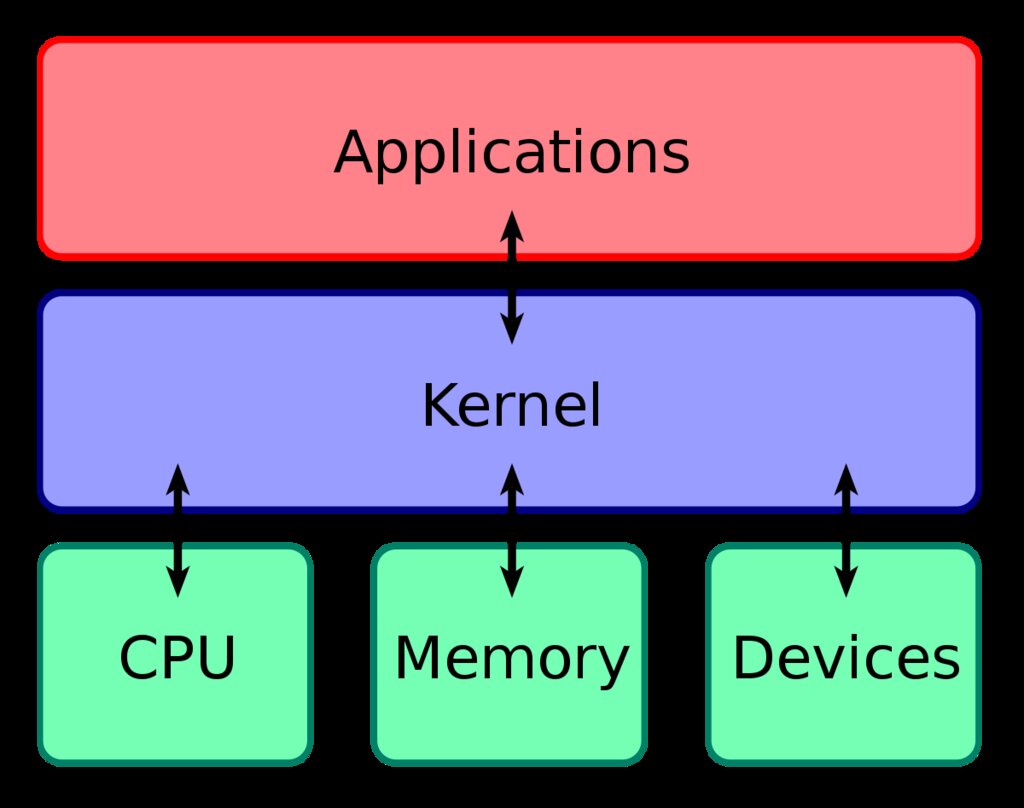
The kernel is the heart of the OS. It has complete control over everything in the system. When your computer starts up, the kernel is the first part of the OS to load, and it remains in memory until the computer is turned off. It handles process management (what programs are running), memory management (who gets to use RAM), and device management (communicating with your keyboard, mouse, and monitor).
If the kernel is the core, the shell is the interface. It's the part you interact with. The shell takes your commands and passes them to the kernel to execute. There are two main types:
- Command-Line Interface (CLI): You type text commands to tell the computer what to do. It's powerful and efficient but requires knowing the commands.
- Graphical User Interface (GUI): You interact with visual elements like icons, windows, and menus using a mouse. This is what most people use on their desktops and phones today.
Finally, the file system is the OS's librarian. It controls how data is stored and retrieved. Without it, data on a disk drive would be one large, jumbled body of information. The file system imposes a structure, typically a hierarchy of directories (folders) and files, making it easy to find, manage, and access your data.
Types of Operating Systems
Not all jobs are the same, so different types of operating systems have been developed for specific needs.
Batch OS: These were early systems that ran jobs in batches, one after another, without any user interaction. You'd submit a stack of punch cards, and hours later, you'd get your printout.
Time-Sharing OS: This is the foundation of modern multi-user systems. It allows many users to share the computer simultaneously. The OS switches between users' tasks so quickly that it appears each person has the computer to themselves.
Distributed OS: This type manages a group of distinct, networked computers and makes them appear to be a single computer. The processing load can be distributed among multiple machines, increasing power and reliability.
Real-Time OS (RTOS): In systems where timing is absolutely critical, an RTOS is used. It's designed to process data as it comes in, without buffer delays. You'll find these in cars, airplane controls, and medical equipment, where a fraction of a second can make all the difference.
What an OS Actually Does
Beyond its structure, the OS performs four primary functions to keep your computer running smoothly.
| Function | Description |
|---|---|
| Process Management | Manages the programs (processes) that are running. It decides which process gets the CPU and for how long. |
| Memory Management | Allocates and de-allocates memory space to programs as they need it, ensuring they don't interfere with each other. |
| File Management | Organizes files and directories on storage devices. It handles creating, deleting, moving, and controlling access to files. |
| Device Management | Controls all the hardware devices attached to the computer, like printers and webcams, through software called drivers. |
These functions work in concert to create a stable and usable environment. When you double-click an icon to launch an application, you're kicking off a chain reaction. The OS's file system finds the program, its process manager creates a new process, and its memory manager allocates RAM for it. As the program runs, the OS continues to manage the CPU's time and handle any requests for hardware access, all happening seamlessly behind the scenes.
Time to test your knowledge on these core concepts.
Using the 'busy hotel' analogy, what do the hotel's rooms, staff, and services represent in a computer system?
Which component of the OS is the first to load on startup and has complete control over memory, processes, and devices?
Understanding these fundamentals provides the groundwork for exploring how different operating systems are built and what makes each one unique.