Operating System Essentials
Introduction to Operating Systems
The Computer's Conductor
Think of an orchestra. You have dozens of musicians, each with a different instrument, all needing to play in harmony. Without a conductor to direct them, you'd just have noise. A computer's operating system (OS) is that conductor. It's the master program that manages all the other software and hardware on your computer.
From the moment you turn on your device, the OS is at work. It's the silent, essential software that acts as a bridge. On one side, you have the physical hardware: the processor (CPU), memory (RAM), storage drives, and all the things you plug in, like a mouse or keyboard. On the other side, you have the applications you want to run, like a web browser or a game. The OS is the intermediary that lets them talk to each other without any chaos.
Simply put, the operating system's job is to make the computer easy to use. It takes care of all the complex, low-level tasks so you and your applications don't have to.
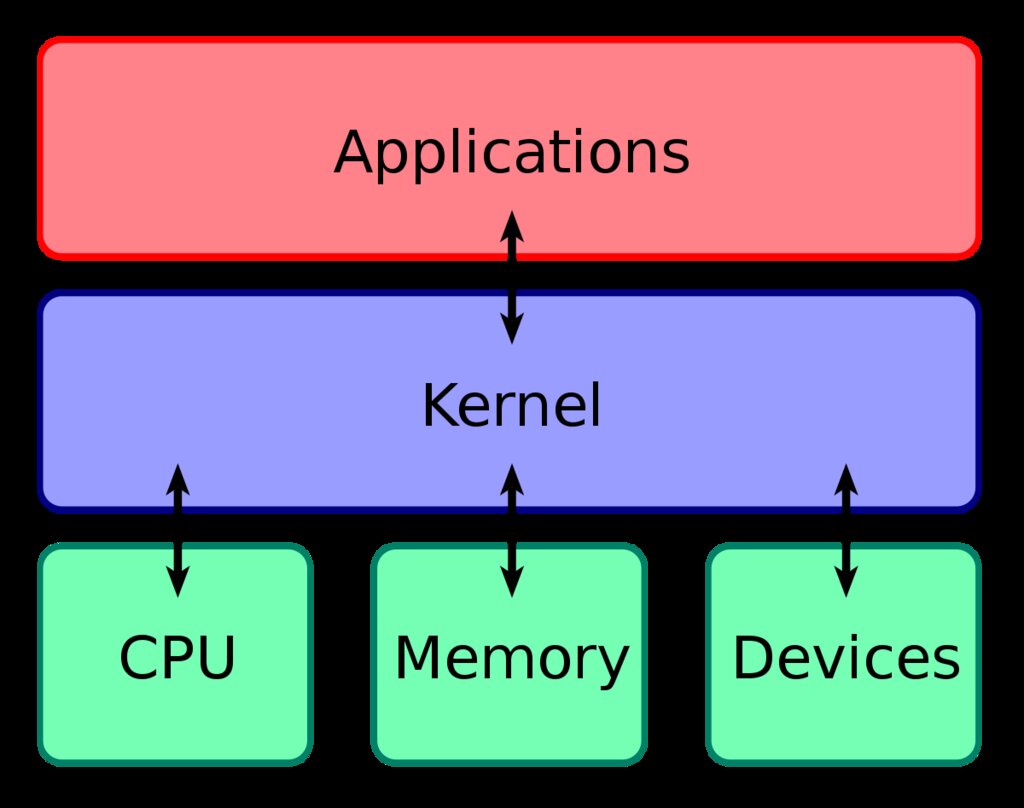
The Four Core Jobs
While an OS does many things, its responsibilities can be broken down into four main areas. Understanding these is key to seeing how your computer really works.
Process
noun
A program that is currently running on a computer.
1. Process Management When you're listening to music, browsing the web, and getting chat notifications all at once, your computer is juggling multiple tasks. Each running application is a process. The OS acts like a skilled juggler, deciding which process gets to use the CPU at any given millisecond. This rapid switching, called scheduling, creates the illusion that everything is happening simultaneously.
2. Memory Management Think of your computer's memory (RAM) as a shared workspace. When a process needs to run, the OS finds it an empty spot in this workspace. The OS is like a strict librarian for the memory, keeping track of who is using which section. It ensures that one process doesn't accidentally write over another's space, which would cause crashes. When you close an application, the OS frees up that memory so another process can use it.
3. File System Management Without a file system, your computer's storage drive would be a massive, jumbled mess of data. The OS organizes this data into a familiar structure of files and folders. It keeps track of where everything is stored, so when you want to open a document, the OS knows exactly where to find it on the hard drive. It also manages permissions, controlling who can read, write, and delete files.
4. Input/Output (I/O) Management Your computer is constantly communicating with devices. Your keystrokes are input. The display on your monitor is output. The OS manages this constant flow of information between the CPU and all your peripherals, from the mouse and keyboard to the printer and speakers. It uses special programs called drivers to translate the hardware's signals into a language that the rest of the software can understand.
Now that you've got the basics down, let's test your knowledge.
What is the primary role of an operating system?
When you have multiple applications running simultaneously, the OS rapidly switches the CPU's focus between them. This process is called:
These four functions are the pillars of any modern operating system, working together to create a smooth, stable experience.