Operating System Essentials
Introduction to Operating Systems
The Computer's Conductor
Think of a computer's hardware—the processor, memory, and storage—as a world-class orchestra. You have all the instruments, but without a conductor, you just get noise. The operating system (OS) is that conductor. It directs all the individual parts, telling them when to play, how loudly, and for how long, turning potential chaos into a beautiful symphony of computation.
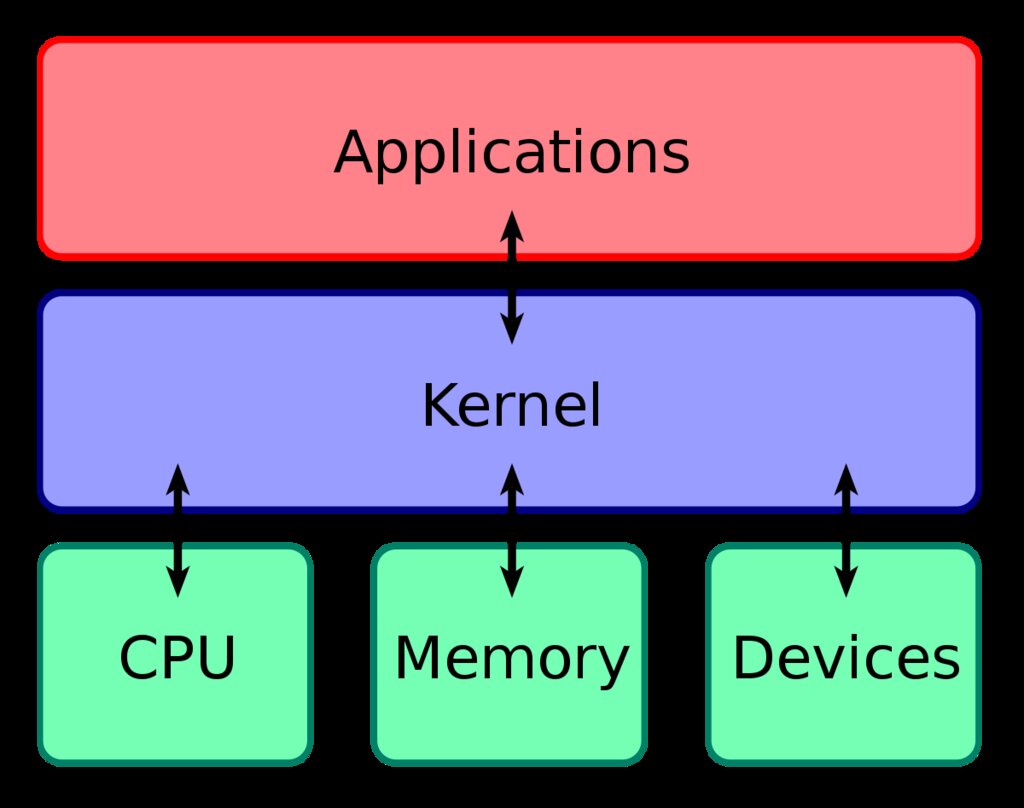
An Operating System (OS) is the essential software layer that bridges the gap between a computer's hardware and its users.
At its core, an OS is the main piece of software that brings your computer to life. It manages all the hardware and provides a stable, consistent platform for applications like your web browser or word processor to run. Without an OS, your phone, laptop, or server would just be an expensive paperweight. It handles everything from the moment you press the power button to the moment you shut it down.
A Brief History of the OS
Early computers didn't have operating systems. Programmers had to manually load their programs using punch cards or toggle switches, a tedious and error-prone process. It was like having to rewire your house every time you wanted to turn on a different light.
To improve efficiency, batch systems were developed. Programmers would submit their jobs on cards to a computer operator, who would group them into batches and run them one after another. This was better, but users had no direct interaction with the computer while their job was running.
The next major leap was time-sharing systems. These allowed multiple users to interact with a single computer simultaneously. The OS would rapidly switch between each user's tasks, giving each a small slice of processor time. The switching happened so fast it created the illusion that each person had the computer's full attention. This is the foundation of the multitasking we rely on today.
Modern systems often use distributed operating systems, which manage a group of independent computers and make them appear to be a single, cohesive system. This allows for sharing resources and computational power across a network, forming the backbone of cloud computing and large-scale data processing.
| System Type | Key Characteristic | Analogy |
|---|---|---|
| Batch | Jobs are grouped and run sequentially | A laundromat running all whites, then all colors |
| Time-Sharing | CPU time is shared among many users | A chess master playing multiple opponents at once |
| Distributed | Manages multiple computers as one | A team of chefs coordinating in separate kitchens |
The Core Jobs of an OS
An operating system juggles several critical responsibilities to keep everything running smoothly. These core functions are essential for any modern computer.
Process Management: An OS manages the life cycle of programs, or processes. It decides which process gets to use the CPU and for how long, a task known as scheduling. This ensures that all programs get a fair share of resources and the system remains responsive, even when you have dozens of browser tabs open.
Think of it as a traffic cop at a busy intersection, directing which cars (processes) can go and when, preventing gridlock and keeping things moving.
Memory Management: The OS is in charge of the computer's main memory (RAM). It allocates memory to processes that need it and deallocates it when they are done. It keeps track of which parts of memory are currently in use and by whom, ensuring that one process doesn't accidentally overwrite another's data.
This is like a librarian managing a library's shelves. It knows where every book (piece of data) is, who has checked one out, and where there is empty space for new books.
File Systems: How do you find a specific photo among thousands on your hard drive? You can thank the OS's file system. It provides a structured way to store and organize files on storage devices, like hard drives and SSDs. It handles creating, deleting, and finding files through a hierarchy of directories (folders).
Without a file system, a storage drive would be like a giant, unorganized pile of documents. The OS provides the filing cabinets and labels to keep everything tidy.
Security: The OS acts as a gatekeeper, controlling who can access the system and what they are allowed to do. It enforces security policies, manages user accounts and passwords, and protects the system from unauthorized access or malicious software. It ensures that your private files remain private and that one user can't interfere with another's work on a multi-user system.
These four functions work in concert to create a usable, stable, and secure computing environment. They are the pillars that support everything you do on your computer.
Time to check your understanding of these core concepts.
What is the primary role of an operating system, analogous to an orchestra conductor?
In the evolution of operating systems, what was the main characteristic of early batch systems?
Understanding what an operating system is and what it does is the first step in seeing how computers truly work. It's the silent, tireless manager that makes modern computing possible.