Operating System Essentials
Operating System Basics
What Is an Operating System?
Think of an operating system (OS) as the general manager of your computer. It’s the essential software that directs all the hardware and other software. Without it, your computer would just be a box of silent, inactive parts. The OS brings everything to life, making sure the processor, memory, and storage devices all work together.
At its core, an operating system (OS) is the software that manages computer hardware and software resources, and provides common services for computer programs.
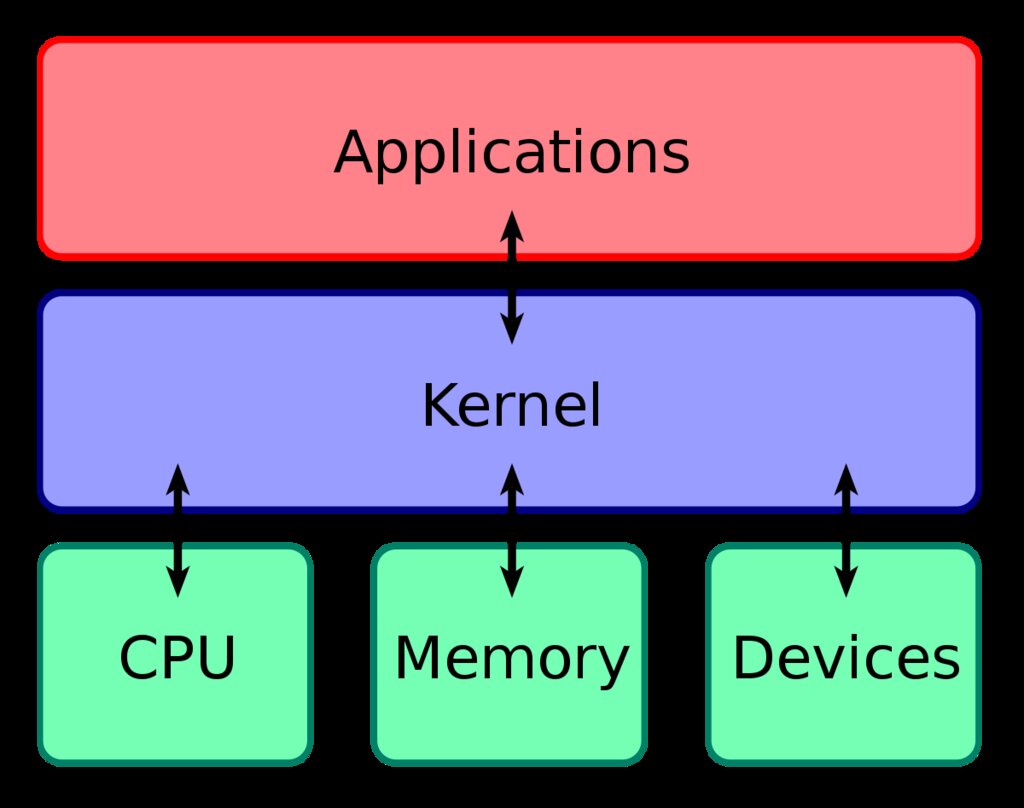
Its main job is to act as a bridge. It sits between you (and your applications, like a web browser or a game) and the physical hardware of the machine. When you click save on a document, you're not telling the hard drive what to do directly. You're telling the application, which then asks the operating system, and the OS handles the rest. This system of layers makes computing much simpler and more efficient.
This structure is fundamental. It allows software developers to create applications without needing to know the specific details of every piece of hardware. They just write code that talks to the OS, and the OS translates their requests into actions for the hardware.
The Core Components
An operating system isn't one single program. It's a collection of key parts that work together. The three main components are the kernel, the user interface, and system utilities.
Kernel
noun
The core component of an operating system that manages the system's resources and communication between hardware and software.
The kernel is the heart of the OS. It has complete control over everything in the system. When your computer starts up, the kernel is one of the first things to load, and it remains active the entire time the computer is on. It manages the CPU's time, allocates memory, and handles input from your keyboard and output to your screen.
Next is the user interface (UI), which is how you interact with the computer. Early computers used a Command-Line Interface (CLI), where users typed specific text commands. Today, most devices use a Graphical User Interface (GUI), which relies on icons, windows, and menus that you can click with a mouse or tap with your finger.
| Feature | Command-Line Interface (CLI) | Graphical User Interface (GUI) |
|---|---|---|
| Interaction | Keyboard only; type commands | Mouse and keyboard; click, drag, type |
| Visuals | Text-based | Graphics, icons, windows |
| Learning Curve | Steeper; requires knowing commands | Easier; more intuitive and discoverable |
| Example | Windows Command Prompt, Terminal | Windows, macOS, Android |
Finally, there are system utilities. These are small programs that help manage and maintain the computer. Think of them as the OS's toolkit. They perform tasks like formatting disks, managing files and folders, and checking for system errors. While not part of the core kernel, they are essential for a complete and functional operating system.
Types of Operating Systems
Operating systems are designed for different purposes, and their architecture reflects that. Over the years, several distinct types have emerged.
Batch Systems: These were the first operating systems. They ran jobs in large batches, one after another, without any direct interaction from the user. Imagine handing a stack of punch cards to an operator, who would feed them to the computer. You’d come back later to pick up your printed results. There was no multitasking; the machine was dedicated to one job at a time.
Multitasking Systems are what we all use today. These systems can run multiple programs seemingly at the same time. The OS achieves this by rapidly switching the CPU's attention between different tasks, a process called scheduling. This happens so fast that it creates the illusion of simultaneous execution, allowing you to browse the web while listening to music and downloading a file.
Real-Time Systems (RTOS): These are specialized operating systems where timing is absolutely critical. They are designed to process data as it comes in, without any delay. You find them in systems where a failure could be catastrophic, such as in aircraft control systems, medical devices like pacemakers, and industrial robots. An RTOS guarantees that a specific task will be completed within a precise timeframe.
The OS as a Resource Manager
Ultimately, the most important role of the operating system is resource management. A computer has limited resources: a certain amount of processing power (CPU time), a fixed amount of memory (RAM), and storage space. Multiple programs all want to use these resources at the same time.
The OS acts as the referee. It decides which program gets to use the CPU and for how long. It allocates chunks of memory to different applications and ensures they don't interfere with each other. It manages access to devices like printers and hard drives, preventing conflicts if multiple programs try to use them simultaneously.
Without this careful management, your computer would be chaotic and unstable. The OS ensures that resources are shared fairly and efficiently, providing a stable platform for all your applications to run.
Now, let's test your understanding of these core concepts.
What is the primary role of an operating system?
Which component of the OS is considered its core, responsible for managing the CPU, memory, and devices?
This foundation gives you a framework for understanding how computers work from the inside out. Every action you take on a device is mediated and managed by its powerful, and often invisible, operating system.