Operating System Essentials
Introduction to Operating Systems
The Computer's Conductor
Think of an orchestra. You have dozens of musicians, each playing a different instrument. Without a conductor, you'd just have noise. The conductor tells the violins when to play, cues the percussion, and makes sure everyone works together to create beautiful music. An operating system, or OS, is the conductor for your computer.
At its core, an operating system (OS) is the software that manages computer hardware and software resources, and provides common services for computer programs.
Every computer, tablet, and smartphone has one. Windows, macOS, Linux, Android, and iOS are all examples of operating systems. They are the essential software that springs to life when you turn on your device, acting as the bridge between you and the physical hardware. Without an OS, a computer is just a box of wires and silicon. It provides the environment for all other software, from your web browser to your favorite game, to run.
Core Components
While operating systems can be incredibly complex, they are generally built from three key parts working in harmony.
Kernel
noun
The central component of an operating system that manages the operations of the computer and its hardware. It is the core that provides basic services for all other parts of the OS.
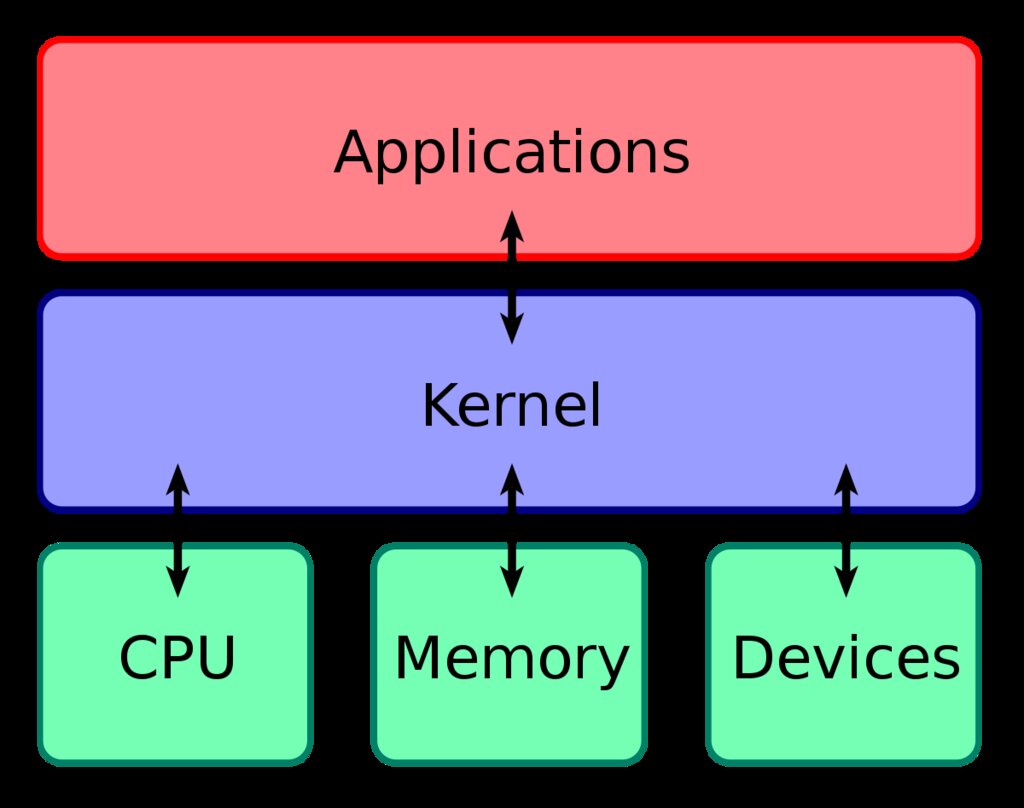
The kernel is the heart of the OS. It has complete control over everything in the system. When you want to save a file or connect to Wi-Fi, an application sends a request to the kernel, which then translates that request into instructions for the hardware, like the hard drive or the network card.
Next is the user interface (UI). This is the part you interact with. It can be a Graphical User Interface (GUI), with icons, windows, and menus, like you see in Windows or macOS. It can also be a command-line interface (CLI), where you type text commands, which is common on servers and for developers.
Finally, there are system utilities. These are programs that help manage and maintain the computer. Think of tools for disk cleanup, task scheduling, or managing user accounts. They aren't part of the core kernel, but they are essential for the OS to be useful.
A Master of All Trades
The main purpose of the OS is to manage the computer's resources efficiently and fairly. It juggles multiple tasks at once, ensuring that every program gets what it needs without interfering with others. This management role breaks down into four main functions.
| Function | Description |
|---|---|
| Process Management | Manages the programs that are running, deciding which gets to use the CPU and for how long. |
| Memory Management | Allocates and deallocates space in the main memory (RAM) for programs and data. |
| File System Management | Organizes files and directories on storage devices, controlling how data is stored and retrieved. |
| Device Management | Controls communication with all connected hardware, such as the keyboard, mouse, and printer, using programs called drivers. |
Imagine you're writing an email while listening to music and a notification from your calendar pops up. The OS is seamlessly managing the email program, the music player, and the notification system. It gives each process a slice of the CPU's time, allocates memory for each one to run, pulls the music file from your hard drive, and directs the sound to your speakers. It handles all this complexity behind the scenes, so you can just use your computer.
Which of the following is the best analogy for the primary role of an operating system?
What is the core component of an operating system that has complete control over the system and translates software requests into hardware instructions?
In short, the operating system is the master coordinator, turning a complex collection of hardware into a useful, interactive tool.