Ontology in Pharma OSD Manufacturing
Introduction to Ontology
What Is an Ontology?
Think of a library. Without a cataloging system, it would be a chaotic pile of books. You wouldn't know where to find a specific novel or how poetry is related to prose. An ontology is like a super-powered cataloging system for knowledge. It doesn’t just list items; it defines what they are and how they relate to each other.
In artificial intelligence, ontology is a formal representation of knowledge as a set of concepts and the relationships between those concepts.
Its main purpose is to create a shared vocabulary for a specific subject, or domain. This allows different people—and different computer systems—to communicate without ambiguity. Whether you're a biologist studying genes or an e-commerce platform managing product inventory, an ontology provides a clear, common framework for understanding your data.
The Building Blocks
Every ontology is built from a few simple, powerful components. Let’s imagine we're creating an ontology for a basic kitchen.
First, we have Classes. These are the main categories or concepts. In our kitchen, classes might include
Appliance,Utensil, andIngredient.
Next, we define Properties. These are the attributes that describe each class. An Appliance might have a property for wattage, and an Ingredient could have a property for calories.
Finally, we establish Relationships. These are the connections between classes. For example, a
Utensilis used with anIngredient. AnAppliancecontains anIngredient. These relationships are what give the ontology its structure and meaning.
By combining these building blocks, we can map out a complex domain in a way that is both human-readable and machine-processable.
A Common Language for Data
The real power of ontologies shines when we need to combine information from different sources. Imagine two different grocery store databases. One lists tomatoes under "Produce," while the other calls them "Vegetables." A human knows they're the same thing, but a computer would see them as completely separate items.
This is a problem of interoperability—the ability of different systems to exchange and make use of information.
Ontologies serve a crucial function by establishing a common vocabulary and set of relationships that can be used to describe and understand data from different sources.
By mapping both databases to a shared ontology, we can teach the computer that "Produce" and "Vegetables" can both contain "Tomato." The ontology acts as a universal translator, creating a unified view of the data. This allows for more powerful analysis and prevents the errors that arise from inconsistent terminology.
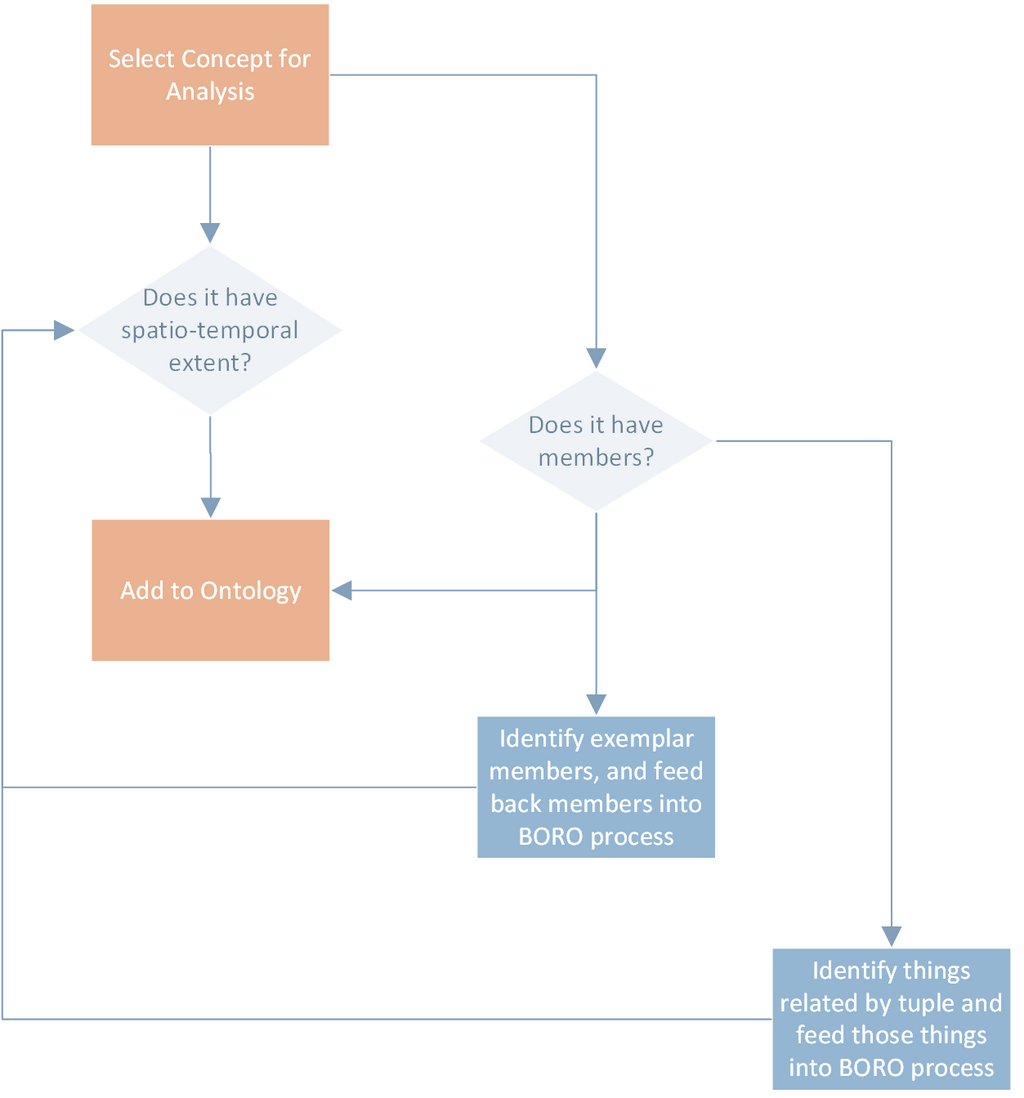
Ontologies are used across many fields to solve this exact problem.
In biology, the Gene Ontology provides a standard vocabulary for describing the functions of genes and proteins across different species. In finance, ontologies help banks standardize data for risk assessment and regulatory reporting. Even e-commerce sites use them to power product recommendations by understanding the relationships between items, like how a specific camera is compatible with a certain lens.
By providing structure and meaning, ontologies turn messy, disconnected data into organized, interconnected knowledge.
Ready to check your understanding?
What is the primary purpose of an ontology?
Imagine one hospital's database records patient temperature in Celsius, while another uses Fahrenheit. This is a problem of ________.
Now you have a foundational understanding of what ontologies are, why they are useful, and the basic components used to build them.