Ontario Grade 9 Science Essentials
Scientific Investigation
The Journey of Discovery
Science isn't just a collection of facts; it's a way of asking and answering questions about the world. This process, often called scientific inquiry, provides a structured path for exploring observations and finding reliable answers. It's a flexible framework that guides us from a simple question to a well-supported conclusion.
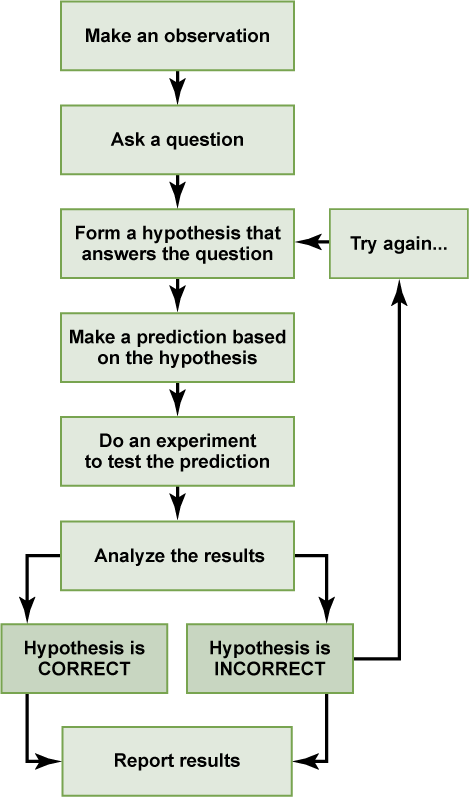
The journey starts with an observation. You notice something interesting or puzzling. This leads you to ask a question. For instance, you might observe that the plants on your sunny windowsill seem to grow faster than the ones across the room.
Next, you form a hypothesis. This isn't a random guess. It's a specific, testable prediction about the answer to your question. A good hypothesis is a clear statement, like: "Plants that receive more sunlight will grow taller than plants that receive less sunlight."
Then comes the fun part: the experiment. You'll design a fair test to see if your hypothesis holds up. After running the experiment, you analyze the data you've collected. Do the results support your prediction? Finally, you draw a conclusion and share what you've learned. This process ensures that scientific knowledge is built on evidence.
Every step is important. A well-designed experiment won't help if the initial question is unclear, and a brilliant discovery is lost if it isn't communicated.
Designing a Fair Test
The heart of scientific investigation is the experiment. A good experiment is designed to be a "fair test," meaning you only change one thing at a time while keeping everything else the same. This allows you to be confident that the change you made is what caused the results you see. To do this, scientists think in terms of variables.
variable
noun
Any factor, trait, or condition that can exist in differing amounts or types.
There are three main types of variables:
- Independent Variable: This is the one thing you intentionally change or test. In our plant example, it's the amount of sunlight.
- Dependent Variable: This is what you observe or measure to see the effect of your change. It's the outcome. For the plants, this would be their height.
- Controlled Variables: These are all the other conditions you must keep exactly the same for all groups in your experiment. If you don't control them, they could influence your results and make your test unfair.
| Variable Type | Plant Experiment Example |
|---|---|
| Independent | Amount of daily sunlight |
| Dependent | Plant height (measured weekly) |
| Controlled | Type of plant, pot size, soil type, amount of water, temperature |
Experiments also need a control group. This is a group that doesn't receive the experimental treatment. In our example, you'd have one group of plants in a sunny spot (the experimental group) and another group in a spot with less light (the control group). Comparing the two groups at the end shows you the true effect of the independent variable.
Making Sense of Data
Once your experiment is running, you need to collect data. Data can come in two main flavors.
Quantitative data involves numbers, things you can measure. Think plant height in centimeters or temperature in degrees.
Qualitative data involves descriptions, things you observe with your senses. This could be the color of the leaves or a description of the plant's overall health.
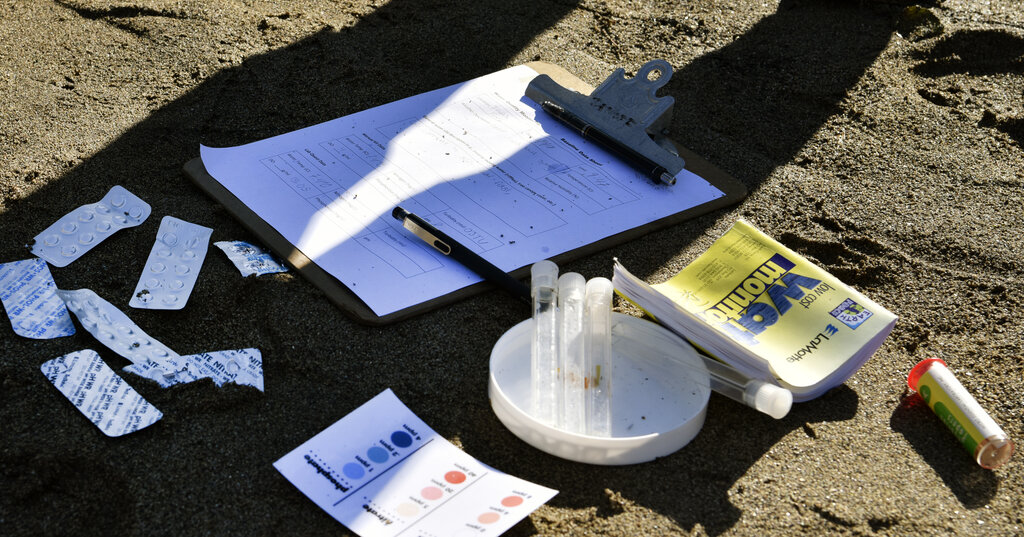
After collecting your data, you analyze it. This means organizing your information, often in charts or graphs, and looking for patterns or trends. Did the plants in the sun consistently grow taller each week? Were their leaves a healthier shade of green? The goal is to turn your raw observations into a clear story that either supports or refutes your hypothesis.
It's crucial to be objective during analysis. Let the data speak for itself, even if it tells you something you didn't expect. An unexpected result isn't a failure; it's a new discovery that can lead to a new hypothesis.
Sharing What You Learn
The final step of the scientific method is communication. A discovery is only useful if it's shared with others. Scientists write papers, create presentations, and publish their findings so that other scientists can learn from their work, replicate their experiments, and build on their knowledge.
Communicating your results involves summarizing your entire process: your initial question, your hypothesis, the details of your experiment, your data, and your final conclusion. This transparency allows the scientific community to check the work and trust the results. Whether your hypothesis was right or wrong, sharing your findings contributes to the larger body of scientific knowledge.
Finally, students draw conclusions based on their investigations and communicate their findings.
Now, let's review the key terms from this process.
Ready to test your understanding?
A scientist is testing a new fertilizer to see if it makes bean plants grow taller. She has two groups of plants. Group A gets the new fertilizer, and Group B gets no fertilizer. What is the role of Group B in this experiment?
Which of the following is the best example of a testable hypothesis?
By following these steps, anyone can think like a scientist. It’s a powerful tool for exploring the world, solving problems, and turning curiosity into understanding.