Ontario Decision Making Explained
Introduction to Ontario's Legal System
The Courts of Ontario
Ontario's legal system is built on a clear hierarchy of courts. Think of it as a ladder. Most legal cases start on the lower rungs and, if necessary, can climb higher for review.
The two main trial courts where cases begin are the Ontario Court of Justice and the Superior Court of Justice. They handle different types of cases.
- Ontario Court of Justice: This court deals with the vast majority of criminal charges in the province. It also handles family law cases that don't involve divorce or property division, as well as all provincial offenses, like traffic tickets.
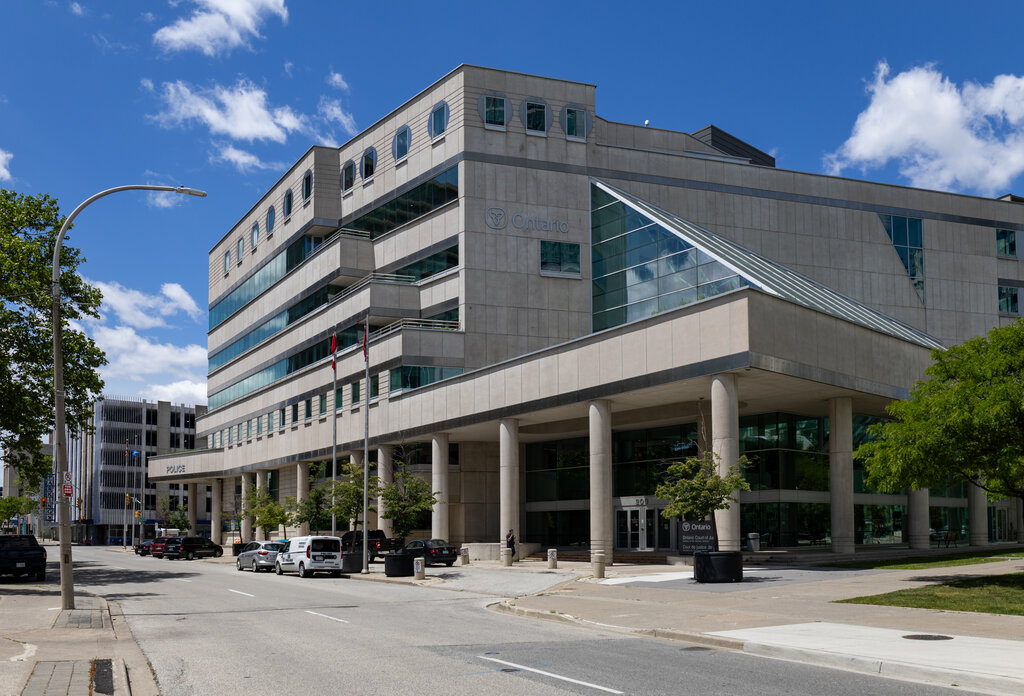
- Superior Court of Justice: This is a court of "inherent jurisdiction," meaning it can hear any case unless a specific law says it can't. It handles the most serious criminal and civil cases, including divorces, large lawsuits, and bankruptcies. It also has specialized branches like the Small Claims Court for minor civil disputes and the Divisional Court, which hears appeals from certain boards and tribunals.
If someone believes a mistake was made in a trial decision from either of these courts, they can ask for an appeal. Most appeals go to the Court of Appeal for Ontario, the highest court in the province. This court doesn't re-hear the whole case; instead, a panel of judges reviews the trial record to see if the original judge made a legal error.
Finally, at the very top of the entire Canadian legal system is the Supreme Court of Canada. This is the final court of appeal for all cases, both civil and criminal. It only agrees to hear a small number of cases that involve issues of national importance. Its decisions are final and binding on all other courts in Canada.
Civil vs. Criminal Law
Legal cases fall into two main categories: civil and criminal. The difference lies in who is involved and what the goal is.
Civil law deals with disputes between private parties, such as individuals or corporations. The goal is usually to resolve a disagreement, often with financial compensation. For example, a lawsuit over a broken contract or a personal injury claim are civil matters.
Criminal law, on the other hand, involves the government prosecuting someone for an act that is considered harmful to society as a whole, like theft or assault. The goal is to punish the wrongdoer and protect the public. The government, referred to as "the Crown," brings the case against the accused person.
| Feature | Civil Law | Criminal Law |
|---|---|---|
| Parties | Individuals or organizations (Plaintiff vs. Defendant) | The state ("the Crown") vs. an accused person |
| Purpose | To resolve a dispute, often with compensation | To punish an offense and protect society |
| Burden of Proof | Balance of probabilities | Beyond a reasonable doubt |
| Outcome | Liable or not liable; remedies like damages | Guilty or not guilty; penalties like fines or imprisonment |
Judicial Independence
For this entire system to work fairly, we rely on a core principle called judicial independence. This means that judges must be free to make decisions based purely on the facts and the law, without any outside pressure or influence.
Governments, corporations, or powerful individuals cannot tell a judge how to rule in a case. This separation ensures that everyone who comes before a court receives an impartial hearing. Judges are appointed, not elected, to protect them from political pressure and allow them to make unpopular decisions if that's what the law requires.
Judicial independence is the cornerstone of the rule of law. It guarantees that legal disputes are decided fairly and impartially.
Now, let's test your understanding of these fundamental concepts.
A case involving a provincial offense, such as a traffic ticket, would typically begin in which court?
What is the primary difference between civil and criminal law?
Before you go, review these key terms.
Understanding this structure is the first step to navigating the complexities of the legal world in Ontario.