Online Customer Acquisition
Introduction to Digital Marketing
What Is Digital Marketing?
At its core, digital marketing is simply marketing that uses electronic devices and the internet. It's the process of promoting products, services, or brands through various digital channels to connect with potential customers where they spend much of their time: online.
Think of it as the art and science of using online tools to communicate a brand’s value and build relationships with customers.
If you've ever seen an ad on social media, received a promotional email from a store you like, or found a company by searching on Google, you've experienced digital marketing. It's a fundamental part of how modern businesses reach and engage with their audience.
From Town Criers to Targeted Ads
Marketing has always been about connecting with an audience in the right place at the right time. Years ago, that meant placing ads in newspapers or on television. This is often called traditional marketing. It was a one-way conversation: businesses broadcasted their message, and hoped the right people were listening.
The internet changed everything. Instead of waiting for a commercial break, people could now actively search for information, products, and services. This shift gave rise to digital marketing, which allows for a two-way conversation between a brand and its customers. It's more direct, personal, and measurable than ever before.
| Feature | Traditional Marketing | Digital Marketing |
|---|---|---|
| Communication | One-way (broadcast) | Two-way (interactive) |
| Audience | Mass, broad | Targeted, specific |
| Measurement | Difficult, often estimated | Precise, data-driven |
| Pacing | Long lead times | Real-time, immediate |
The Digital Toolkit
Digital marketing isn't a single thing; it's a collection of different online strategies and channels. Each channel serves a unique purpose, but they often work together to create a cohesive marketing plan.
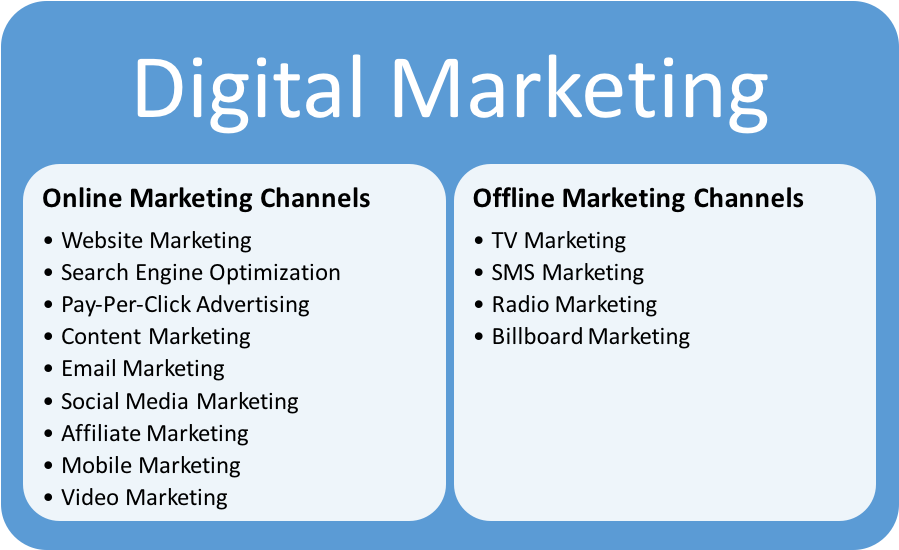
Here are some of the most common channels in the digital marketing world:
-
Search Engine Optimization (SEO): This is the practice of optimizing your website to rank higher in search engine results pages, like on Google. The goal is to increase organic (non-paid) traffic.
-
Pay-Per-Click (PPC) Advertising: With PPC, you pay a fee each time one of your ads is clicked. The most popular type is search engine advertising, where your ad appears at the top of search results for specific keywords.
-
Social Media Marketing: This involves promoting your brand and content on social media channels like Facebook, Instagram, X (formerly Twitter), and LinkedIn to increase brand awareness, drive traffic, and generate leads.
-
Content Marketing: This focuses on creating and distributing valuable, relevant, and consistent content—like blog posts, videos, or ebooks—to attract and retain a clearly defined audience.
-
Email Marketing: A direct line of communication with your audience. Businesses use email to promote content, share discounts, and direct people toward their website. It's a powerful way to nurture relationships with potential and current customers.
Why Go Digital?
The benefits of digital marketing over traditional methods are clear and significant. First, it offers a global reach. A small business in one town can sell to customers across the world with a well-built website and a smart digital strategy.
Second, it’s incredibly targeted. Unlike a billboard that everyone sees, a digital ad can be shown specifically to people based on their age, location, interests, and even past online behavior. This precision makes marketing efforts more efficient and cost-effective.
Finally, every action is measurable. Marketers can track exactly how many people saw an ad, how many clicked on it, and how many made a purchase. This data allows for continuous improvement, as you can see what's working and what isn't, and adjust your strategy accordingly.
This ability to track return on investment (ROI) is one of the biggest advantages of digital marketing. You know exactly where your money is going and what results it’s generating.
What is the core purpose of digital marketing?
A company wants to improve its website's ranking in Google's non-paid search results. Which strategy should they focus on?
This foundation gives you a starting point for understanding how businesses connect with people in the digital age.