Online Course Creation Masterclass
Instructional Design Basics
What is Instructional Design?
Instructional design is the art and science of creating effective learning experiences. Think of it as the blueprint for a course. Just as an architect designs a house before construction begins, an instructional designer plans out the entire learning journey before a single lesson is built. The goal is to make learning more efficient, effective, and engaging for the student.
Instructional design is the backbone of effective learning experiences.
This process involves analyzing who the learners are, defining what they need to learn, and deciding the best way to teach it. It's a systematic approach that ensures every element of a course—from videos to quizzes to reading materials—has a clear purpose and contributes to the overall goal.
Start with the Destination
Imagine planning a road trip without a destination. You might have a great car and a full tank of gas, but you'd just be driving aimlessly. The same is true for a course. The first and most critical step in instructional design is to define clear learning objectives.
Objective
noun
A specific, measurable statement that describes what a learner will be able to do after completing a course or lesson.
Learning objectives are your destination. They are promises you make to your learners about the skills or knowledge they will gain. For example, instead of a vague goal like "Learn about photography," a strong learning objective would be "By the end of this course, you will be able to adjust aperture, shutter speed, and ISO to correctly expose a photograph."
Once you have your objectives, every piece of content and every activity in your course must align with them. This is called alignment. If you're teaching how to adjust aperture, you should have a lesson explaining it, an activity where students practice it, and a quiz question that tests their understanding of it. Anything that doesn't help learners achieve an objective is a distraction.
Well-defined learning objectives are the foundation of any successful online course.
Frameworks for Learning
You don't have to invent a process from scratch. Instructional designers use established models as frameworks for building courses. These models provide a reliable structure to guide the design and development process, ensuring all necessary steps are covered.
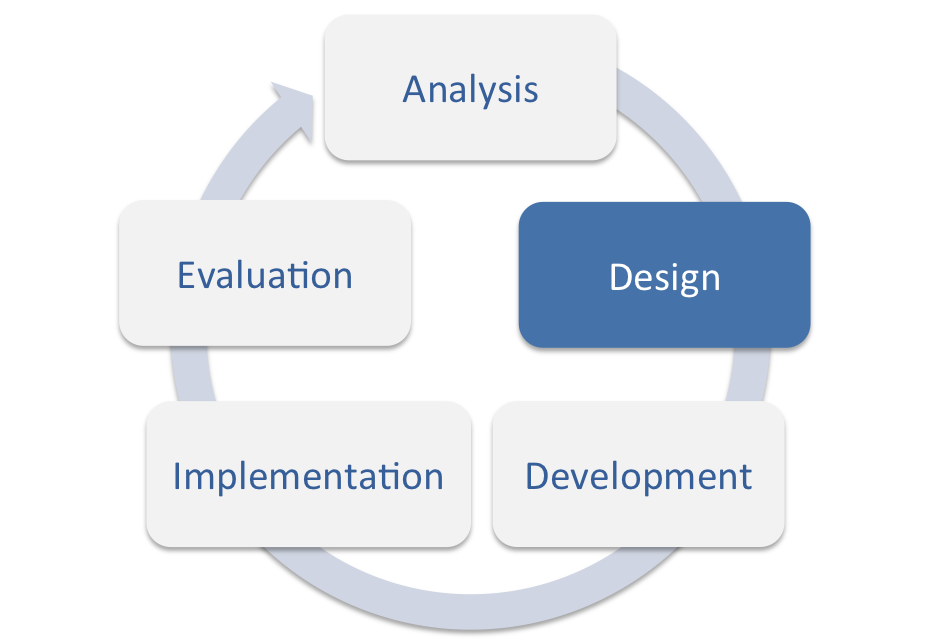
One popular model is ADDIE, which stands for Analysis, Design, Development, Implementation, and Evaluation. It's a straightforward, step-by-step process that takes you from understanding your audience's needs all the way to evaluating the course's success.
Another powerful framework is Merrill's First Principles of Instruction. This model focuses on what makes learning stick. It suggests that learning is most effective when it is problem-centered and involves activating existing knowledge, demonstrating new skills, applying those skills, and integrating them into the learner's world.
These models aren't rigid rules but helpful guides. They provide a checklist to ensure you’re building a course that is both comprehensive and effective.
Designing for Adults
Teaching adults is different from teaching children. Adult learners (a field often called andragogy) bring a wealth of life experience to the table. They are typically more self-directed and motivated, but they also need to understand why they are learning something. Unlike a child in school, an adult won't learn a topic just because someone told them to. They need to see its direct relevance to their lives or careers.
When designing for adults, keep these principles in mind:
- Relevance: Connect the content directly to their goals or problems they need to solve.
- Experience: Acknowledge and draw upon their existing knowledge and experience.
- Autonomy: Give them some control over their learning path.
- Problem-focused: Center learning around real-world tasks and challenges, not just abstract concepts.
People also have different preferences for how they absorb information. Some are visual learners who benefit from diagrams and videos. Others are auditory learners who prefer lectures and discussions. Kinesthetic learners learn best by doing, while read/write learners prefer text.
A well-designed online course caters to these diverse styles by offering a mix of content types. Include videos, readings, hands-on activities, and group discussions. This variety not only accommodates different learning styles but also makes the course more engaging for everyone.
By offering content in multiple formats, you give every learner a better chance to connect with the material and succeed.
Now, let's test what you've learned about these foundational concepts.
What is the primary goal of instructional design?
Which of the following is the best example of a clear learning objective?
Building an effective course starts with these core ideas. By focusing on clear goals, using a structured process, and understanding your learners, you can create an experience that truly works.