Onboarding Mastery for M.S. Agarwal Retail Sales
Metallurgy and Product Core
The Anatomy of a High-Performance Bar
The key to MSAF's product performance isn't just the steel itself, but how we treat it. Our TMT (Thermo-Mechanical Treatment) bars have a unique dual structure: a tough, hard outer layer and a soft, flexible inner core. This combination delivers both high strength and excellent ductility, allowing the bar to bend without breaking.
This structure is created through a precise, multi-stage process. It starts when a hot-rolled steel bar, straight from the mill at a temperature of around 900°C, enters a quenching chamber. Here, it's hit with a carefully controlled, high-pressure water spray. This is where MSAF's use of German becomes critical, ensuring a perfect quench every time.
This sudden cooling transforms the bar's surface into a hard, crystalline structure called , while the core remains hot and malleable. As the bar exits the quenching chamber, a fascinating second stage begins: self-tempering. The residual heat from the core flows outward, warming and tempering the brittle martensitic layer, which increases its toughness and reduces brittleness.
Meanwhile, the core cools slowly in the open air. This gentle cooling process allows a different microstructure to form: a soft, ductile blend of ferrite and pearlite. The final product is a composite bar, engineered with a tough exterior to handle high stress and a flexible core to absorb shocks and vibrations, such as those from an earthquake.
Decoding the Grades
This advanced manufacturing process allows us to create steel with specific mechanical properties, which are categorized into grades. The grade, such as Fe 600, tells you about the bar's yield strength. "Fe" stands for Ferrum (Latin for iron), and 600 indicates a minimum yield strength of 600 Megapascals (MPa) or N/mm².
Yield strength is the amount of stress a material can withstand before it starts to deform permanently. Elongation, on the other hand, measures ductility—how much a bar can stretch before it breaks. There's an inherent trade-off between these two properties.
| Grade | Min. Yield Strength (MPa) | Min. Elongation (%) | Key Characteristic |
|---|---|---|---|
| Fe 500D | 500 | 16 | High ductility, ideal for seismic zones |
| Fe 550 | 550 | 14.5 | A balance of strength and ductility |
| Fe 600 | 600 | 10 | Maximum strength, for high-stress infrastructure |
As you can see, increasing the yield strength from Fe 500D to Fe 600 comes at the cost of reduced elongation. An Fe 600 bar is significantly stronger, allowing engineers to use less steel in a structure, which can reduce costs and congestion in the concrete. However, its lower ductility means it's best suited for projects where raw strength is the priority over flexibility, such as high-rise buildings or bridges.
For customers, the choice is clear: Fe 500D for earthquake-prone regions where flexibility is key, and Fe 600 for high-stress applications where maximizing load-bearing capacity is the goal.
The Virgin Steel Advantage
The final piece of the quality puzzle is the raw material. MSAF exclusively uses primary, or 'virgin,' steel made in an . This process uses a mix of high-quality raw materials and select scrap, giving us precise control over the chemical composition of the steel.
This is a major advantage over secondary steel producers, who rely almost entirely on melting down scrap metal. Scrap-based steel often contains higher levels of impurities like sulfur and phosphorus. These elements can create weak points in the final product, compromising its structural integrity and making it more susceptible to fatigue and failure over time.
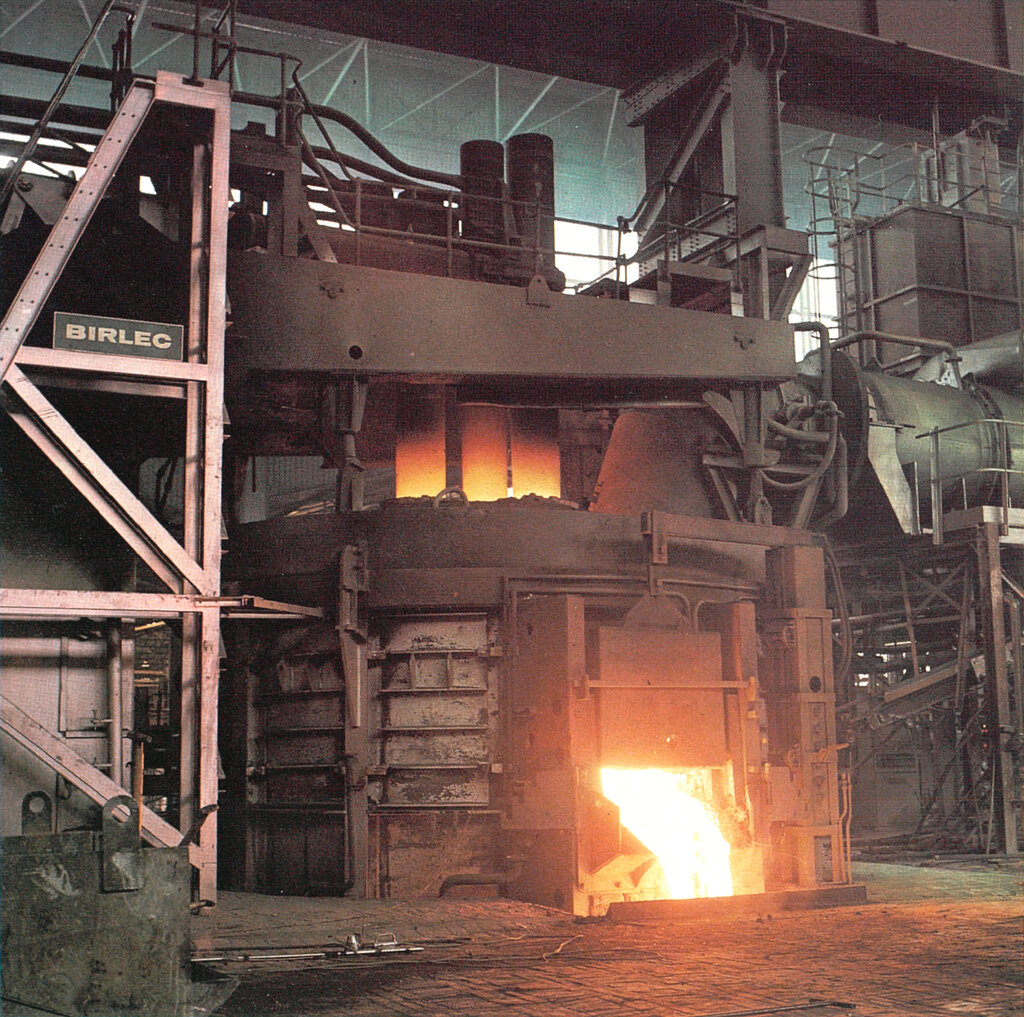
By controlling impurities from the very beginning, our AF Star and MS Life Fe 600 bars offer superior, more reliable performance. This ensures that the mechanical properties promised on paper are delivered on the construction site. It's a commitment to quality that starts at the molecular level.
What is the primary advantage of the dual-structure (hard outer layer, soft inner core) in MSAF's TMT bars?
During the TMT process, what happens immediately after the hot steel bar is sprayed with high-pressure water (quenching)?
Understanding these metallurgical details is what separates a salesperson from a trusted advisor. This knowledge allows you to explain not just what our products do, but why they are the superior choice for a client's project.