On-Device AI Today
Introduction to On-Device AI
What Is On-Device AI?
Artificial intelligence isn't just something that happens in massive, faraway data centers. Increasingly, it's happening right in the palm of your hand, in your car, or on your wrist. This is called on-device AI.
On-Device AI
noun
The execution of artificial intelligence tasks directly on a physical device, like a smartphone or a smart speaker, without needing to send data to a remote server.
Think about unlocking your phone with your face. The camera sees you, and the phone's processor analyzes your features to confirm your identity. This entire process happens locally, on the device itself. Your facial data isn't sent to a cloud server for analysis; the phone's internal hardware handles the job.
On-device AI, sometimes called "edge AI," brings the processing power to where the data is collected, rather than sending the data to the processor.
Cloud vs. Device
The traditional way to handle AI tasks has been through the cloud. When you ask a digital assistant a complex question, your voice recording is typically sent over the internet to a powerful server. The server processes the request, finds the answer, and sends it back to your device. This cloud-based approach has access to immense computational power and vast amounts of data.
On-device AI works differently. It relies on specialized, energy-efficient chips built directly into the device. These processors are designed to run AI models without needing a constant internet connection or communication with a remote server. The trade-off is that they have less computational power than a giant data center.
The choice between cloud and on-device AI depends entirely on the task. For massive, complex models that require training on petabytes of data, the cloud is essential. For quick, private, and offline tasks, on-device AI is the clear winner.
The Advantages of Local Processing
Why go to the trouble of putting AI directly on a device? There are three main benefits: speed, privacy, and offline access.
Speed (Low Latency): Sending data to the cloud and waiting for a response takes time. This delay, or latency, can be a problem for real-time applications. On-device AI eliminates this round trip. The processing happens instantly, which is critical for things like real-time language translation or augmented reality filters that need to react to your movements immediately.
Privacy: When data is processed on your device, it doesn't have to leave it. Sensitive information—like your photos, messages, or biometric data—stays local. This is a huge advantage for privacy, as it reduces the risk of your personal data being intercepted or misused on a server you don't control.
Offline Functionality: Since on-device AI doesn't need an internet connection, it works anywhere. You can use your phone’s smart camera features, get text predictions, or use navigation in an app even when you're on a plane or in an area with no cell service. This makes devices more reliable and useful in all conditions.
On-Device AI in the Wild
You probably use on-device AI every day without realizing it. It has become a standard feature in many of the gadgets we rely on.
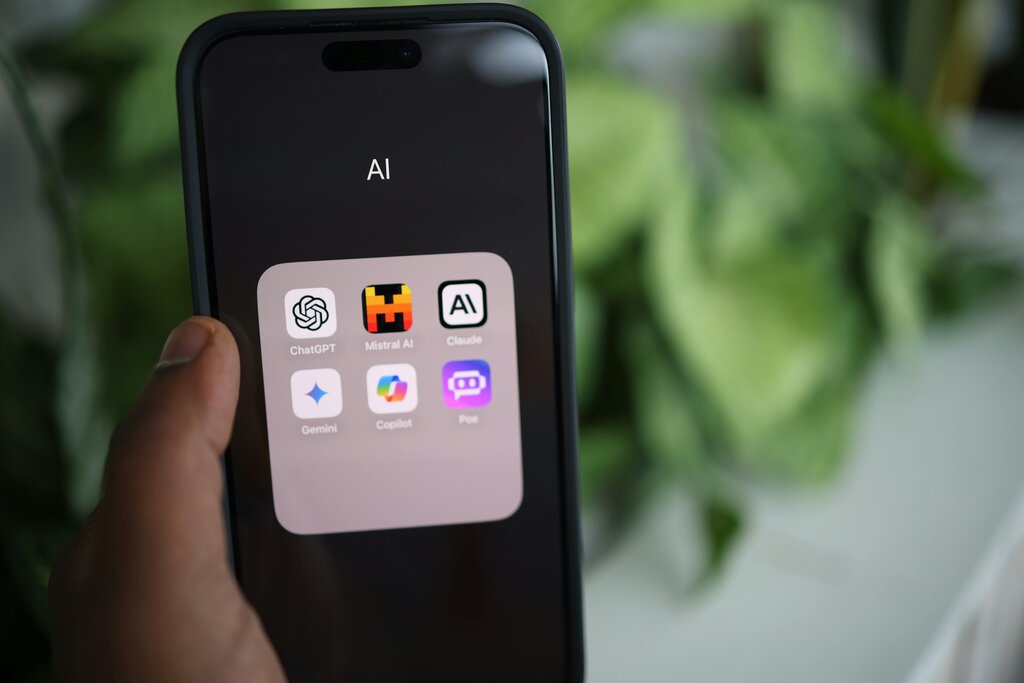
In smartphones, it powers features like predictive text, photo organization (grouping pictures by faces or locations), and real-time camera effects. When your phone suggests the next word you might type, it's using a language model running locally.
IoT (Internet of Things) devices, such as smart home cameras and speakers, use on-device AI to process events locally. A security camera can analyze video to distinguish between a person and a passing car, sending you an alert only when something important happens. This saves bandwidth and improves response time.
Wearables like smartwatches use on-device AI for health monitoring. They can analyze your heart rate patterns to detect irregularities or track your sleep cycles, all without constantly sending sensitive health data to the cloud.
Ready to check your understanding?
What is a primary benefit of processing AI tasks on a device instead of in the cloud?
Which of the following scenarios is the best example of on-device AI in action?
As processors become more powerful and efficient, we can expect to see even more sophisticated AI tasks moving from the cloud to our local devices.