OLT and Telecom Fundamentals
Introduction to Fiber Optic Communications
Sending Data with Light
At its heart, fiber optic communication is simple: it's about sending information using pulses of light. Instead of pushing electrons through a copper wire, we flash light down a tiny, flexible strand of ultra-pure glass or plastic called an optical fiber. These fibers are incredibly thin, often about the diameter of a human hair.
Think of it like sending Morse code with a flashlight. A quick flash can represent a '1', and no flash can represent a '0'. By flashing the light source billions of times per second, we can transmit a massive amount of digital data, from emails and websites to streaming video and phone calls.
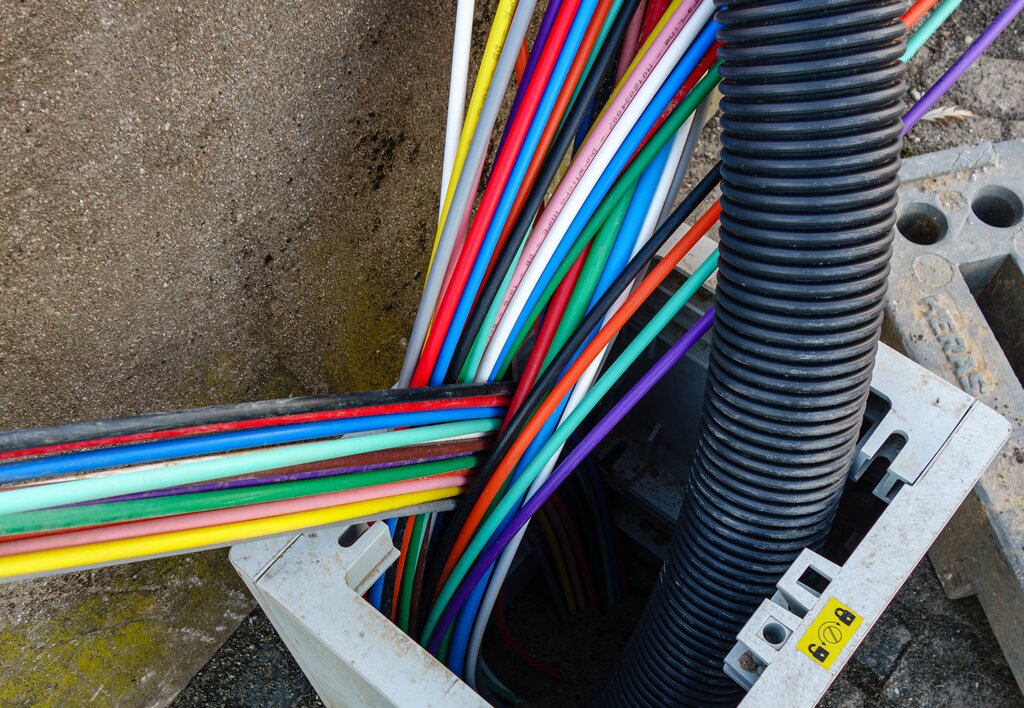
The light travels down the fiber by repeatedly bouncing off the inner walls. This process, called total internal reflection, acts like a perfect mirror, trapping the light inside the core of the fiber and allowing it to travel for miles with very little loss of signal.
Why Fiber Beats Copper
For a long time, copper wires were the standard for telecommunications. But fiber optics offer several huge advantages that have made them the preferred choice for high-speed networks.
Bandwidth: Light waves have a much higher frequency than the electrical signals used in copper wires. This means they can carry significantly more information. It's the difference between a single-lane country road and a 20-lane superhighway.
Distance and Signal Quality: Light signals traveling through fiber lose less strength (or 'attenuate') over distance compared to electrical signals in copper. A signal can travel for miles through a fiber cable without needing a booster. Copper cables require amplification much more frequently. Furthermore, because fiber cables carry light, they are immune to electromagnetic interference from power lines, motors, and other sources of electrical noise. This results in a cleaner, more reliable signal.
| Feature | Fiber Optic Cable | Copper Cable |
|---|---|---|
| Bandwidth | Very High | Lower |
| Distance | Long (miles) | Short (hundreds of feet) |
| Interference | Immune to EMI | Susceptible to EMI |
| Security | Difficult to tap | Easier to tap |
| Size | Thinner and lighter | Thicker and heavier |
The Basic Components
A fiber optic communication system has three essential parts working together to move data.
Transmitter
noun
Converts electrical data signals into light signals. It uses a light source, like a light-emitting diode (LED) or a laser, to generate the pulses of light that travel down the fiber.
The transmitter is the starting point. It takes the digital 1s and 0s from a computer or network device and translates them into a corresponding pattern of light flashes.
Receiver
noun
Detects the incoming light signals and converts them back into electrical data signals. The key component is a photodetector, which generates an electrical current when struck by light.
At the other end of the fiber, the receiver catches the light pulses. It acts as the destination, translating the light show back into the 1s and 0s that the receiving device can understand and use.
And connecting them, of course, is the optical fiber itself, the passive pathway that guides the light from the transmitter to the receiver. These three components form the foundation of any fiber optic link, from the internet cables spanning oceans to the connections that bring high-speed internet to your home.
Time to check what you've learned.
What is the primary phenomenon that allows light to travel long distances inside an optical fiber by bouncing off its inner walls?
In a fiber optic communication system, what is the role of the receiver?
Together, these elements create a communication system that is faster, more reliable, and capable of carrying far more data than its copper-based predecessors.