Oil Palm Cultivation and Yield Calculation
Oil Palm Botany
The Oil Palm Blueprint
The oil palm, known scientifically as Elaeis guineensis, is a distinctive tropical tree. Unlike many trees that branch out, the oil palm grows a single, stout trunk that can reach heights of over 20 meters. This trunk, which is actually a woody stem, is rough with the bases of old leaves and supports a dense crown of large leaves at its top.
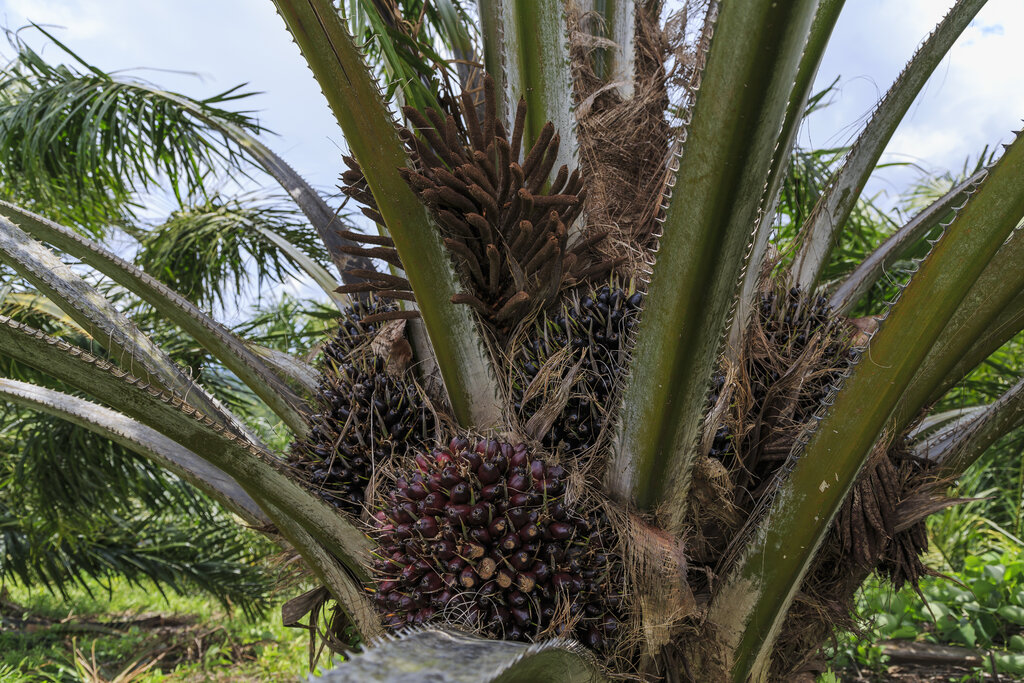
The tree doesn't have bark in the traditional sense. Instead, its trunk is covered by the persistent bases of shed leaves, which provide a sort of protective layer. The diameter of the trunk remains fairly constant throughout the tree's life, as it doesn't grow wider with age like an oak or maple tree does.
Leaves and Roots
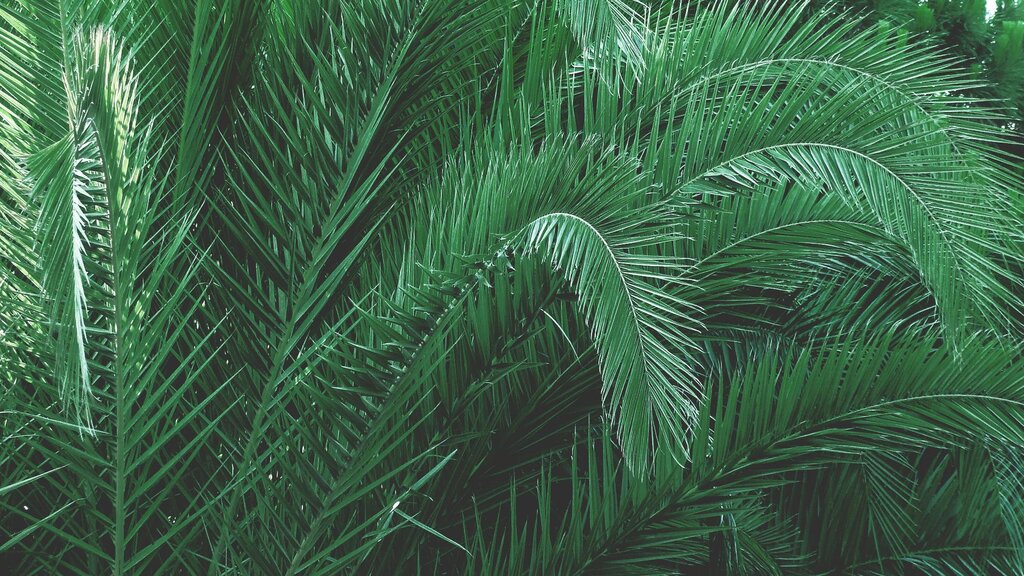
The leaves, or fronds, are the tree's solar panels. They are massive, reaching lengths of 3 to 5 meters. Each frond is pinnate, meaning it has a central stem, called the rachis, with many long, narrow leaflets branching off either side, resembling a giant feather. The base of the frond, the petiole, is armed with sharp spines that help protect the tree's growing point from herbivores.
A mature oil palm can have between 40 and 60 fronds in its crown at any given time. These leaves are crucial for photosynthesis, the process of converting sunlight into the energy the tree needs to grow and produce its valuable fruit.
Below ground, the oil palm has a fibrous root system rather than a single, deep taproot. The roots arise from the base of the stem, spreading out widely in the upper layers of the soil. This network consists of primary roots that grow horizontally, with smaller secondary, tertiary, and quaternary roots branching off them. This extensive but relatively shallow system is excellent for absorbing water and nutrients from the soil surface and provides firm anchorage for the tall tree.
Flowers and Fruit
Oil palms are monoecious, meaning each tree produces both male and female flowers. However, these flowers grow in separate clusters called inflorescences. The tree typically goes through alternating phases of producing male or female flower bunches, though occasionally a tree might produce both at once.
The male inflorescence is a large, finger-like structure that produces huge quantities of fine, powdery pollen. The female inflorescence is more compact and spherical. It consists of hundreds of individual flowers, each with the potential to develop into a fruit if pollinated.
Pollination is primarily carried out by a specific type of insect, the oil palm weevil (Elaeidobius kamerunicus), as well as by wind.
After successful pollination, the female flowers develop into the oil palm fruits. These fruits grow in large, tight bunches called Fresh Fruit Bunches (FFB). A single bunch can weigh between 10 and 40 kilograms and contain several hundred to a few thousand individual fruits.
Each fruit has a simple structure: an outer skin (exocarp), a fleshy, oil-rich pulp (mesocarp), a hard shell (endocarp), and inside the shell, the kernel (endosperm), which is also rich in oil. Both the pulp and the kernel are harvested to produce two different types of oil: palm oil from the pulp and palm kernel oil from the kernel.
Now that you understand the basic botany of the oil palm, let's test your knowledge.
How does the trunk of an oil palm differ from that of a tree like an oak?
What is the primary purpose of the sharp spines located on the petiole (base) of an oil palm frond?
Understanding the tree's structure is the first step in appreciating how this remarkable plant produces one of the world's most important vegetable oils.