Oil and Gas Piping Systems Engineering
Piping System Fundamentals
What Is a Piping System?
Think of a large oil refinery or a natural gas processing plant. These facilities are like small cities, and they need a way to move materials from one place to another. Piping systems are the highways and roadways for the fluids—liquids and gases—that keep these plants running.
At its core, a piping system is an interconnected network of pipes designed to transport fluids safely and efficiently between different pieces of equipment. In the oil and gas industry, this could mean moving crude oil from a storage tank to a distillation unit, carrying steam to heat a process, or transporting finished gasoline to a holding area before it's shipped out.
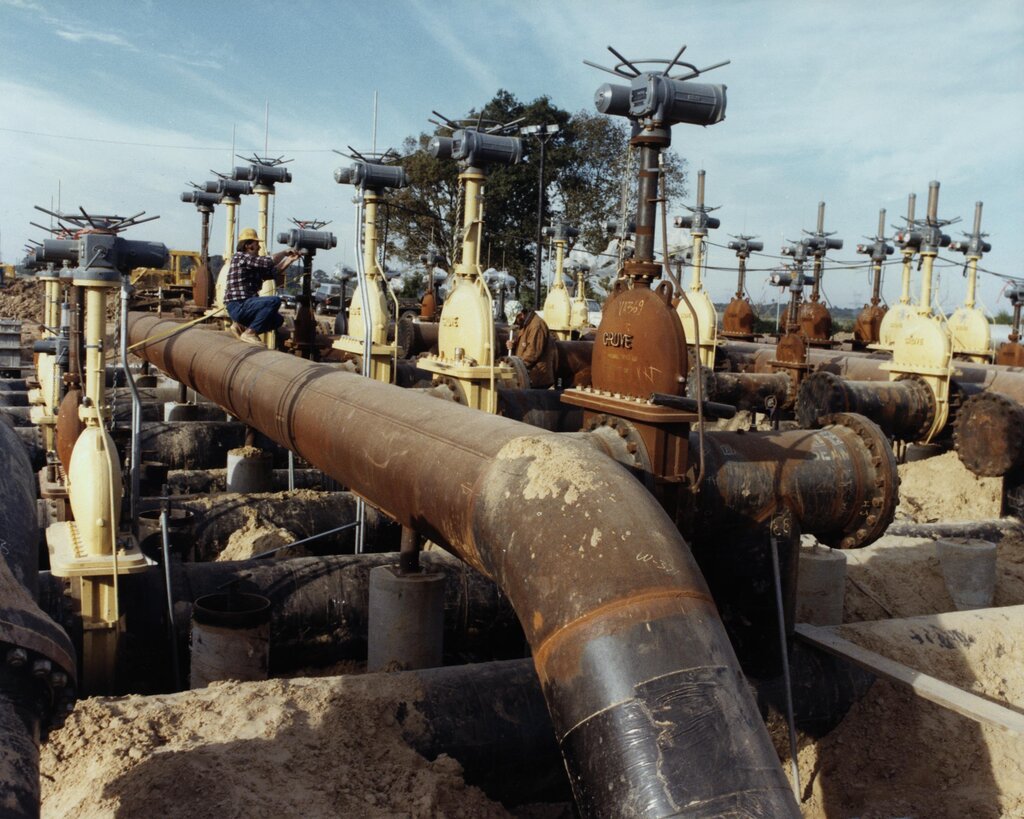
The Core Components
While piping systems can look incredibly complex, they are all built from a few fundamental types of components. Understanding these parts is the first step to understanding the whole system.
Pipe
noun
A hollow tube or cylinder used to convey fluids. It's the main component and forms the primary structure of the system.
Pipes themselves are just straight conduits. To create a useful network, you need parts that can connect pipes, change the direction of flow, or branch off into multiple paths. These are called fittings.
Common fittings include elbows to make turns, tees to create branches, and reducers to connect pipes of different sizes.
Just as important as moving fluids is the ability to control their flow. That's where valves come in. A valve is a device that regulates, directs, or controls the flow of a fluid by opening, closing, or partially obstructing passageways.
Valve
noun
A mechanical device that controls the flow and pressure within a system. Valves are essential for starting, stopping, and throttling flow.
Finally, all these components need to be connected to each other and to large equipment like pumps, tanks, and vessels. Flanges are used to make these connections. A flange is a flat rim or collar, often with bolt holes, that can be attached to the end of a pipe. Two flanges can then be bolted together with a gasket in between to create a tight seal, while still allowing for disassembly for maintenance or repairs.
Types of Piping Systems
Not all pipes in a plant do the same job. We can group them into three main categories based on what they carry and why.
| System Type | Purpose | Fluid Examples |
|---|---|---|
| Process Piping | Carries the raw materials, intermediate products, and final products that are part of the main manufacturing process. | Crude oil, natural gas, gasoline, chemicals |
| Utility Piping | Supports the main process by providing necessary utilities. | Steam, cooling water, compressed air, nitrogen |
| Service Piping | Provides general services to the plant facility itself, unrelated to the industrial process. | Drinking water, wastewater, fire protection water |
Process piping is the star of the show, directly handling the valuable hydrocarbons. Utility and service piping are the essential supporting cast, ensuring the plant can operate smoothly and safely.
How Fluids Move
Fluids don't move through pipes on their own. Their movement, or flow, is governed by basic principles of physics. Flow is primarily driven by a difference in pressure. Fluids will always move from an area of higher pressure to an area of lower pressure.
To create this pressure difference, engineers use pumps for liquids and compressors for gases. These devices add energy to the fluid, increasing its pressure and forcing it to move through the system. Gravity can also help, especially when moving liquids downhill from an elevated tank.
Think of squeezing a tube of toothpaste. Your hand creates high pressure at the bottom of the tube, forcing the toothpaste out of the low-pressure opening at the top.
Another key idea is the relationship between fluid speed and pipe size. If you have a constant amount of fluid flowing and you make the pipe narrower, the fluid has to speed up to get through. This is similar to how water flows faster through the narrow part of a river. Engineers use this principle when designing pipes to achieve the desired flow rates throughout the plant.
What is the primary function of a valve in a piping system?
A maintenance team needs to remove and replace a large pump. Which component is specifically designed to allow for this kind of disassembly and reassembly in the system?
These fundamentals—components, system types, and flow principles—are the building blocks for understanding any industrial piping system.