Offshore Vertical Axis Wind Turbines
VAWT Marine Re-emergence
The Deep Water Dilemma
For decades, the silhouette of a wind turbine has been unmistakable: a tall tower with three massive blades spinning like a pinwheel. These are Horizontal Axis Wind Turbines, or HAWTs. They have dominated the wind energy landscape, but as we push into deeper waters over 60 meters, their design is hitting a fundamental limit.
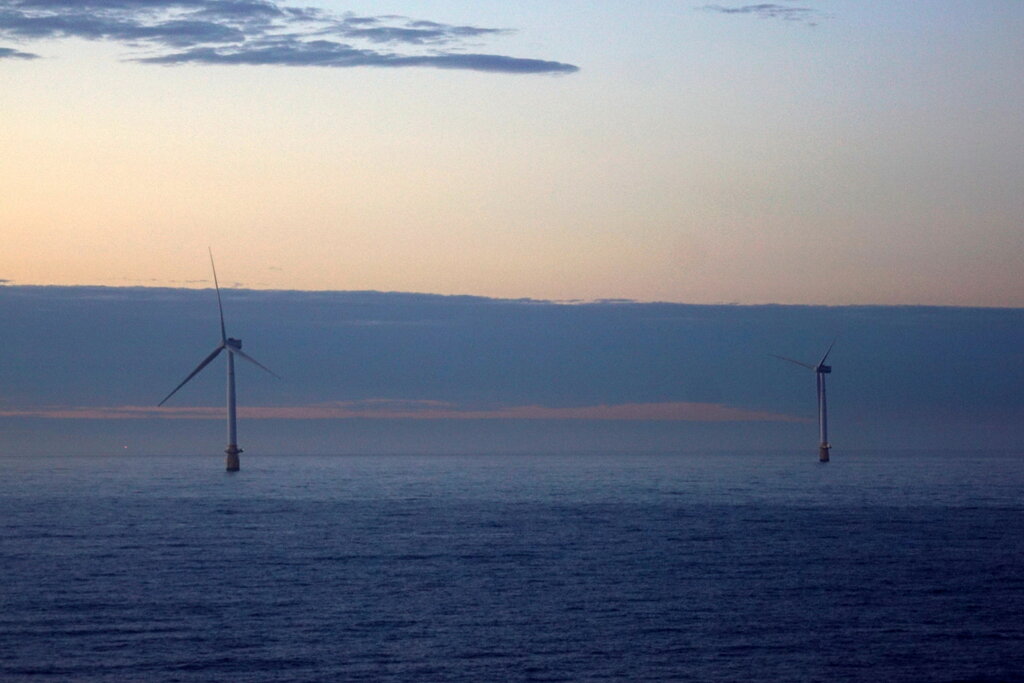
The problem is weight, and where that weight sits. A HAWT's key components—the gearbox, generator, and control systems—are all packed into a heavy housing at the very top of the tower called a s. For a multi-megawatt offshore turbine, this nacelle can weigh hundreds of tons. Placing all this mass 100 meters or more above the water creates an enormous top-heavy structure. In shallow water, this isn't a deal-breaker; the turbine's foundation can be fixed directly to the seabed. But in deep water, where turbines must float, a high center of gravity becomes a serious engineering headache.
A high center of gravity () makes a floating platform inherently less stable. To counteract this, engineers have to design enormous, heavy, and expensive floating foundations. The structure must constantly fight the tendency to tip over, especially in rough seas. This drives up material costs, complicates installation, and ultimately makes deep-water wind energy more expensive.
The VAWT Pivot
This stability challenge is forcing a rethink of turbine design, leading to a resurgence of an older concept: the Vertical Axis Wind Turbine (VAWT). Unlike a HAWT, a VAWT spins around a vertical driveshaft, like a carousel. This fundamental difference allows for a radical, game-changing shift in design.
With a VAWT, all the heavy machinery—the generator, gearbox, and power electronics—can be moved from the top of the tower down to the floating platform itself. This immediately lowers the structure's center of gravity, making it vastly more stable. A more stable platform requires less ballast and a smaller, lighter, and cheaper foundation. This completely changes the economic equation for deep-water wind projects.
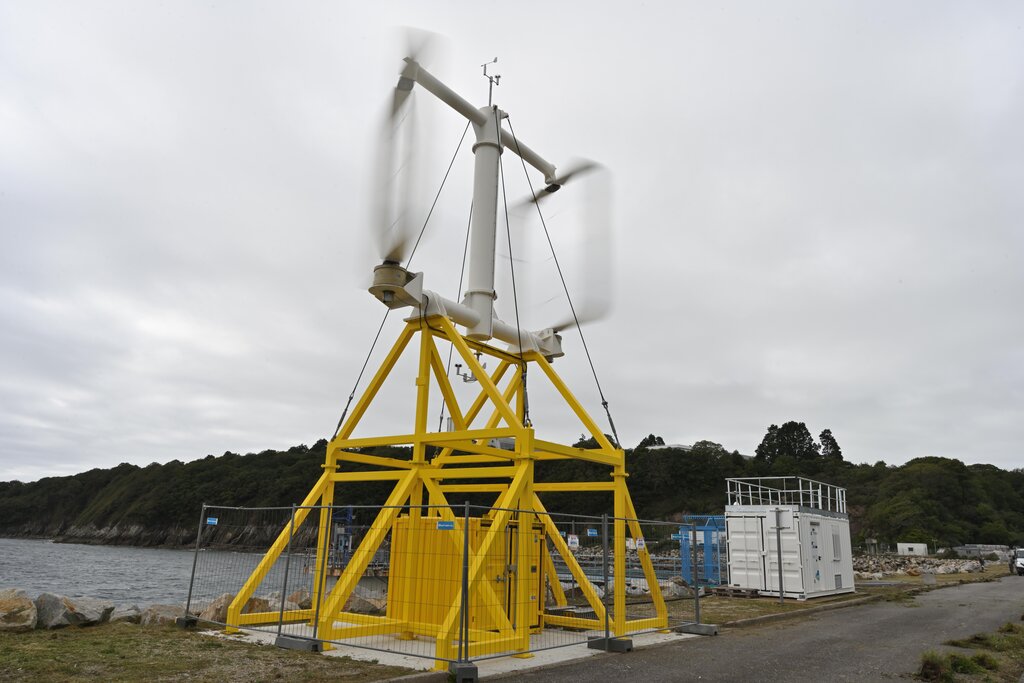
By moving the center of gravity down, VAWTs naturally optimize for stability on floating platforms, reducing the need for massive, costly foundations.
This design also simplifies operations and maintenance (O&M), a huge expense for offshore farms. On a HAWT, servicing the nacelle requires specialized vessels with massive cranes to hoist technicians and equipment hundreds of feet into the air, an operation that is dangerous and highly weather-dependent. With a VAWT, technicians can access the most critical components at platform level, dramatically reducing costs, risks, and downtime.
| Feature | Horizontal Axis (HAWT) | Vertical Axis (VAWT) |
|---|---|---|
| Center of Gravity | High (in the nacelle) | Low (at the base) |
| Floating Stability | Lower; requires large, heavy foundations | Higher; allows for smaller, lighter foundations |
| Maintenance Access | Difficult; requires cranes to reach nacelle | Easy; generator/gearbox at platform level |
| Yaw System | Required to face the wind | Not required; omni-directional |
| Blade Pitch Control | Complex system in the hub | Simpler or not required |
| Deep Water Cost | High | Potentially much lower |
Smarter, Not Just Bigger
Beyond stability, VAWTs eliminate other major complexities. HAWTs need a yaw system to constantly turn the nacelle so the blades face directly into the wind. This is a complex mechanical system with many potential failure points. VAWTs, by their very nature, are omni-directional; they capture wind from any direction without needing to pivot. This removes the entire yaw mechanism.
Similarly, the blade pitch control on a HAWT—which adjusts the angle of the blades to manage power and loads—is a highly complex system located in the rotor hub. While some VAWT designs also use pitch control, the mechanisms can be simpler and more robust. This reduction in mechanical complexity means fewer things can break, a crucial advantage in the harsh and inaccessible offshore environment.
The renewed focus on VAWTs isn't about replacing HAWTs everywhere. It's about selecting the right tool for the job. For deep-water floating wind farms, the engineering elegance of a low center of gravity, simplified maintenance, and reduced mechanical complexity offers a compelling path forward. It represents a pivot from simply scaling up old designs to re-imagining the fundamental architecture of wind energy extraction for the world's most challenging environments.
Let's test your understanding of these offshore turbine concepts.
What is the primary engineering challenge that makes traditional Horizontal Axis Wind Turbines (HAWTs) difficult to deploy on floating platforms in deep water?
A key advantage of Vertical Axis Wind Turbines (VAWTs) is that they are omni-directional. This eliminates the need for which complex HAWT component?