Offset Printing Explained
Introduction to Printing
From Press to Page
For centuries, getting words and images onto paper was a labor-intensive process. It started with methods like woodblock printing, where each page was carved from a single piece of wood. Then, around 1440, Johannes Gutenberg introduced movable type, allowing individual letters to be arranged and rearranged. This was a revolution, making books accessible like never before.
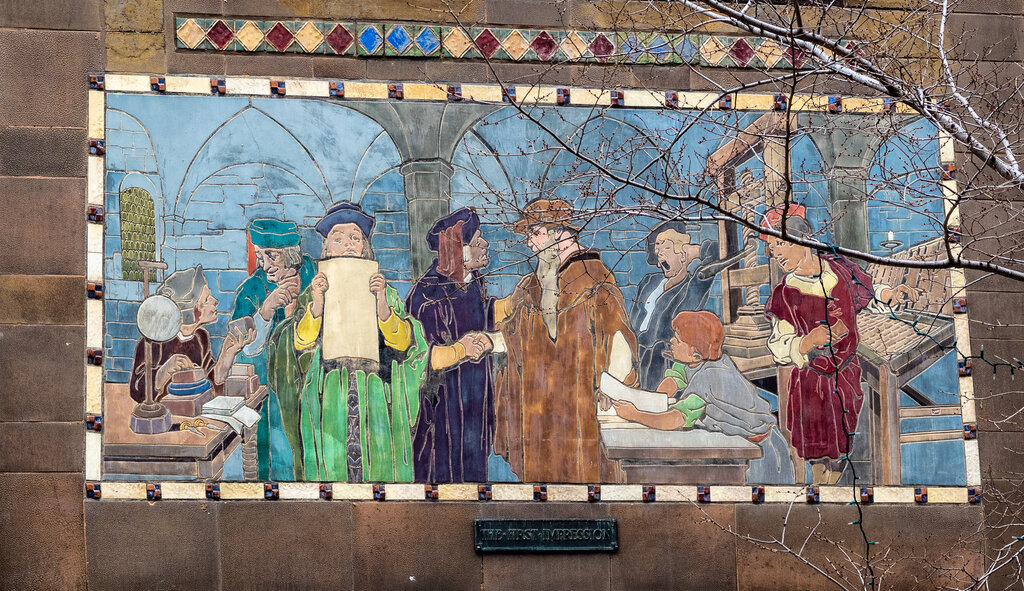
These early methods, known as relief printing, worked like a rubber stamp. Ink was applied to a raised surface and then pressed directly onto paper. While groundbreaking, the constant pressure would eventually wear down the type. A new idea was needed, and it came from an unlikely place: stone writing.
In the late 1700s, lithography was invented. The process is based on a simple chemical principle: oil and water don't mix.
An artist would draw an image on a flat limestone slab with an oil-based crayon. The stone was then treated with a mixture that helped the non-image areas absorb water. When an oil-based ink was rolled onto the stone, it stuck only to the greasy drawing, while the wet parts repelled it. This allowed for a perfect transfer of the image to paper without needing a raised surface.
The Offset Revolution
Offset printing takes the principle of lithography and adds a clever intermediate step. Instead of pressing the inked plate directly onto paper, the image is first transferred—or "offset"—to a rubber blanket. The blanket then presses the image onto the paper. This indirect process is the defining feature of offset lithography.
Why add this extra step? The soft rubber blanket has several advantages. It can press into the tiny crevices of textured paper, producing a much sharper and cleaner image. It also dramatically extends the life of the printing plate, because the plate never touches the abrasive surface of the paper. This allows for millions of high-quality impressions from a single set of plates, making it perfect for large-scale jobs.
Key Concepts
To talk about offset printing, it helps to know a few key terms.
Plate
noun
A thin sheet, usually made of aluminum, that carries the image to be printed. In offset lithography, the image area holds ink and the non-image area repels it.
The plate is the heart of the operation, containing the definitive version of what will be printed.
Blanket
noun
A rubber-coated sheet that transfers the ink from the plate to the paper. Its flexibility allows for crisp printing on various paper surfaces.
For color printing, offset presses use four primary ink colors that combine to create a full spectrum of hues. This is known as the CMYK color model.
CMYK stands for Cyan (a shade of blue), Magenta (a purplish-pink), Yellow, and Key (black). Black is called "key" because it's often used to provide the key details and contrast in an image.
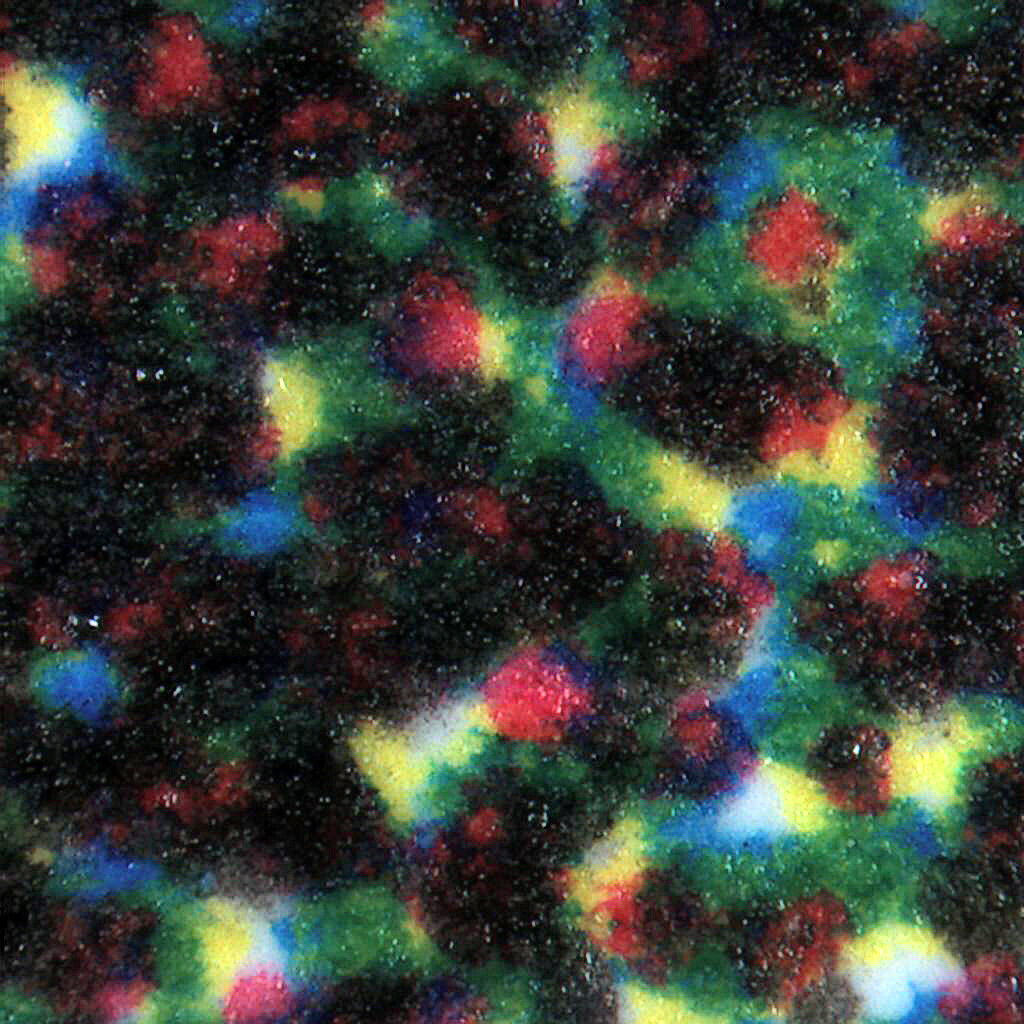
Each color is applied by a separate printing unit, one after the other. The press lays down tiny dots of each color in patterns. When viewed from a normal distance, our eyes blend these dots together to see millions of different colors.
Offset vs. Digital
Today, offset printing is the industry standard for high-volume commercial jobs like magazines, books, and brochures. Its main competitor is digital printing, which works more like a desktop office printer, applying toner or ink directly to the paper without plates.
Each method has its place.
| Feature | Offset Printing | Digital Printing |
|---|---|---|
| Best For | High volume (1,000+ copies) | Low volume, quick jobs |
| Setup Cost | High (making plates) | Low (no plates) |
| Cost Per Item | Decreases as quantity increases | Stays relatively constant |
| Turnaround | Slower | Faster |
| Customization | Not practical for individual changes | Easy to customize each print |
If you need 5,000 identical flyers, offset is the most cost-effective choice. The upfront cost of making the plates is high, but the price per flyer becomes very low. If you need 50 personalized wedding invitations, digital is the way to go. There are no plate costs, and changing the names on each invitation is simple.
Understanding the basics of offset printing provides a foundation for grasping how most of the printed materials we see every day are created.
Ready to check your understanding?
What is the defining characteristic of offset printing that distinguishes it from direct lithography?
In offset printing, the printing plate has direct contact with the abrasive surface of the paper.
Now you know the journey of an image from an idea to a printed page, all thanks to a process that started with a greasy crayon on a stone.