OFAC Sanctions Explained
Introduction to OFAC Sanctions
The Gatekeepers of Finance
Imagine a financial gatekeeper with the power to freeze assets and block transactions anywhere in the world. That's essentially the role of the Office of Foreign Assets Control, or OFAC. As a part of the U.S. Department of the Treasury, OFAC administers and enforces economic and trade sanctions based on U.S. foreign policy and national security goals.
Its mission isn't about military force. Instead, OFAC uses financial pressure to combat threats like terrorism, drug trafficking, and the spread of weapons of mass destruction. By controlling access to the U.S. financial system, it can isolate bad actors and push for changes in their behavior.
The Legal Backbone
OFAC doesn't act on its own. Its authority comes from specific laws passed by Congress that grant the President the power to impose sanctions. These powers are typically used in response to a national emergency or a specific threat to the country.
Two of the most significant laws are the Trading with the Enemy Act (TWEA) and the International Emergency Economic Powers Act (IEEPA). IEEPA, in particular, is the foundation for most modern sanctions programs. It allows the President to regulate a wide variety of economic transactions after declaring a national emergency in response to an “unusual and extraordinary threat” that originates outside the United States.
In essence, IEEPA gives the President the authority to use the U.S. economy as a tool of foreign policy, blocking transactions and freezing the assets of designated foreign entities.
Sanctions Programs
Not all sanctions are created equal. OFAC's programs generally fall into two categories: comprehensive and selective. The type of program depends on the specific foreign policy goals.
Comprehensive sanctions are broad embargoes that prohibit almost all trade and financial transactions with an entire country. Think of it as putting up a financial wall around a nation. Jurisdictions like Cuba, Iran, North Korea, and Syria are subject to these wide-ranging restrictions.
More common today are selective sanctions, also known as "smart sanctions." These are much more targeted. Instead of blacklisting an entire country, they focus on specific individuals, companies, or organizations involved in threatening activities. This approach aims to punish the responsible parties while minimizing the impact on ordinary citizens.
The SDN List
The primary tool for implementing selective sanctions is the Specially Designated Nationals and Blocked Persons List, better known as the SDN List. This is a publicly available blacklist of individuals, groups, and entities that are owned, controlled by, or acting for or on behalf of targeted countries. It also includes individuals and entities designated under non-country-specific programs, such as terrorists and narcotics traffickers.
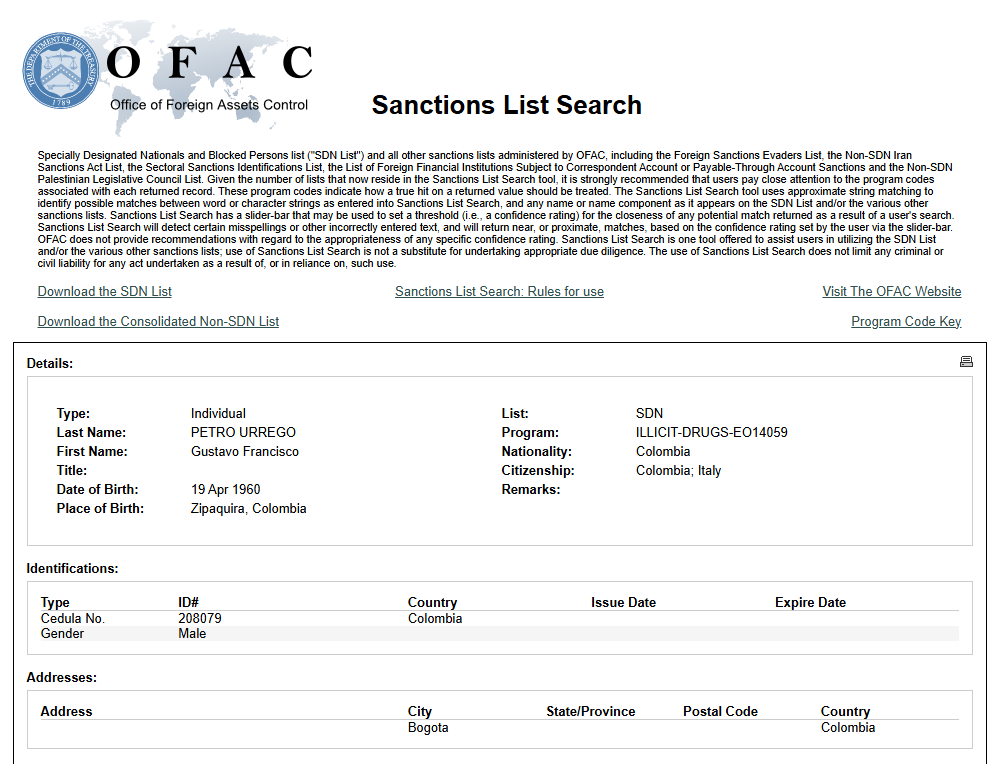
Once a person or company is added to the SDN List, their assets are blocked, and U.S. persons are generally prohibited from dealing with them. This effectively cuts them off from the U.S. financial system, making it incredibly difficult for them to conduct business internationally, as most global transactions touch the U.S. system in some way.
This list is constantly updated as new threats emerge and old ones evolve. It's a dynamic tool at the forefront of U.S. national security efforts.
What is the primary method used by the Office of Foreign Assets Control (OFAC) to achieve its goals?
Which piece of legislation serves as the legal basis for most modern sanctions programs administered by OFAC?
This powerful system of sanctions is a cornerstone of how the U.S. engages with global security challenges, using economic leverage to influence actions on the world stage.