ODT Consulting Fundamentals
Introduction to Organizational Development
What is Organizational Development?
Organizational Development, or OD, is a planned, systematic effort to improve an organization's health and effectiveness. Think of an OD consultant like a coach for a business. A basketball coach doesn't just drill players on shooting; they look at the entire system—the offense, the defense, team chemistry, and player conditioning—to help the team win. Similarly, OD looks at the whole organization.
It’s not a quick fix or a single training program. Instead, OD is a long-term approach that uses insights from behavioral science to manage change. The goal is to create a culture where the organization and its employees can adapt, learn, and grow together. This involves looking at strategy, structure, processes, and people to see how they all work together.
A Quick History
OD began to take shape in the 1940s and 50s. It grew out of what were called "human relations" studies. One famous example, the Hawthorne Studies, found that productivity increased simply because workers were being observed and listened to. This was a revelation: the social and psychological environment at work matters.
Early pioneers like Kurt Lewin, a social psychologist, introduced ideas that are still central to OD. He developed concepts like "action research," where you diagnose a problem, take action, and then evaluate the results to see what worked. He also championed the idea of group dynamics—that the behavior of a group is more than the sum of its individual members. These ideas helped shift the focus from just managing tasks to understanding and developing people and teams.
The Core Principles
Organizational Development is guided by a few key ideas. These principles form the foundation for how OD consultants approach their work and help organizations thrive.
Systems Thinking
This is the cornerstone of OD. Systems thinking views an organization not as a collection of separate parts, but as a complex, interconnected system. Like a spider's web, a tremor in one corner is felt across the entire structure. A change in one department will inevitably affect others.
For example, introducing a new customer relationship management (CRM) software isn't just a tech upgrade. It changes the daily processes for the sales team, alters how the marketing team tracks leads, impacts how the finance department handles billing, and requires the support team to learn a new interface. An OD approach anticipates these ripple effects and manages them holistically.
Continuous Improvement
OD is not a one-and-done event. It's a commitment to ongoing improvement. This involves a constant cycle of planning changes, implementing them, checking the results, and acting on what was learned. This methodical process helps organizations become more agile and responsive.
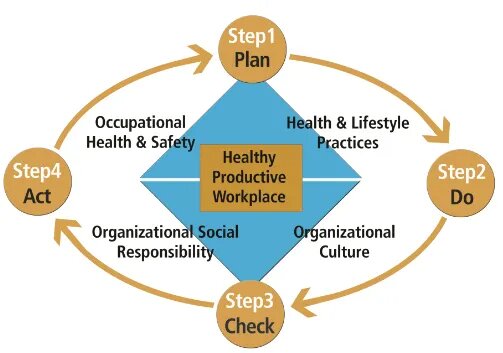
By building a culture of continuous improvement, organizations move away from reactive problem-solving. Instead, they proactively seek out ways to become more efficient, innovative, and effective, making small, incremental adjustments that lead to significant gains over time.
Humanistic Approach
At its heart, OD is about people. It operates on the belief that most individuals want to contribute and do good work. A humanistic approach focuses on creating a work environment that is open, trusting, and collaborative. It values employee well-being, engagement, and personal growth.
This means moving beyond seeing employees as mere resources and instead treating them as whole people with valuable ideas and potential. By empowering employees and fostering psychological safety, organizations unlock creativity and commitment, which are essential for navigating today's complex business world.
Why OD Matters Today
In a world of constant change, disruption is the new normal. Technology evolves, markets shift, and customer expectations change overnight. Organizations can no longer rely on rigid, top-down structures to succeed. They need to be adaptable, resilient, and innovative.
This is where OD becomes critical. It provides the tools and mindset to build an organization that can not just survive change, but thrive on it. By focusing on the entire system, fostering a culture of continuous learning, and putting people first, Organizational Development helps businesses build a sustainable competitive advantage.
Ready to check your understanding? This quiz covers the core ideas of Organizational Development.
Organizational Development (OD) is best described as:
The Hawthorne Studies, a key influence on early OD, revealed that productivity increased primarily because __________.
Understanding these foundational concepts is the first step in seeing how OD can transform a workplace from the inside out.