Odoo's Growth Strategy Explained
Introduction to Odoo
What is Odoo?
Think of a business as a complex machine with many moving parts: sales, inventory, accounting, customer relationships. Often, each part uses its own separate tool, leading to a messy, disconnected system. Odoo solves this problem by bringing all these functions together into one place.
Odoo is a flexible, modular, and open-source ERP (Enterprise Resource Planning) solution that enables businesses to manage all their processes on a single platform.
At its core, Odoo is an Enterprise Resource Planning (ERP) system. An ERP integrates all the essential processes needed to run a company. Instead of juggling different software for different tasks, a business can use a single, unified system to manage everything from the first customer contact to the final sale and beyond. This creates a single source of truth for data, making operations smoother and more efficient.
The Power of Modules
Odoo's main strength is its modular design. Imagine a toolbox. You don't need every tool for every job. You pick the ones you need. Odoo works the same way. Businesses can start with a few essential applications, or modules, like Sales and Accounting, and then add more as they grow.
Need to manage your customer interactions? Add the CRM module. Want to launch an online store? There's an e-commerce module. Each module is designed to work seamlessly with the others.
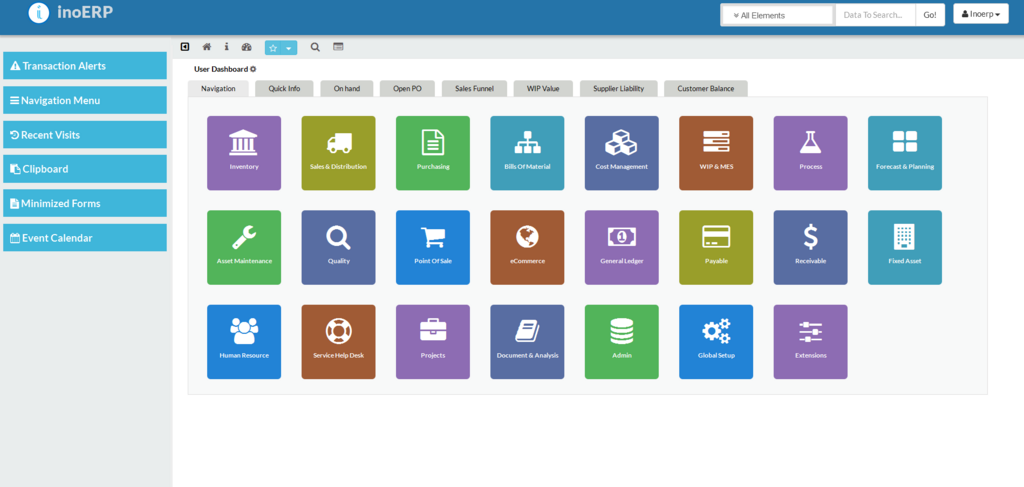
This building-block approach is incredibly flexible. It allows a company to create a custom ERP system perfectly tailored to its unique needs without paying for unnecessary features. This is a significant advantage over traditional, monolithic ERP systems that are often rigid and expensive.
Odoo modules are like building blocks that allow you to tailor your ERP system to your company’s specific needs, allowing businesses to add, remove, or modify functionalities as they grow.
Open Source at its Core
Another key aspect of Odoo is its open-source foundation. The source code for the core software is publicly available, which means a global community of developers can contribute to it, fix bugs, and create new modules. This collaborative approach drives rapid innovation and ensures the platform remains robust and up-to-date.
Odoo offers two main versions:
- Odoo Community: A free, open-source version with a wide range of core functionalities.
- Odoo Enterprise: A licensed version with additional proprietary apps, unlimited functional support, and hosting options.
This dual-license model makes Odoo accessible to businesses of all sizes. A small startup can begin with the free Community edition and later upgrade to the Enterprise version as its needs become more complex. This flexibility lowers the barrier to entry for powerful business management software.
Odoo in the ERP Market
The ERP market has historically been dominated by large, complex, and costly systems. Odoo carved out a significant space for itself by offering a more agile and affordable alternative. Its user-friendly interface and modular architecture make it particularly appealing to small and medium-sized enterprises (SMEs) that might find traditional ERPs overwhelming.
Odoo's core value proposition is to provide businesses of all sizes with a comprehensive, integrated suite of business applications that can be easily customized and scaled.
However, Odoo is not just for small companies. Its scalability means it can also power large corporations, making it a versatile player in the global ERP landscape. By combining the power of an all-in-one solution with the flexibility of a modular, open-source platform, Odoo provides a compelling option for any business looking to streamline its operations.
What is the primary function of Odoo as a business software?
The text describes Odoo's design as "modular." What is the main advantage of this approach?