Ocean Salt Harvesting Explained
Introduction to Salt Harvesting
A Taste of History
Long before refrigeration, salt was a cornerstone of civilization. It was the key to preserving food, especially meat and fish, allowing people to survive lean times and travel long distances. This made salt incredibly valuable, almost like gold. In fact, Roman soldiers were sometimes paid in salt, a payment known as a salarium. This is the origin of the modern word "salary."
The ability to preserve food with salt transformed human society, enabling the growth of cities and the establishment of long-distance trade routes.
From Ocean to Table
The ocean is a vast soup of dissolved minerals. While we mostly think of sodium chloride (), or common table salt, seawater contains a mix of different salts and trace elements. The total concentration of these dissolved salts is called salinity. On average, every liter of seawater has about 35 grams of salt dissolved in it.
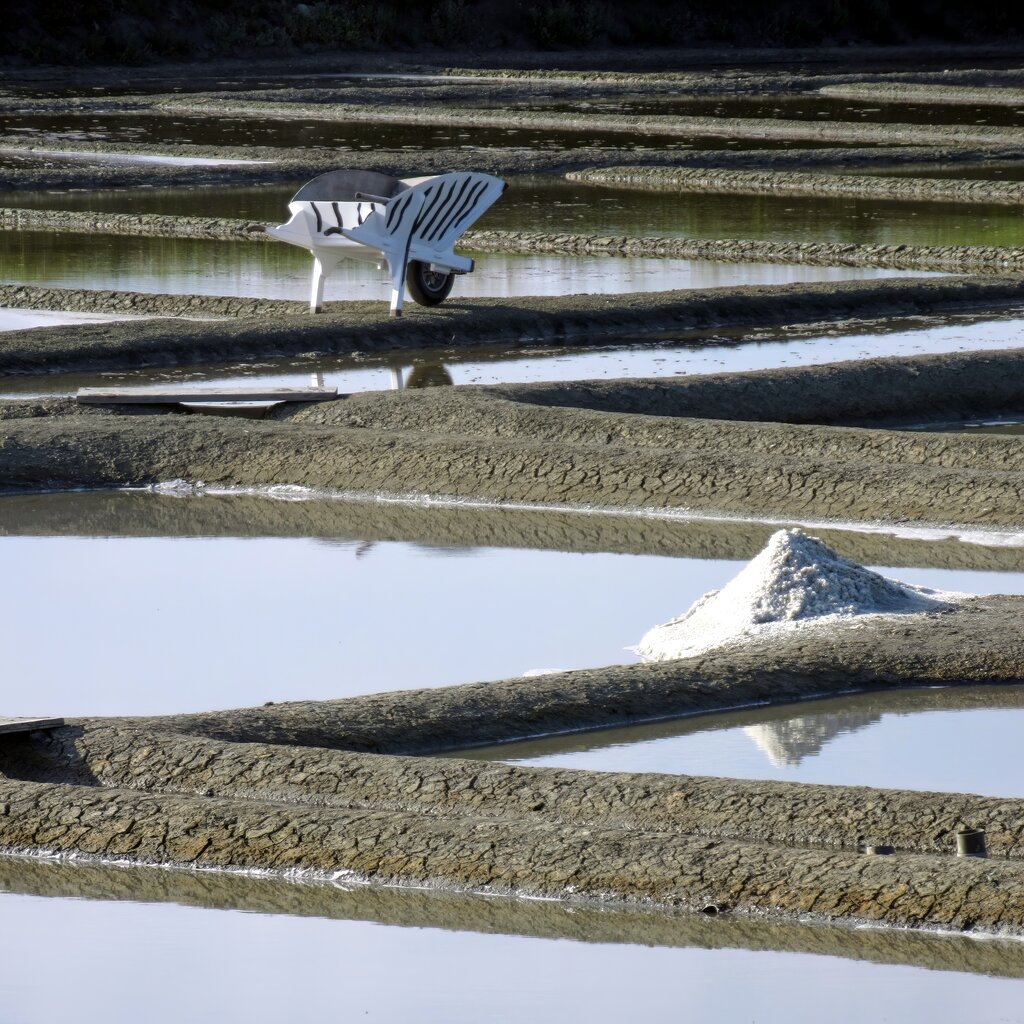
So, how do we get the salt out of the water? The fundamental process is surprisingly simple: evaporation. When seawater is exposed to the sun and wind, the water molecules turn into vapor and escape into the air, but the heavier salt ions are left behind. As more water evaporates, the concentration of salt in the remaining liquid increases until it becomes saturated. At this point, the salt can no longer stay dissolved and begins to form solid crystals.
Old Ways and New
For centuries, people have harvested salt using this principle in what are called salt pans or salterns. These are shallow, man-made ponds, often near the coast. Seawater is channeled into the first pond, and as it evaporates, the increasingly salty water, or brine, is moved through a series of progressively smaller ponds. In the final pond, known as a crystallizer, the salt is allowed to fully form and is then raked up by hand.
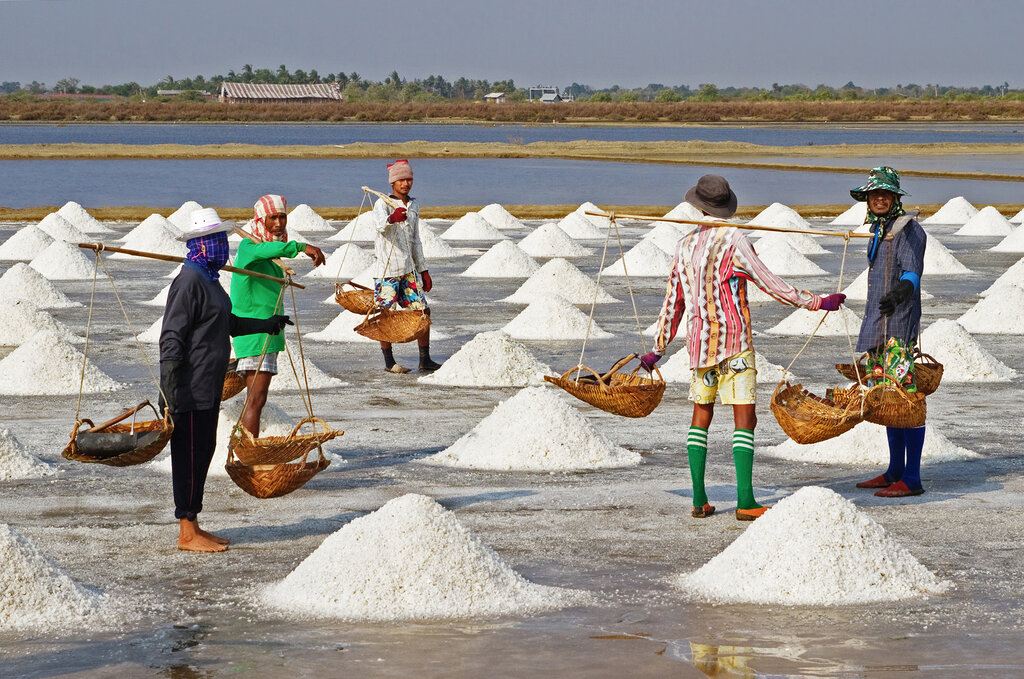
This traditional, labor-intensive method produces high-quality sea salt that is often prized by chefs for its mineral content and texture. Today, while many artisanal salt makers continue this practice, most of the world's salt is produced on a massive industrial scale. Modern operations use the same evaporation principle but rely on large machinery to manage vast pond systems and harvest the salt, making production far more efficient.
crystallization
noun
The natural process where a substance solidifies from a solution into a well-defined, ordered structure, or crystal.
Ready to test your knowledge on the basics of salt?
The modern word "salary" originates from the Latin word salarium, which was a payment given to Roman soldiers in the form of what commodity?
What is the fundamental physical process used to extract salt from seawater in both traditional and industrial methods?
From its vital role in history to the simple science that allows us to harvest it from the sea, salt is a remarkable and essential substance.