Oaxaca's Rich History
Indigenous Origins
The Cloud People of Monte Albán
Long before the Aztecs dominated central Mexico, the valleys of Oaxaca were home to a sophisticated civilization known as the Zapotecs, or “The Cloud People.” For over a thousand years, their capital city, Monte Albán, sat perched on a flattened mountaintop, overlooking the surrounding valleys. This wasn't just a city; it was one of the earliest urban centers in Mesoamerica, a hub of political power, religion, and culture.
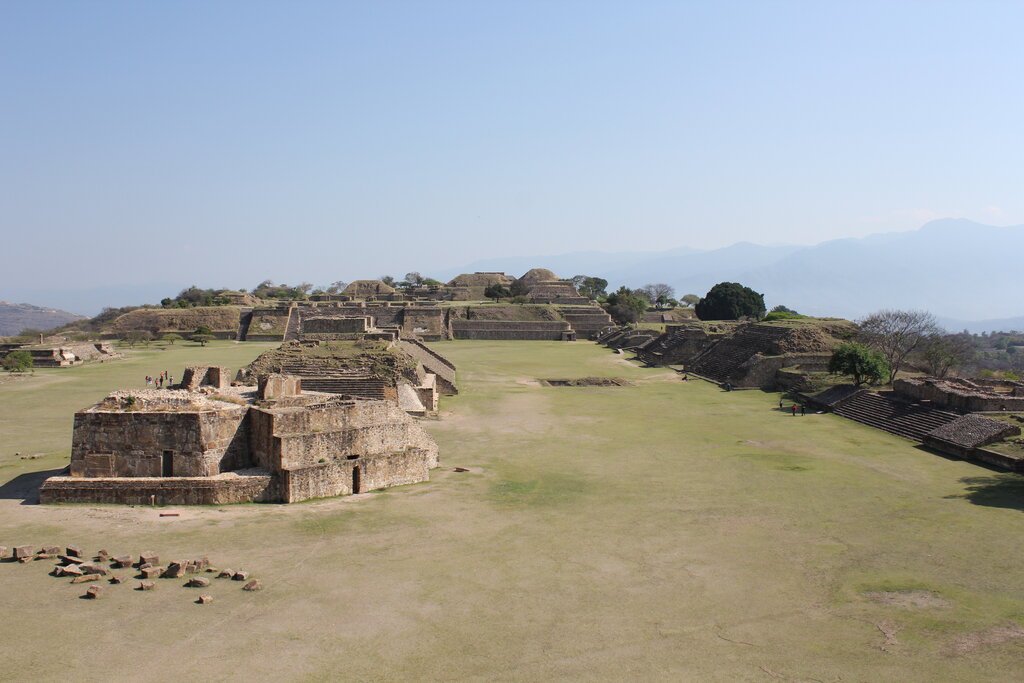
Founded around 500 BCE, Monte Albán was meticulously planned. It featured grand plazas, towering pyramids, a ball court, and elite residences. The Zapotec society was a hierarchy. At the top was a powerful ruler, followed by a class of priests and nobles who held significant influence. Below them were artisans, merchants, and the farmers who worked the fertile valley floors, providing the food that sustained the city.
The Zapotecs were brilliant architects and astronomers. One of the most intriguing structures at Monte Albán is Building J, an arrowhead-shaped building that is uniquely misaligned with the rest of the city. Scholars believe it functioned as an astronomical observatory. The site is also famous for its carved stone monuments known as Danzantes, or “dancers.” These figures, once thought to be dancers, are now interpreted as depictions of tortured war captives, showcasing the Zapotecs' military power.
The Master Artisans
As Monte Albán's influence waned around 800 CE, another group, the Mixtecs, rose to prominence in Oaxaca. They were not empire-builders in the same way as the Zapotecs. Instead, their society was organized into smaller city-states, often forming alliances through marriage and trade. The Mixtecs eventually came to occupy many former Zapotec sites, including Monte Albán, which they repurposed as a sacred burial ground for their own elite.
What truly set the Mixtecs apart was their unparalleled artistry. They are widely regarded as some of the most skilled artisans of ancient Mesoamerica.
Their most famous contributions are their codices. These were long strips of deer hide or bark paper, folded like an accordion and painted with intricate scenes and symbols. These pictorial manuscripts are our primary source of Mixtec history, recording genealogies, myths, and military campaigns in vivid detail.
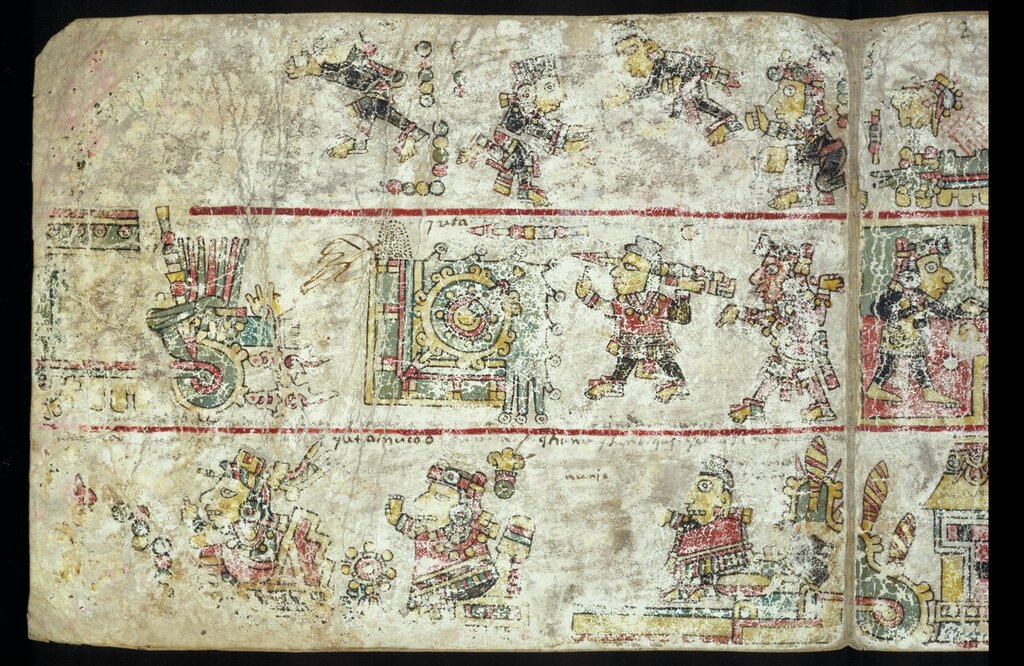
Besides the codices, the Mixtecs excelled in metallurgy, creating exquisite jewelry from gold, silver, and copper using techniques like filigree and turquoise mosaic. Their pottery was also highly sought after, known for its beautiful polychrome designs. These artifacts weren't just decorative; they were symbols of power and status, crucial for religious ceremonies and for forging political ties between city-states.
A Shared Legacy
The Zapotec and Mixtec cultures were not entirely separate. They coexisted, competed, and intermingled for centuries, sharing cultural traditions and artistic styles. The Zapotecs were the monumental builders and city planners who established a powerful state. The Mixtecs were the master craftspeople and historians who recorded their legacy on beautiful manuscripts and artifacts.
Together, they created a rich cultural tapestry in Oaxaca that endured for millennia. Their innovations in writing, art, and urban planning laid a deep foundation for the region's history, and their influence is still felt in the traditions of modern-day Oaxacan communities.
Now, let's test your knowledge of these foundational Oaxacan cultures.
What was the capital city of the Zapotec civilization, known for being one of the earliest urban centers in Mesoamerica?
The Mixtecs are most famous for their codices. What were these artifacts?
Understanding these early civilizations is key to appreciating the deep history of Mesoamerica.