Nutrigenetics of the Mediterranean Diet and Visceral Fat
PPARgamma Mechanism and Signaling
Adipose Tissue's Master Regulator
Within the nucleus of our fat cells, or adipocytes, sits a crucial protein known as Peroxisome Proliferator-Activated Receptor gamma (PPARγ). Think of it as a sensor and a switch. It detects the presence of specific fatty acids and, in response, activates a whole suite of genes. The most abundant form in adipose tissue is the PPARγ2 isoform, which acts as the master transcriptional regulator for creating new fat cells (adipocyte differentiation) and managing how they handle lipids.
PPARγ doesn't act alone. To turn on genes, it must first bind to a ligand, a molecule that fits into it like a key in a lock. Natural ligands for PPARγ include monounsaturated fatty acids (MUFAs), such as oleic acid found in olive oil. When a MUFA binds to PPARγ, the receptor changes shape. This new conformation allows it to partner with another nuclear receptor (RXR) and recruit co-activator proteins. This entire complex then binds to specific DNA sequences called Peroxisome Proliferator Response Elements (PPREs) located in the promoter regions of target genes.
The result is an increase in the transcription of genes responsible for fatty acid uptake, their conversion into triglycerides for storage, and the enhancement of insulin sensitivity.
This activation increases the expression of key proteins. For example, it boosts levels of GLUT4, the transporter that moves glucose out of the bloodstream and into cells, and adiponectin, a hormone that enhances insulin sensitivity throughout the body. By promoting the safe storage of fatty acids in subcutaneous adipose tissue, PPARγ helps prevent them from accumulating in other organs like the liver and muscle, a condition known as ectopic lipid deposition, which can cause insulin resistance.
The Pro12Ala Polymorphism
Not everyone's PPARγ gene is identical. A common and well-studied variation is the Pro12Ala polymorphism (officially known as rs1801282). In this version, a single nucleotide change results in the amino acid alanine being substituted for the usual proline at position 12 of the PPARγ2 protein.
This seemingly small change has a significant, and somewhat paradoxical, effect: it moderately reduces the receptor's ability to activate its target genes.
The alanine ('Ala') variant binds to PPREs on the DNA with slightly less enthusiasm than the proline ('Pro') version. This leads to a lower level of gene transcription in response to ligands. You might assume that a less active version of this crucial metabolic regulator would be detrimental. However, for many people, the opposite is true.
A Paradoxical Benefit
Carriers of the Ala allele often exhibit greater whole-body insulin sensitivity. This benefit stems from the subtle shifts in gene expression caused by the less active receptor.
The reduced activity appears to alter the balance of adipokines, the signaling molecules released by fat tissue. Carriers of the Ala variant tend to have higher circulating levels of adiponectin, the beneficial insulin-sensitizing hormone mentioned earlier. It’s thought that the dampened PPARγ activity shifts cellular resources in a way that favors adiponectin production.
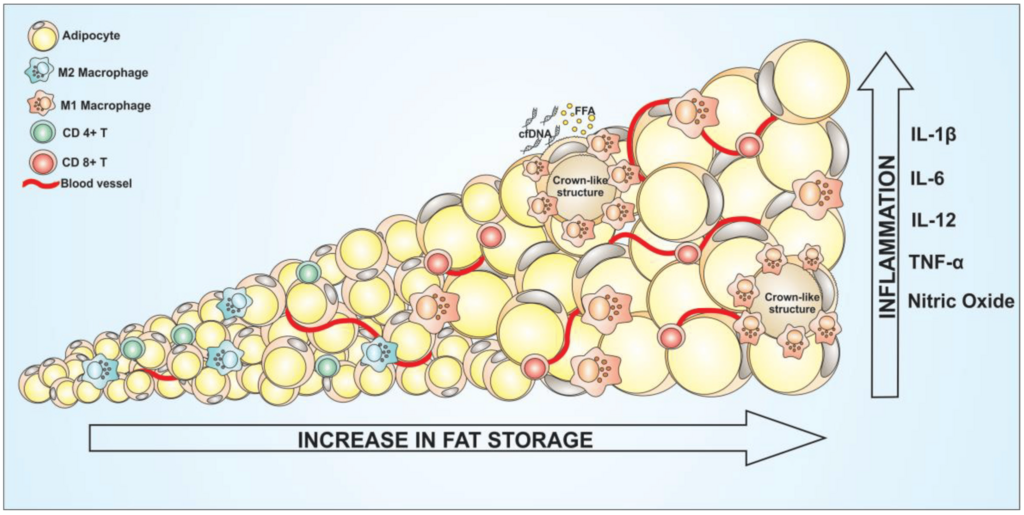
Furthermore, the Ala variant has a favorable impact on inflammation. Adipose tissue isn't just for storage; it's an active endocrine organ that can produce pro-inflammatory cytokines like tumor necrosis factor-alpha (TNF-α). Over-activation of the standard 'Pro' version of PPARγ can sometimes promote pathways that lead to inflammation. The slightly less potent 'Ala' variant appears to blunt this effect, leading to a less inflammatory profile in the adipose tissue. This reduction in low-grade, chronic inflammation is a major factor in improving insulin sensitivity.
Peroxisome proliferator-activated receptor (PPAR) α, β/δ, and γ modulate lipid homeostasis.
So, the Pro12Ala polymorphism offers a fascinating example of how a 'weaker' version of a gene can sometimes lead to a healthier metabolic outcome by fine-tuning the delicate balance of lipid storage, hormone signaling, and inflammation.
What is the primary function of the PPARγ2 protein in fat cells?
Place the following events in the correct order for PPARγ to activate a target gene.