Nursery Examination Curriculum and Assessment Guide
Literacy Learning Milestones
From Lines to Letters
Before children can write the letter 'A' or 'B', they need to master the building blocks of all letters: lines. The journey into literacy for a three or four-year-old begins with pre-writing strokes. These are the fundamental patterns that combine to form every letter in the alphabet.
The three most basic strokes are:
- Standing lines: Vertical lines, straight up and down ( | ).
- Sleeping lines: Horizontal lines, from side to side ( — ).
- Slanting lines: Diagonal lines, leaning left or right ( / \ ).
Assessing a child's ability to trace or copy these lines shows their readiness to form letters. Consistent practice with these patterns on sand, a slate, or paper develops the muscle control needed for writing.
Once a child is comfortable with these basic strokes, the focus shifts to the alphabet itself. The goal is complete recognition of all 26 letters, in both their uppercase (A, B, C) and lowercase (a, b, c) forms. It's crucial to teach them together. This helps the child understand that 'A' and 'a' represent the same letter, just in different clothes.
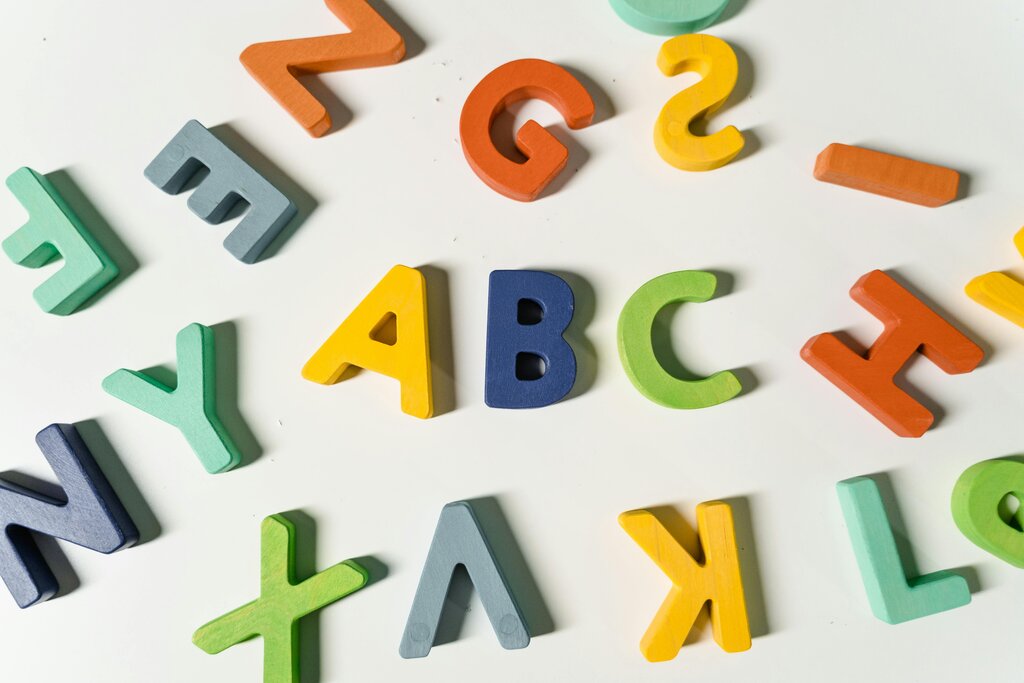
Frequent, playful exposure is key. Use alphabet blocks, flashcards, and point out letters on signs and in books to build familiarity in their everyday environment.
Connecting Sounds and Pictures
Recognising a letter's shape is only half the battle. The next step is connecting that shape to its most common sound. This is the start of phonemic awareness. For nursery students, this means learning the beginning phonic sound of each letter, like 'a' for 'apple' or 'b' for 'ball'. Avoid complex rules; the goal is a simple, direct association.
To strengthen this connection, we use letter-object association. Every letter is paired with a familiar object or picture. This makes the abstract concept of a letter sound more concrete and memorable. A child should be able to look at the letter 'C', hear the /k/ sound, and point to a picture of a cat.
This skill extends to oral picture reading. When shown a picture, a child should be able to identify the main objects in it. For a picture associated with 'D', they might say "dog," "duck," or "drum." This not only reinforces letter sounds but also builds their vocabulary and oral communication skills.
Putting It All Together
How do we know if a child is truly mastering these concepts? A formal assessment for a nursery student isn't about high-pressure tests. It involves simple, engaging activities that measure their understanding in different ways. These assessments check if they can apply their knowledge, not just recite it.
| Assessment Type | What It Measures | Example Task |
|---|---|---|
| Odd One Out | Auditory discrimination of sounds. | Show pictures of an apple, ant, and a ball. Ask, "Which one does not start with the 'a' sound?" |
| Match the Letter | Visual letter-object recognition. | Draw a line from the letter 'B' to a picture of a balloon. |
| Picture Identification | Vocabulary and letter association. | Show a picture of a fish and ask, "Which letter does 'fish' start with?" |
| Letter Dictation | Ability to recall letter shapes from sound. | Say the sound /s/ and ask the child to write or point to the letter 'S'. |
Another key area is tracing. When a child traces a letter, we look for accuracy. Are they starting at the right point? Are they following the lines without straying too far? This evaluates their fine motor control and reinforces the correct formation of each letter. Together, these assessments provide a complete picture of a child's progress from making simple lines to understanding the fundamentals of the written word.
What are the three most basic strokes a child learns before writing letters?
It is important to teach a child that 'A' and 'a' are different forms of the same letter.
These milestones form the foundation for a lifetime of reading and writing. Mastering them sets a child up for success as they move on to more complex literacy skills.