Nuclear Weapon Construction Fundamentals
Introduction to Nuclear Fission
Splitting the Atom
At the heart of every atom is a nucleus, a dense core of protons and neutrons. For most elements, this core is incredibly stable. But for some heavy elements, like certain types of uranium, the nucleus is fragile. Nuclear fission is the process of splitting one of these heavy atomic nuclei into two or more smaller ones.
This is exactly what happens with nuclear fission (fission means to break apart).
This isn't a spontaneous event. Fission is typically induced, or started on purpose. The process begins when a free-roaming neutron strikes the nucleus of a heavy atom, like uranium-235. The nucleus absorbs the neutron, becoming unstable and agitated. Unable to hold itself together, it wobbles and stretches until it violently splits apart.
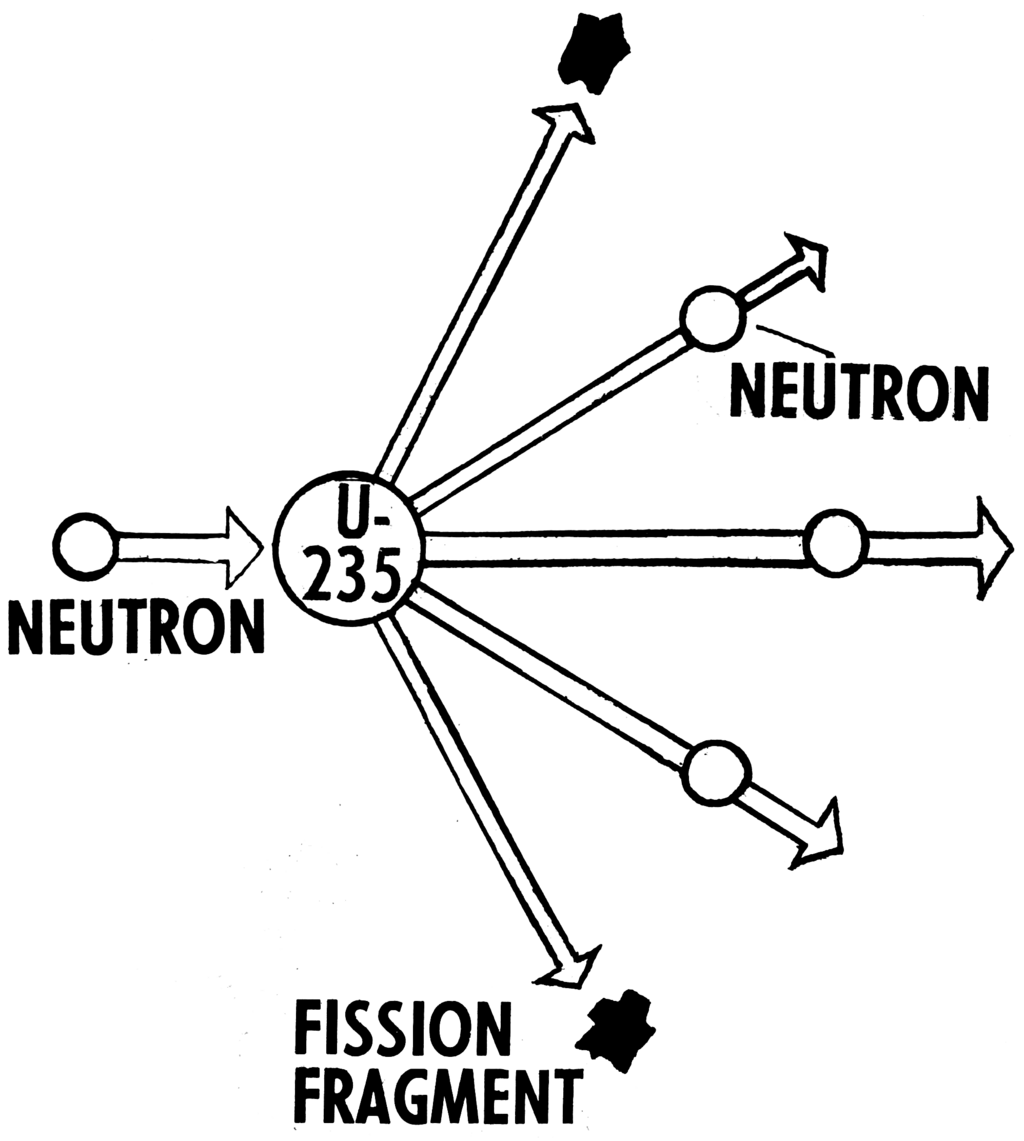
The result of this split is a set of smaller atoms, known as fission fragments, and a few extra free neutrons. But something else is created: a tremendous amount of energy. This happens because the total mass of the fission fragments and released neutrons is slightly less than the mass of the original uranium atom and the initial neutron. This tiny amount of lost mass is converted directly into energy, following Albert Einstein's famous equation.
In this equation, is energy, is the minuscule amount of lost mass, and is the speed of light. Because the speed of light is such an enormous number (and it's squared), converting even a tiny bit of mass releases a disproportionately huge amount of energy.
The Chain Reaction
The key to harnessing fission is that the process can sustain itself. Remember those extra neutrons released during the split? Each of them can fly off and strike another nearby uranium nucleus, causing it to fission as well. This next round of fission events releases even more neutrons, which can trigger even more fissions. This cascading effect is called a chain reaction.
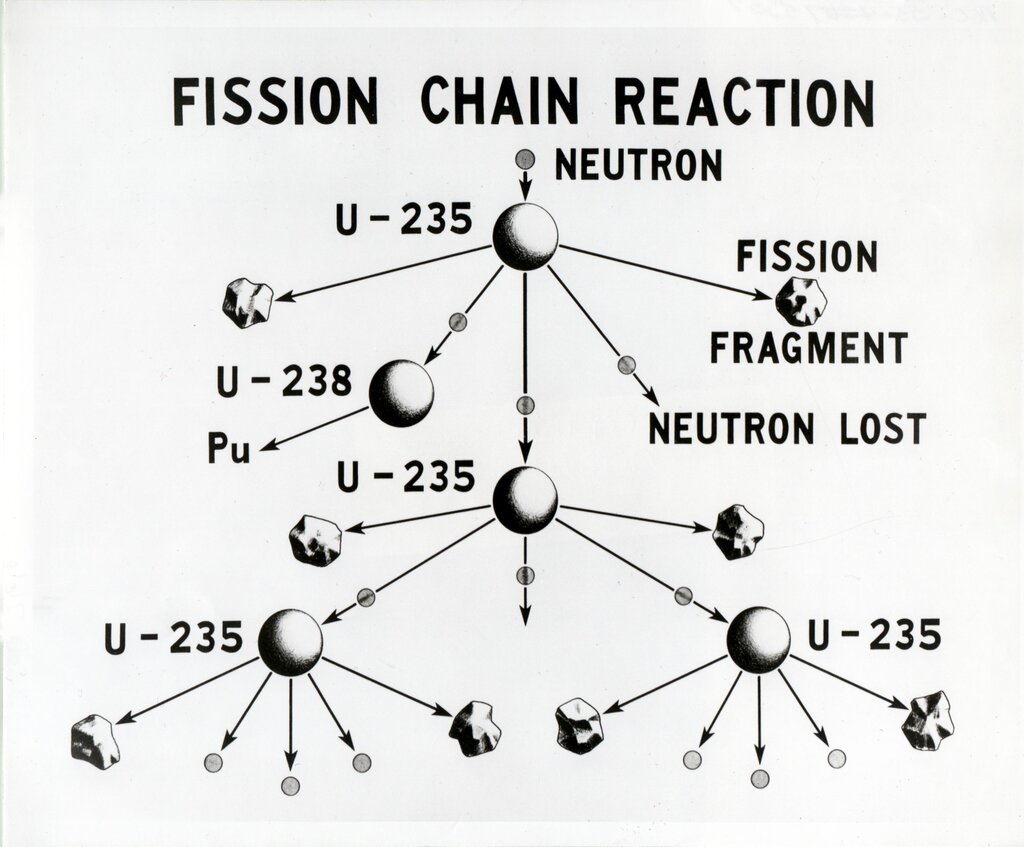
For a chain reaction to be self-sustaining, it must reach a state called criticality. This is the point where, on average, exactly one neutron from each fission event goes on to cause another fission.
If, on average, less than one neutron from each fission causes another, the reaction is subcritical. The chain reaction will fizzle out and stop.
If more than one neutron causes another fission, the reaction is supercritical. The rate of fission events will grow exponentially, releasing a massive amount of energy very quickly.
Controlled vs. Uncontrolled
The difference between subcritical, critical, and supercritical states is fundamental to the applications of nuclear fission. The same underlying physical process can be used to either generate electricity or create a weapon, depending entirely on how the chain reaction is managed.
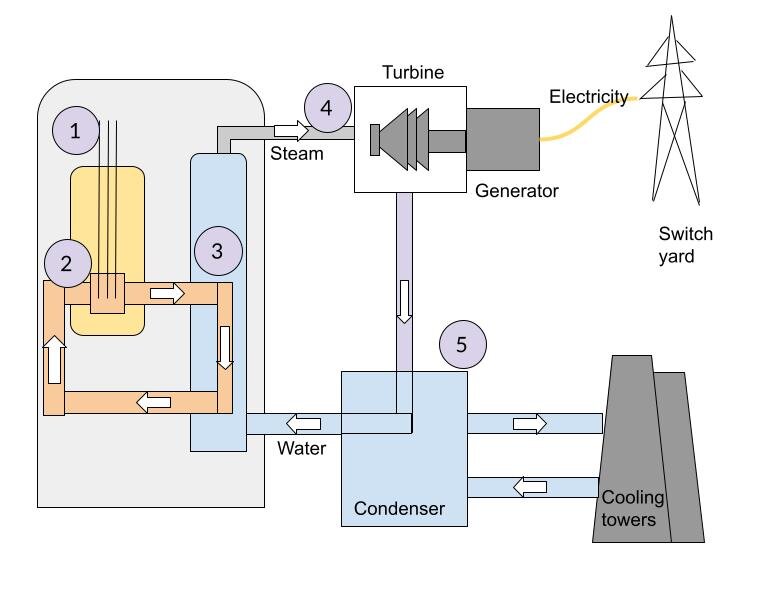
A nuclear power plant is designed to maintain a perfectly critical chain reaction. The reactor carefully balances the rate of fission to produce a steady, controllable stream of heat. This heat is used to boil water, create steam, and turn turbines to generate electricity. Control rods, which absorb neutrons, are used to keep the reaction from becoming supercritical.
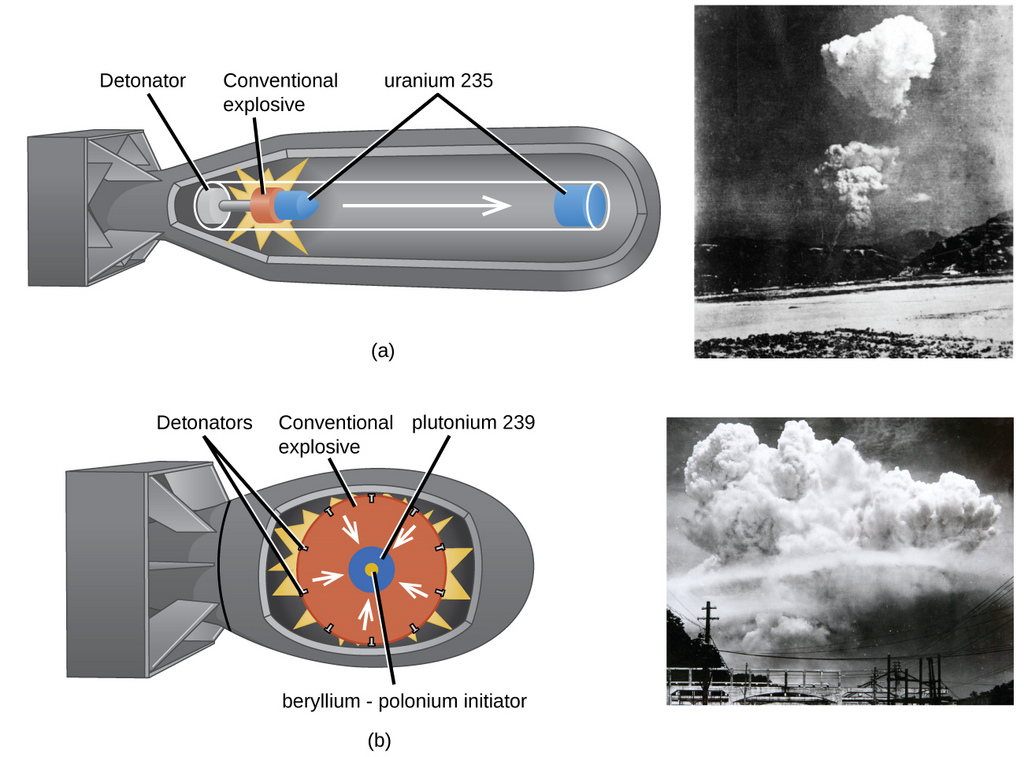
A nuclear weapon, on the other hand, is designed to create a powerful, uncontrolled supercritical chain reaction. It uses a conventional explosive to rapidly force pieces of fissile material together, creating a supercritical mass. The fission reaction escalates almost instantaneously, releasing an immense amount of energy in a massive explosion.
Understanding this distinction is key. Fission itself is a neutral physical process; its application determines its purpose.
Time to check your understanding of nuclear fission.
What is nuclear fission?
What typically initiates the fission of a heavy nucleus like uranium-235 in a chain reaction?
This fundamental process of splitting atoms unlocks a powerful force that has reshaped both energy production and the nature of conflict in the modern world.