Nuclear War Unveiled
Introduction to Nuclear Weapons
The Dawn of the Atomic Age
The story of nuclear weapons begins in the midst of World War II with the Manhattan Project. This top-secret American research and development undertaking brought together some of the world's brightest scientific minds. Their goal was to harness the power of the atom to create a weapon of unprecedented power before Nazi Germany could.
The project culminated on July 16, 1945, with the Trinity test in the New Mexico desert. The world's first atomic explosion was a success, ushering in the atomic age. Less than a month later, the United States dropped two atomic bombs on the Japanese cities of Hiroshima and Nagasaki, leading to the end of the war.
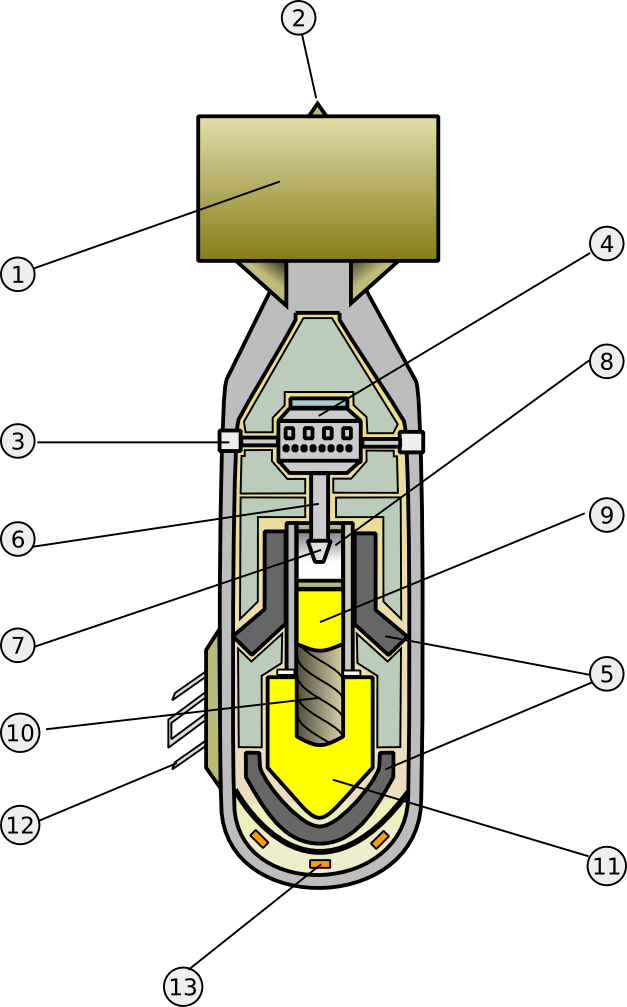
Splitting and Fusing Atoms
Nuclear weapons derive their immense destructive power from a process that releases energy locked within the nucleus of an atom. There are two primary ways to do this: fission and fusion.
fission
noun
The action of dividing or splitting something into two or more parts.
In nuclear fission, the nucleus of a heavy, unstable atom, like uranium-235 or plutonium-239, is split apart. This is typically done by bombarding it with a neutron. When the nucleus splits, it releases a huge amount of energy along with two or three additional neutrons.
If enough of this fissile material is packed together to reach what's called a 'critical mass,' these newly released neutrons can go on to split other nuclei. This creates a self-sustaining, rapidly escalating chain reaction, releasing a catastrophic amount of energy in an instant.
The other method, fusion, is the opposite process. It's the same reaction that powers our sun.
fusion
noun
The process or result of joining two or more things together to form a single entity.
In nuclear fusion, the nuclei of light atoms, such as isotopes of hydrogen like deuterium and tritium, are forced together under extreme temperature and pressure. When they merge, or fuse, they form a heavier nucleus (like helium) and release an amount of energy that is several times greater than fission.
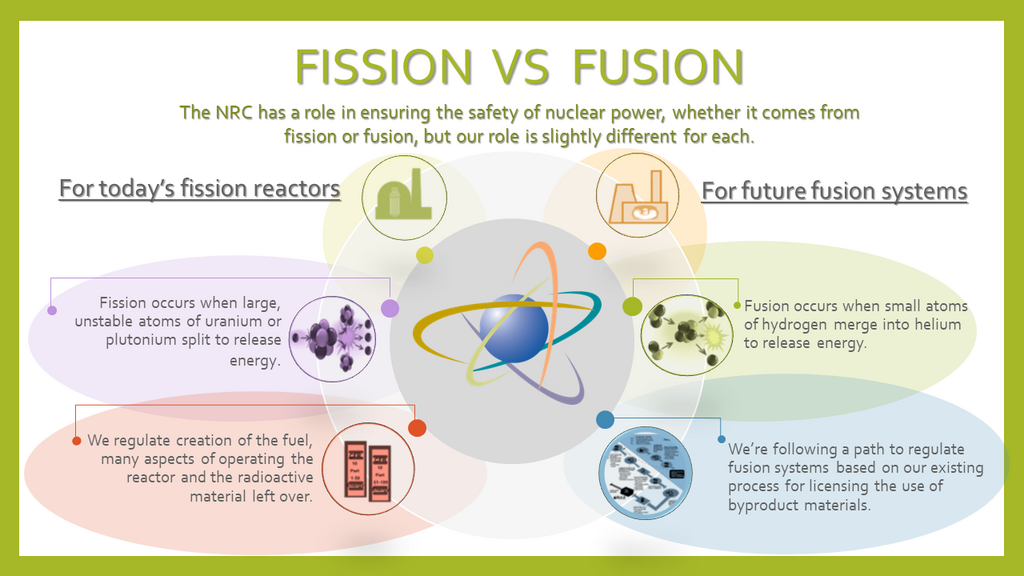
Types of Nuclear Weapons
Based on these two principles, nuclear weapons are broadly categorized into two types.
Fission Bombs (Atomic Bombs): These are the first-generation nuclear weapons. They use a fission chain reaction as their primary source of energy. The bombs used in World War II were fission bombs.
Thermonuclear Bombs (Hydrogen Bombs or H-Bombs): These are far more powerful. A thermonuclear weapon is a multi-stage device that uses a fission explosion to create the intense heat and pressure necessary to trigger a much larger and more powerful fusion reaction. Essentially, an atomic bomb acts as the trigger for a hydrogen bomb.
| Feature | Fission Bomb (A-Bomb) | Thermonuclear Bomb (H-Bomb) |
|---|---|---|
| Principle | Nuclear Fission | Fission followed by Fusion |
| Fuel | Uranium-235 or Plutonium-239 | Hydrogen isotopes (Deuterium, Tritium) |
| Relative Power | Kilotons (thousands of tons of TNT) | Megatons (millions of tons of TNT) |
The Global Stockpile
After World War II, the United States and the Soviet Union entered the Cold War, a period marked by an intense nuclear arms race. Both superpowers built vast arsenals, each possessing tens of thousands of warheads at their peak. While treaties have significantly reduced these numbers, the threat remains.
Today, nine countries are known to possess nuclear weapons: the United States, Russia, the United Kingdom, France, China, India, Pakistan, Israel, and North Korea.
International efforts, most notably the Treaty on the Non-Proliferation of Nuclear Weapons (NPT), aim to prevent the spread of these weapons and work towards the goal of nuclear disarmament. However, the complete elimination of nuclear arsenals remains a complex and distant goal.
Now, let's test your knowledge on these foundational concepts.
What was the primary goal of the Manhattan Project during World War II?
The process of splitting a heavy atomic nucleus, like uranium-235, to release energy is known as nuclear ________.
Understanding the science and history of nuclear weapons is the first step toward grasping their profound impact on global security and politics.