Nuclear Science Fundamentals
Atomic Structure
The Building Blocks of Matter
Everything around you, from the air you breathe to the screen you're reading, is made of tiny particles called atoms. For a long time, people thought atoms were the smallest possible things, but we now know they're made of even smaller components called subatomic particles.
The core of an atom is called the nucleus. It’s a dense, central region that contains two types of particles: protons and neutrons. Protons have a positive electric charge, while neutrons have no charge at all. They are neutral. Because they both reside in the nucleus, protons and neutrons are collectively known as nucleons.
Swirling around the nucleus at incredible speeds are electrons. Electrons are much smaller and lighter than protons or neutrons, and they carry a negative electric charge. The attraction between the positive protons in the nucleus and the negative electrons keeps the electrons in orbit, much like how gravity keeps planets orbiting the sun.
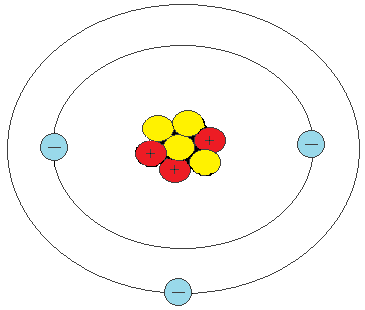
Here's a quick summary of these three key particles:
| Particle | Charge | Location | Relative Mass |
|---|---|---|---|
| Proton | Positive (+) | Nucleus | ~1 |
| Neutron | Neutral (0) | Nucleus | ~1 |
| Electron | Negative (-) | Outside nucleus | ~1/1836 |
Identifying Elements
What makes one element, like gold, different from another, like oxygen? It all comes down to the number of protons in the nucleus.
The number of protons in an atom's nucleus is called its atomic number, symbolized by the letter . This number is the element's unique identifier. Every single atom of carbon has 6 protons, and every atom of oxygen has 8. If an atom had 7 protons, it wouldn't be carbon or oxygen—it would be nitrogen.
The atomic number () defines the element. Change the number of protons, and you change the element itself.
The total number of protons and neutrons in the nucleus is called the mass number, symbolized by . Since electrons have very little mass, the mass number gives us a good approximation of the atom's total mass.
The relationship is simple. If is the number of neutrons, then:
While the number of protons for an element is fixed, the number of neutrons can vary. Atoms of the same element that have different numbers of neutrons are called isotopes.
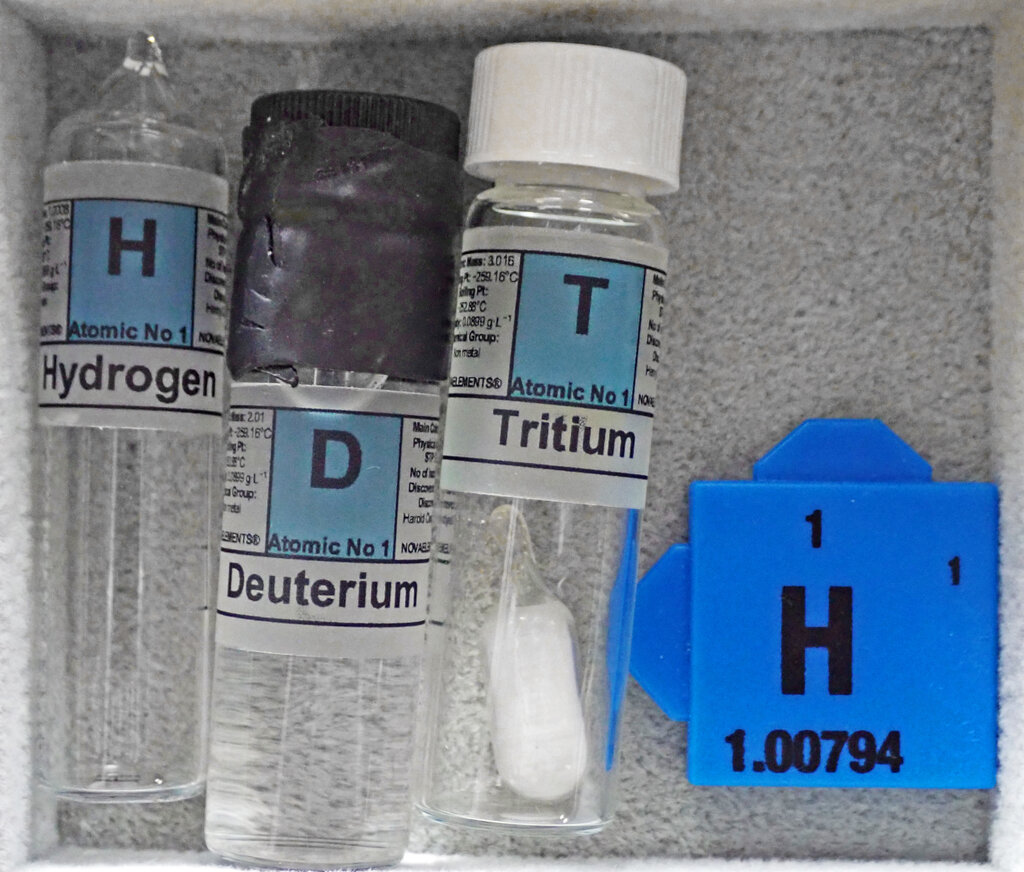
For example, all hydrogen atoms have one proton (). But a hydrogen atom can have zero, one, or two neutrons. These isotopes have special names: regular hydrogen (0 neutrons), deuterium (1 neutron), and tritium (2 neutrons). They are all still hydrogen, but they have different mass numbers.
Where Electrons Live
Electrons don't just fly around the nucleus randomly. They are organized into specific energy levels called electron shells. Think of these shells like concentric layers of an onion, with the nucleus at the very center. Shells closer to the nucleus have lower energy, while those farther away have higher energy.
Each shell is identified by a principal quantum number, , starting with for the shell closest to the nucleus, then , , and so on.
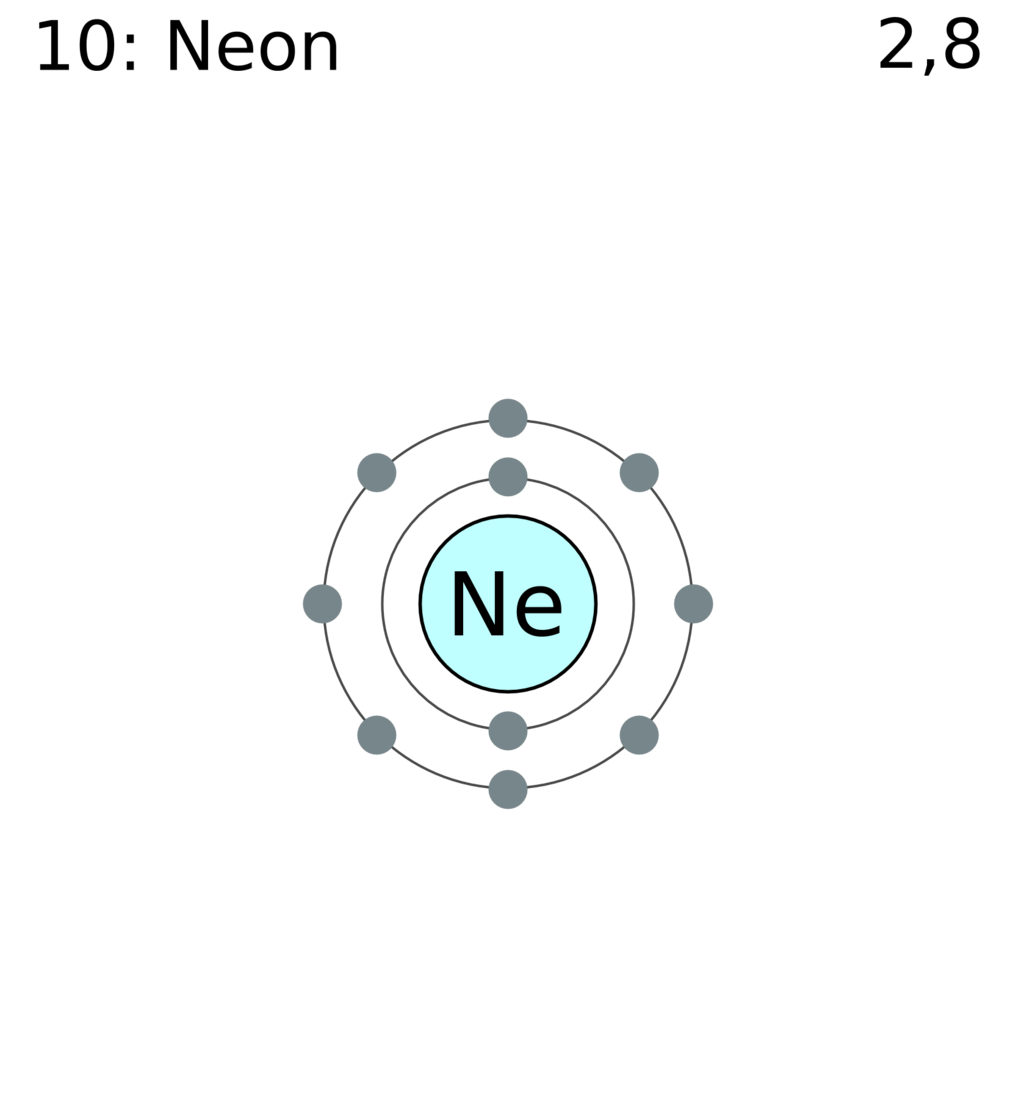
But the organization doesn't stop there. Each shell is further divided into one or more subshells, which are denoted by letters: s, p, d, and f. Each type of subshell has a unique shape and can hold a specific maximum number of electrons:
- An s subshell can hold up to 2 electrons.
- A p subshell can hold up to 6 electrons.
- A d subshell can hold up to 10 electrons.
- An f subshell can hold up to 14 electrons.
The number of subshells available depends on the main shell. The first shell () only has an s subshell. The second shell () has s and p subshells. This structure dictates how electrons fill up the available space, which in turn determines an element's chemical properties and its place on the periodic table.
Ready to check your understanding? Let's see what you've learned.
What are the particles found in the nucleus of an atom collectively called?
The atomic number (Z) of an element is determined by the number of ________ in its nucleus.
Understanding these fundamental pieces—protons, neutrons, and electrons—and how they are arranged is the first step toward understanding the behavior of all matter in the universe.