Nuclear Science Explained
Atomic Structure
The Building Blocks of Matter
Everything around you, from the air you breathe to the screen you're reading this on, is made of atoms. For a long time, people thought atoms were the smallest, most fundamental things in the universe. But it turns out, atoms themselves are made of even smaller pieces.
These are called subatomic particles. The three main players are protons, neutrons, and electrons. Their arrangement gives each atom its unique properties.
At the center of every atom is the nucleus, a dense core containing protons and neutrons. Protons have a positive electric charge, while neutrons have no charge at all. Swirling around the nucleus at incredible speeds are the electrons, which carry a negative charge. It's the attraction between the positive protons and negative electrons that holds the atom together.
| Particle | Charge | Location in Atom |
|---|---|---|
| Proton | Positive (+) | Nucleus |
| Neutron | Neutral (0) | Nucleus |
| Electron | Negative (-) | Orbiting the Nucleus |
An Atom's Identity
What makes an atom of gold different from an atom of oxygen? It all comes down to the number of protons.
atomic number
noun
The number of protons in an atom's nucleus. This number uniquely identifies a chemical element.
The atomic number, often represented by the letter , is like an atom's social security number. All carbon atoms have 6 protons (). All oxygen atoms have 8 protons (). If you change the number of protons, you change the element entirely.
Another key value is the mass number, represented by . This is simply the total count of protons and neutrons in the nucleus. The number of neutrons can be found by subtracting the atomic number from the mass number ().
For example, the most common form of carbon has 6 protons and 6 neutrons. Its atomic number () is 6, and its mass number () is 12.
Atomic Variations
While the number of protons for an element is fixed, the number of neutrons can vary. Atoms of the same element that have different numbers of neutrons are called isotopes.
Think of isotopes as different models of the same car. They're all the same make (the element) but have slightly different weights (the mass number).
For instance, hydrogen () usually has just one proton and no neutrons. But it has two other common isotopes. Deuterium has one proton and one neutron, while tritium has one proton and two neutrons. They are all hydrogen, but they have different masses.
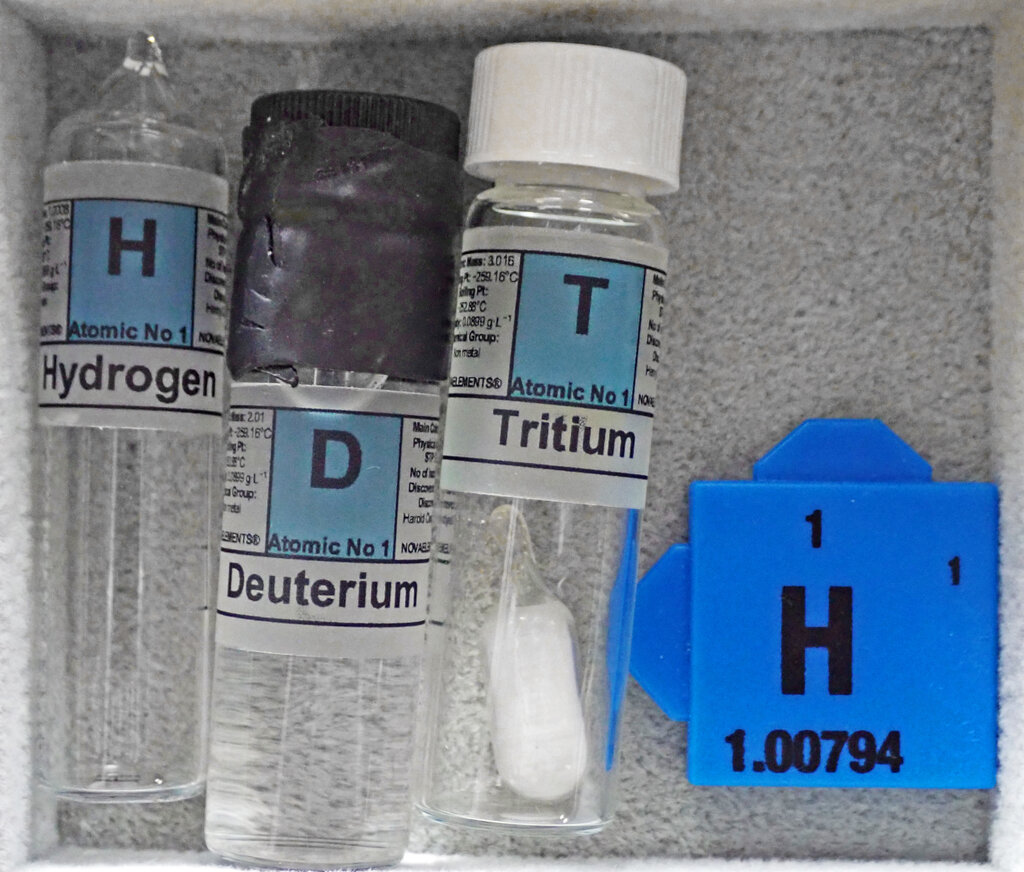
Isotopes are important in many fields. Some, like Carbon-14, are used in archaeology to date ancient artifacts. Others are used in medical imaging and treatments.
Electron Arrangements
Electrons don't just swarm the nucleus randomly. They are organized into distinct energy levels, often visualized as shells or orbitals. Think of it like a multi-story parking garage where cars can only park on specific floors, not in between them.
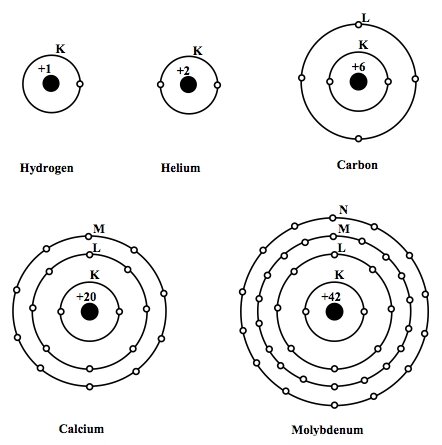
Each shell can only hold a certain number of electrons. The first shell, closest to the nucleus, can hold up to 2 electrons. The second can hold up to 8, the third up to 18, and so on. Electrons fill the lowest available energy levels first before moving to higher ones.
For example, a sodium atom has 11 electrons. Two fill the first shell, eight fill the second shell, and the one remaining electron occupies the third shell. This arrangement of electrons, called the electron configuration, determines how an atom interacts with other atoms to form chemical bonds.
It's the electrons in the outermost shell, known as valence electrons, that are primarily responsible for an element's chemical behavior. An atom with a full outer shell, like Neon, is very stable and doesn't readily react. An atom with only one valence electron, like Sodium, is highly reactive.
Let's review what you've learned about the atom.
What are the three main subatomic particles and their respective locations within an atom?
The atomic number () of an element is determined by the number of ________.