Nuclear Power Explained
Atomic Structure
The Building Blocks of Everything
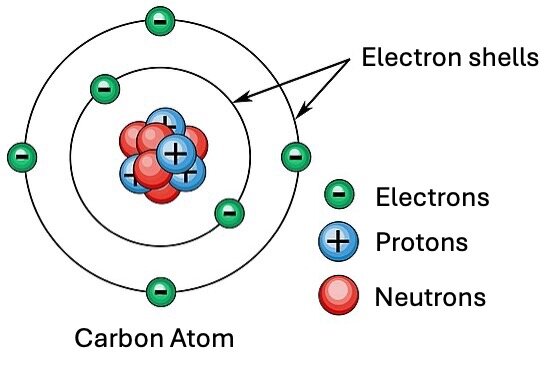
Everything you see around you, from your phone to the stars in the sky, is made of tiny particles called atoms. Think of them as the fundamental LEGO bricks of the universe. At the center of every atom is a dense core called the nucleus.
The nucleus contains two types of particles: protons and neutrons. Protons have a positive (+) electrical charge, while neutrons have no charge at all. The number of protons is what makes an element unique. An atom with one proton is always hydrogen. An atom with six protons is always carbon. This crucial number is called the atomic number.
Whizzing around the nucleus are much smaller, lighter particles called electrons. Electrons have a negative (-) electrical charge. In a neutral atom, the number of electrons is equal to the number of protons, so their positive and negative charges cancel each other out.
How Electrons Behave
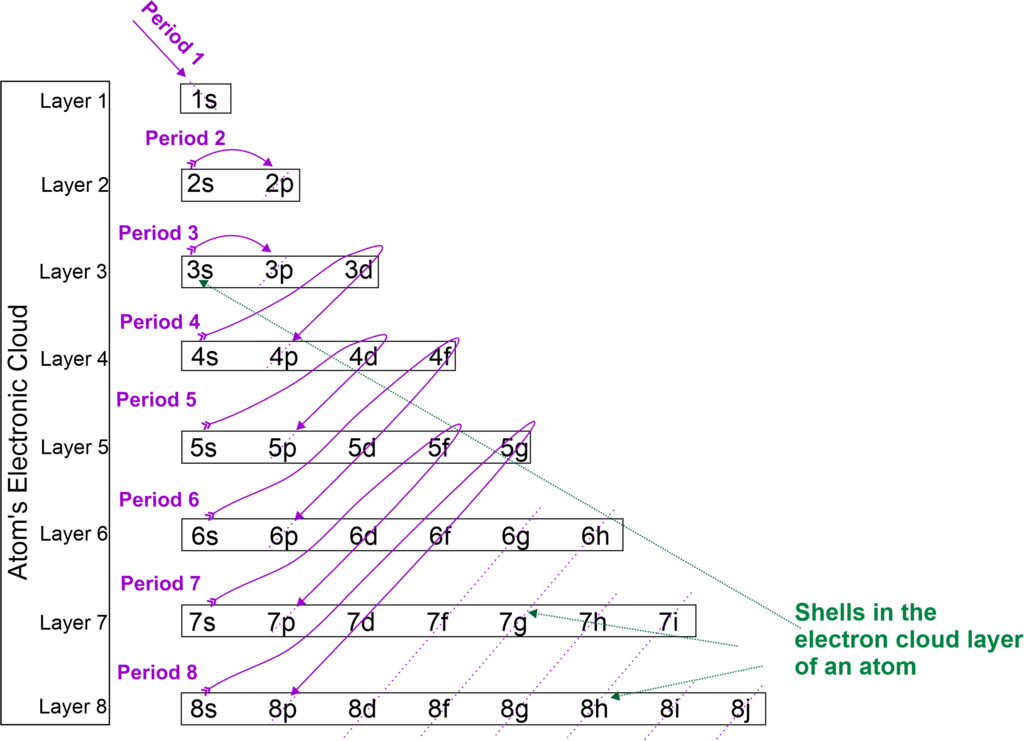
Electrons don't just fly around the nucleus randomly. They are organized into specific energy levels, or layers, called electron shells. Imagine these shells like the layers of an onion or the orbits of planets around a sun, with each shell being a certain distance from the nucleus.
Each shell can only hold a certain number of electrons. The first shell, closest to the nucleus, can hold a maximum of two electrons. The second shell can hold up to eight, the third can hold up to 18, and so on. Electrons fill the innermost shells first before moving to the outer ones. This arrangement is known as an atom's electron configuration.
The arrangement of electrons, especially in the outermost shell, determines how an atom interacts with other atoms. This is the foundation of all chemical reactions.
A Stable Core
While electrons determine an atom's chemical behavior, the nucleus determines its stability. The nucleus is packed tightly with positively charged protons and neutral neutrons. Since particles with the same charge repel each other, you might wonder why all those positive protons don't just fly apart. Neutrons act like a kind of nuclear glue, helping to hold the protons together through a powerful force called the strong nuclear force.
For an atom to be stable, it needs a good balance between protons and neutrons. While the number of protons for a given element is always the same, the number of neutrons can vary. Atoms of the same element with different numbers of neutrons are called isotopes.
Isotope
noun
Variants of a particular chemical element which differ in neutron number, and consequently in nucleon number (mass number).
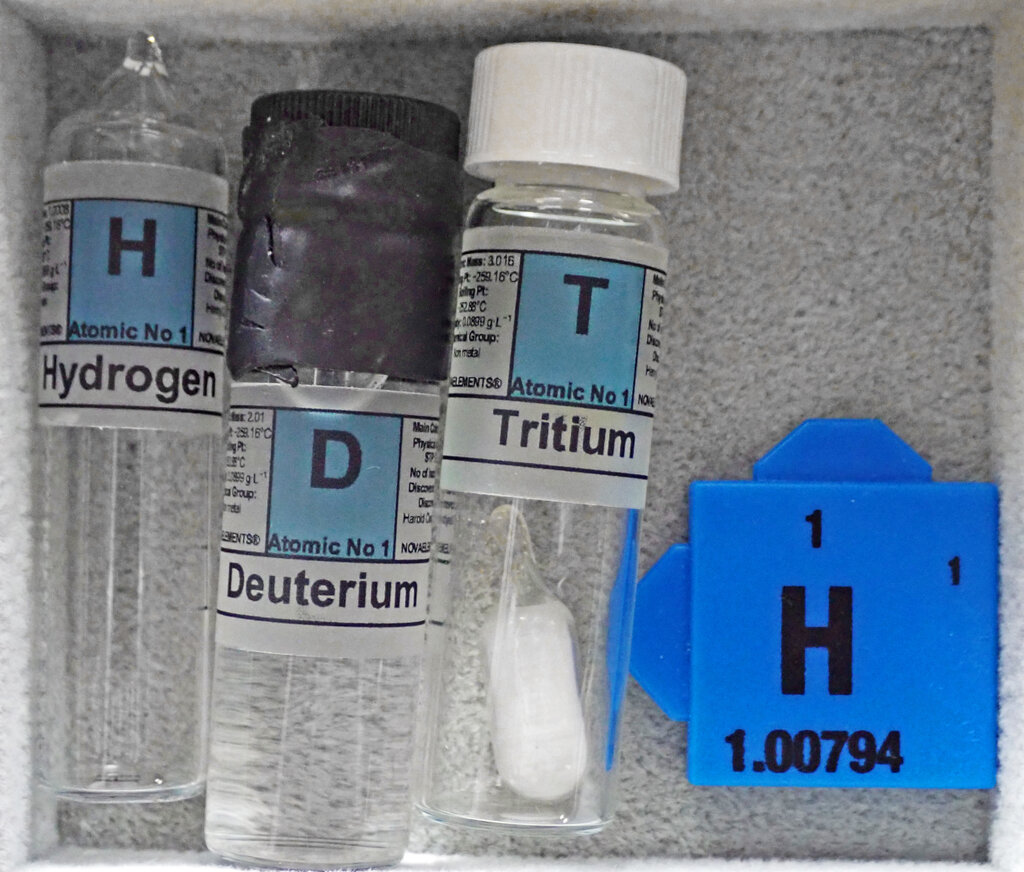
For example, every hydrogen atom has one proton. But it can have zero, one, or two neutrons. These three isotopes are all hydrogen, but they have different masses and different levels of stability.
- Hydrogen-1 (Protium): 1 proton, 0 neutrons. This is the most common and stable form.
- Hydrogen-2 (Deuterium): 1 proton, 1 neutron. Also stable.
- Hydrogen-3 (Tritium): 1 proton, 2 neutrons. This isotope is unstable.
The stability of an atom's nucleus is the key to understanding nuclear energy. When a nucleus is unstable, it has a tendency to change, releasing energy in the process.
Now, let's test your knowledge of atomic structure.
What defines a chemical element?
What is the primary role of neutrons within the atomic nucleus?
Understanding these fundamental pieces—protons, neutrons, electrons, and their arrangements—is the first step toward understanding the immense power held within the atom's core.